



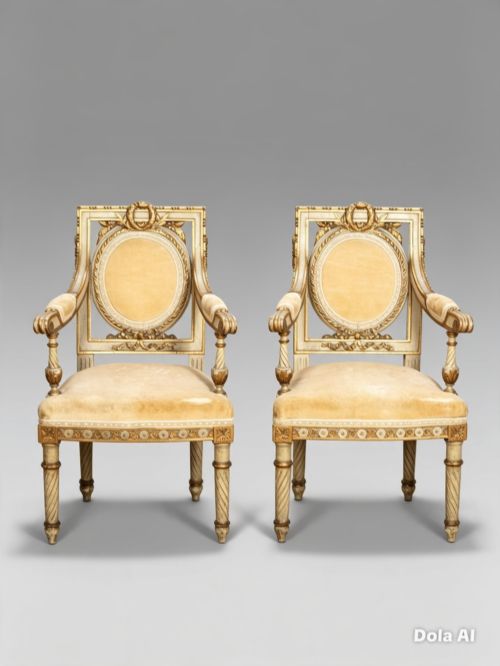

Painted French Fauteuils
These painted french fauteuils offer open-armed seating shaped by centuries of stylistic evolution, bringing decorative painted timber and period textiles into modern interiors.
Painted French Fauteuils
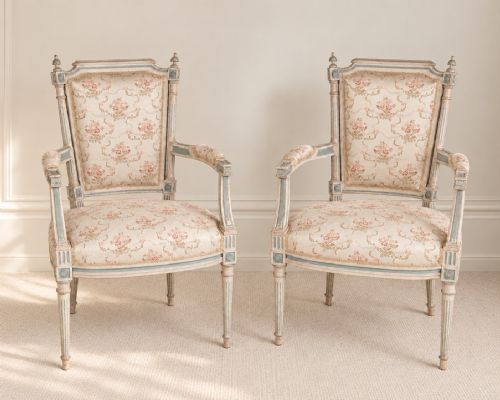
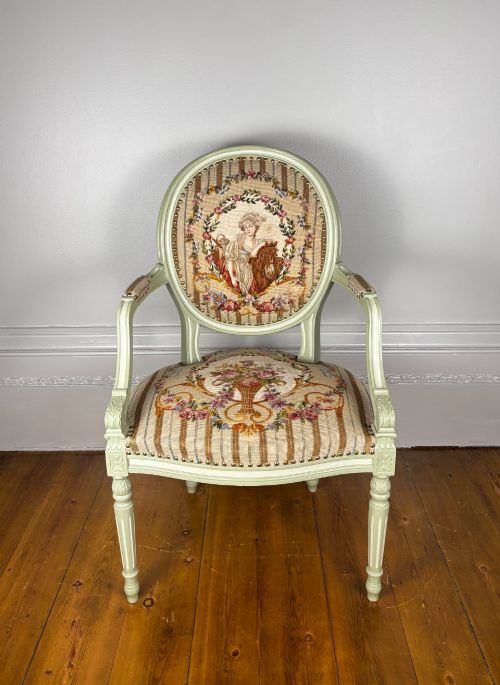
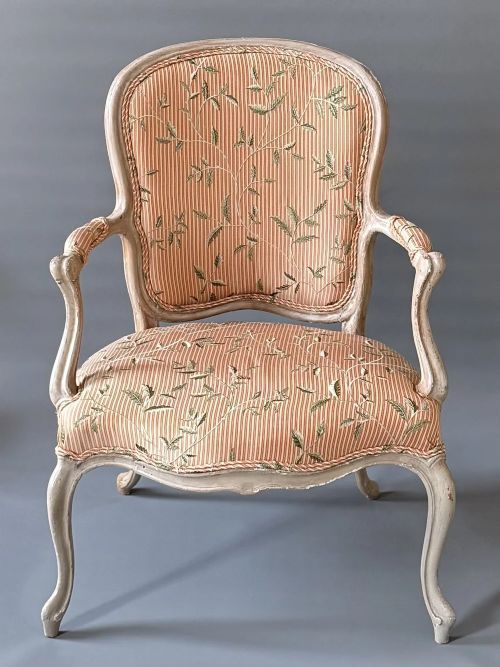
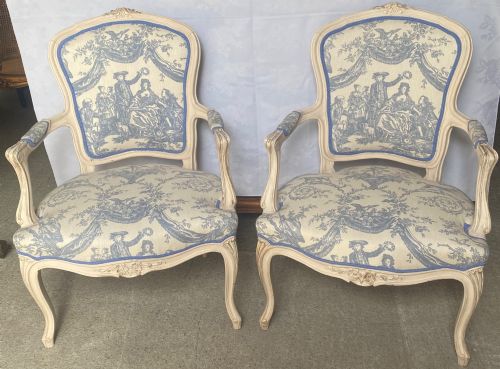
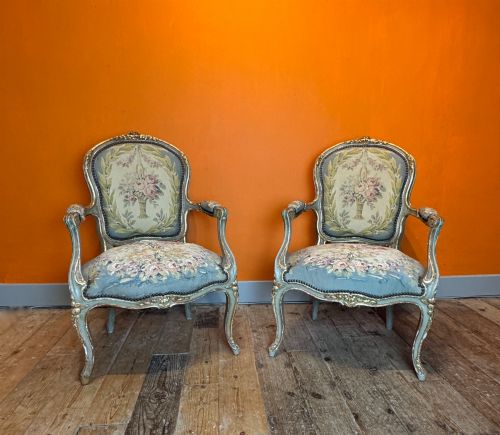
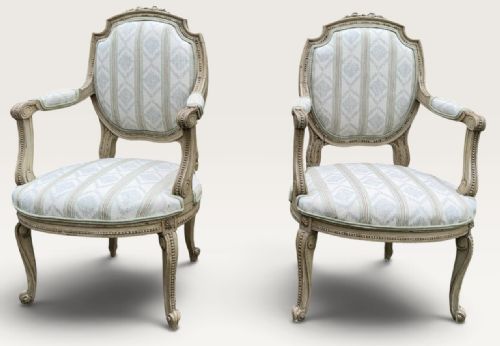
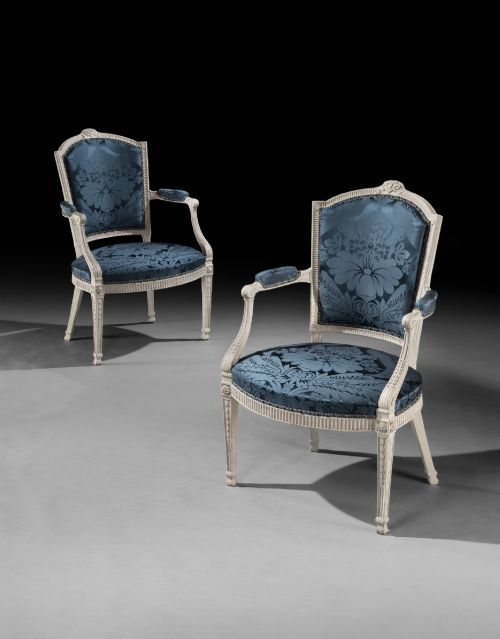
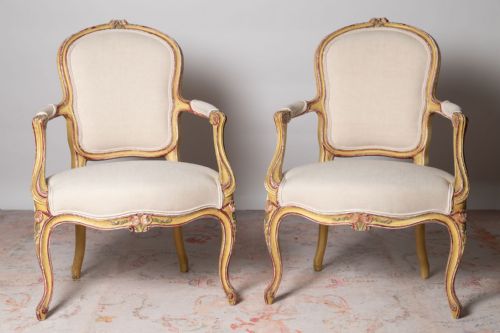
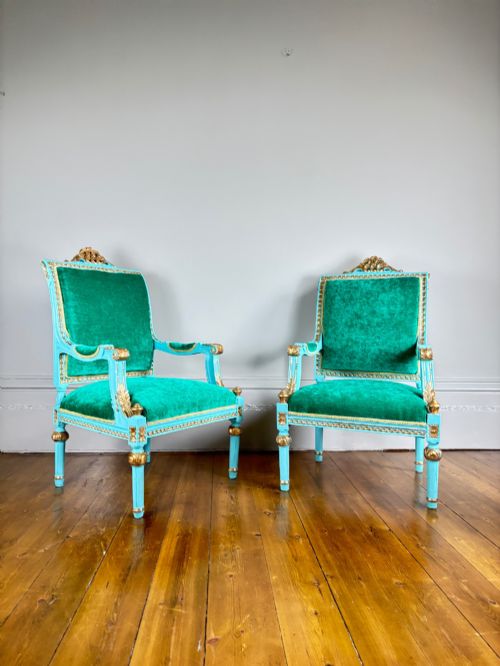
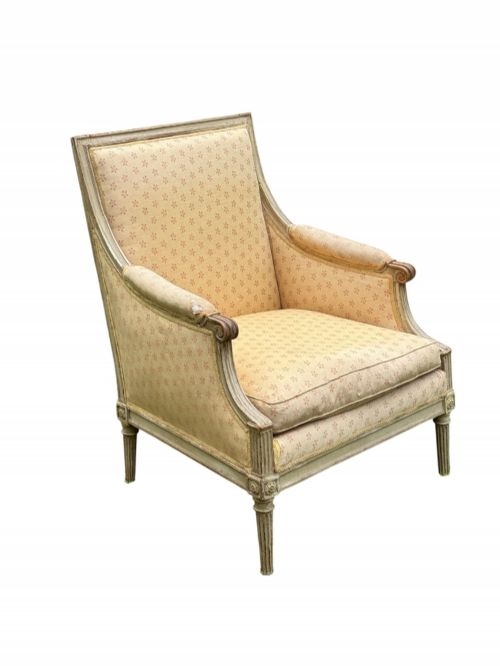
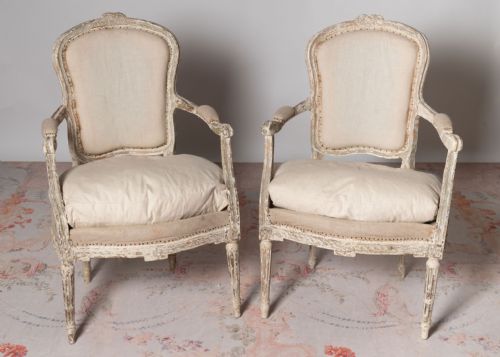
When searching for painted french fauteuils, buyers encounter open-armed seating structures spanning the eighteenth, nineteenth, and early twentieth centuries. These forms reflect the prevailing taste of their respective eras, incorporating designs associated with Louis reigns alongside provincial interpretations.
The pieces appearing on this page range from grand salon armchairs to smaller occasional seats and settees. Most examples originate from the nineteenth century or around nineteen hundred, carrying the decorative paint finishes and upholstery styles recorded across the archive.
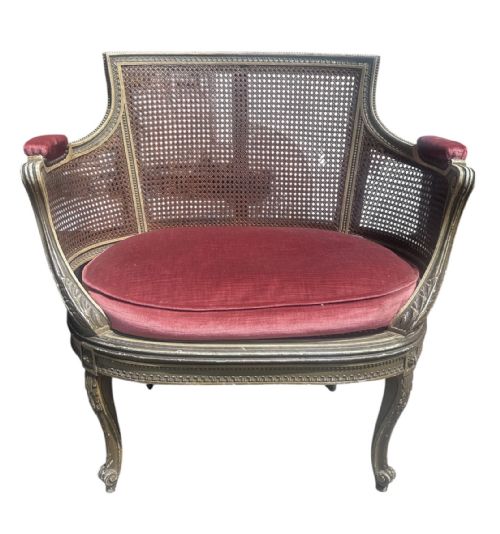
Makers and designers of these periods utilised classical proportions, shaping wooden frames to accommodate upholstered panels, needlework, or cane work. Buyers find both single armchairs and matched pairs designed for formal rooms.
How they were made
Makers constructed these frames predominantly from beech and walnut, shaping the timber through carving before applying surface treatments. Gesso and paint layers built up the decorative finish, sometimes combined with parcel gilding to highlight carved details.
Upholstery methods involved securing fabric, velvet, linen, or tapestry over padded elements, often incorporating needlework panels or woven cane. Original paint finishes remained intact on many surviving frames, while others received later decorative coatings.
Painted French Fauteuils Retail Price Guide 2026
Typical asking prices for painted french fauteuils among the pieces listed under this phrase on Sellingantiques today, from the lower quarter to the upper quarter. They describe what is for sale here now, not the wider market.
Periods represented span from the eighteenth century through the Edwardian era and nineteen thirty.
What varies in quality
Quality rests upon the crispness of the wood carving and the integrity of the structural joinery within the frame. Pieces displaying refined proportions and deeply sculpted ornamentation separate themselves from simpler provincial iterations.
The preservation of original surface paint and the authenticity of period upholstery contribute significantly to the character of each armchair. Surviving needlework panels and undisturbed painted layers indicate higher craftsmanship.
Henri Jacob
The Painted French Fauteuils Glossary
- Fauteuil
- An open-armed upholstered armchair with a wooden frame. These chairs typically feature exposed carved woodwork and padded armrests.
- Gesso
- A plaster-based mixture applied to wooden frames to create a smooth surface for painting or gilding. It allows for intricate relief details.
- Parcel Gilt
- A technique where selective areas of a painted surface receive gold leaf. This method highlights specific carved motifs on the wooden frame.
- Caning
- Woven rattan material used for chair seats and backs. It provides a lightweight, resilient panel alternative to solid wood or upholstery.
- Tapestry
- Heavy hand-woven or machine-woven textile featuring pictorial designs. These durable fabrics frequently appear on eighteenth and nineteenth-century seating.
Painted French Fauteuils: Frequently Asked Questions
What is a fauteuil?
A fauteuil is an open-arm upholstered chair originating in France, designed with exposed wooden framing rather than fully upholstered sides.
These seats gained popularity during the seventeenth and eighteenth centuries for use in formal salons and drawing rooms.
Are painted finishes original?
Many surviving pieces retain their original layered paint surfaces, while others were redecorated during subsequent interior redesigns.
Examination of the paint layers under magnification helps determine whether the finish dates to the construction period or a later century.
How should I care for antique upholstery?
Protect antique textiles and needlework from direct sunlight to prevent fading and fibre degradation over time.
Gentle surface cleaning by a specialist preserves delicate tapestry and needlepoint panels without damaging historic weaves.