



Painted Farmhouse Bench
A painted farmhouse bench brings honest regional character to a room, offering everyday utility built from plain timber.
Painted Farmhouse Bench
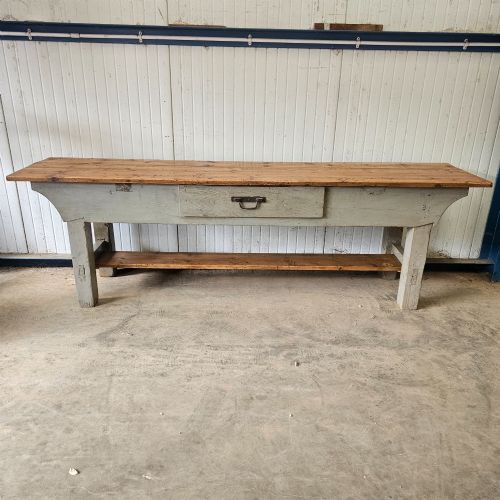
The versions most commonly met on this page date from the nineteenth century, including specific regional examples from English, French, and Austrian workshops. They combine simple wooden construction with traditional painted finishes developed to protect the timber.
Makers built these items from accessible local woods to serve hardworking households, resulting in unpretentious forms that suit modern hallways and kitchens. Their straightforward design reflects the utilitarian needs of rural life.
How they were made
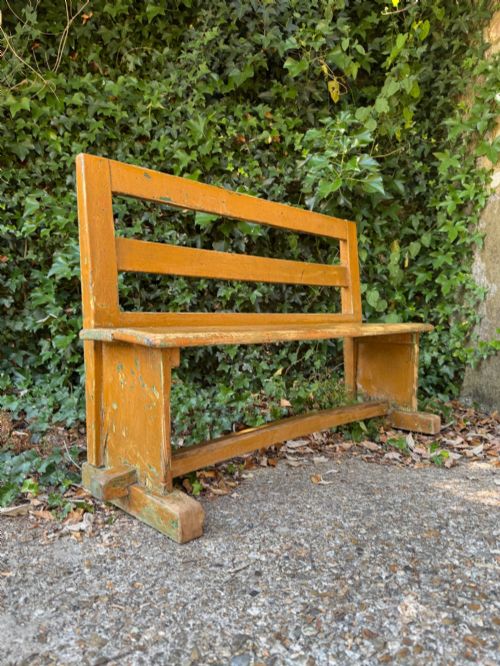
Makers utilised softwood and general pine timber, constructing straightforward frames reinforced with iron fixings where necessary. Scratch built and traditional joinery methods formed the structural foundation of each seat.
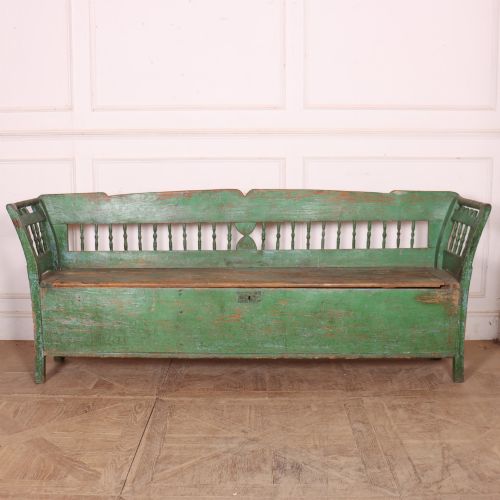
Surfaces received layers of paint, often in distinct hues like distressed green or original regional colours, applied to seal the wood. This finish endured heavy daily wear while defining the visual identity of the piece.
Painted Farmhouse Bench Retail Price Guide 2026
Typical asking prices for painted farmhouse bench among the pieces listed under this phrase on Sellingantiques today, from the lower quarter to the upper quarter. They describe what is for sale here now, not the wider market.
Some Austrian settles wear their original paint like a badge of honour, having survived generations of mountain folk slamming their boots nearby.
What varies in quality
The integrity of the original paint layer separates standard utility pieces from those retaining historic surface character. Original colour and honest patination indicate how well the bench survived decades of domestic use.
Structural proportions and the cleverness of regional joinery dictate the overall standard of the object. Pieces displaying deliberate craftsmanship in their framing hold greater interest than simple utilitarian repairs.
The Painted Farmhouse Bench Glossary
- Pine
- A common softwood utilised extensively in nineteenth-century rural furniture making. It provides a lightweight yet durable structural timber.
- Settle
- A wooden bench featuring a high back and often solid sides designed to block drafts in older homes. These forms offer enclosed seating.
- Scratch built
- A term describing furniture made independently outside of rigid guild workshops, relying on local ingenuity. Such pieces display idiosyncratic construction details.
- Distressed green
- A painted surface finish showing wear and weathering acquired through long use. This appearance highlights the age of the timber beneath.
Painted Farmhouse Bench: Frequently Asked Questions
Where should I put a painted farmhouse bench?
These benches suit narrow hallways, large kitchens, and boot rooms where practical seating is necessary. Their long profiles make them useful along dining tables or against plain walls.
Ensure the placement allows the painted surface to remain clear of dampness and direct heat sources. This protects the historic timber and the integrity of the finish.
Are these benches comfortable to sit on?
Nineteenth-century country benches were designed for utilitarian durability rather than modern ergonomic luxury. High back settles offer good protection against drafts.
Adding a simple loose cushion can improve comfort for extended seating use. The primary purpose remains sturdy and reliable function.
How do I tell regional styles apart?
Austrian and Alpine examples often feature folk art motifs and specific painted pigments distinct from English country pieces. French provincial versions display characteristic proportions and regional joinery habits.
Examining the construction methods and the palette of the paint helps identify the geographic origin. Each tradition reflects the local materials and aesthetic preferences of its makers.