



Painted Earthenware Dog Figurines
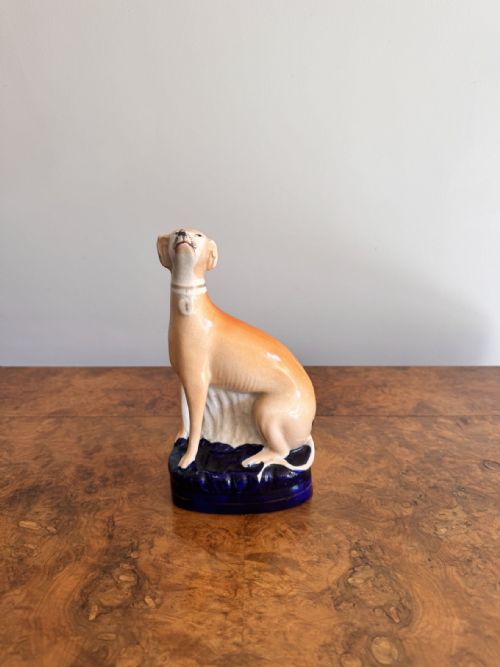
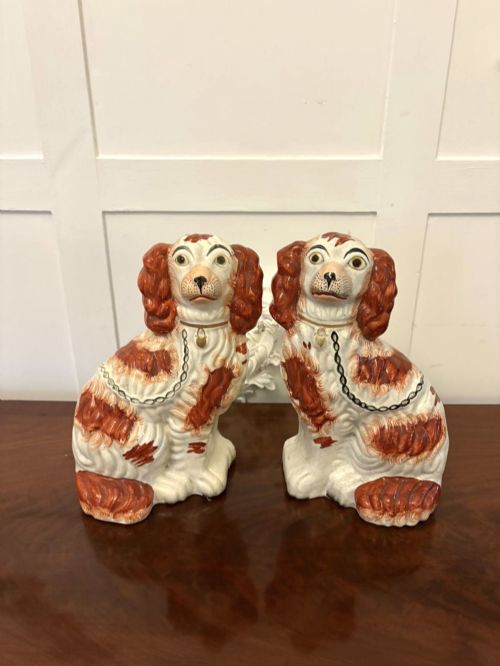
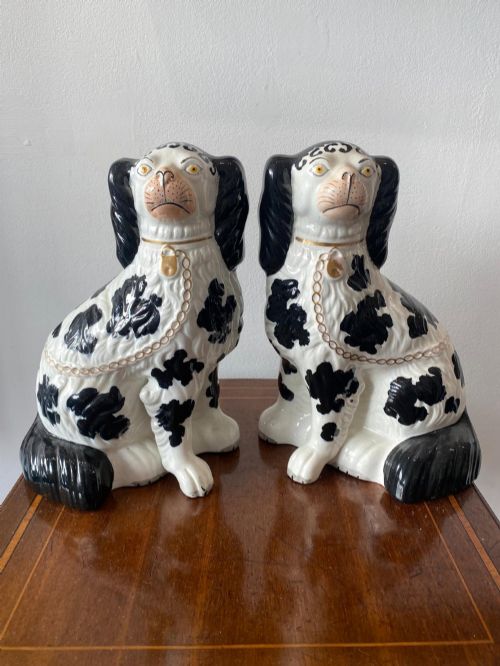
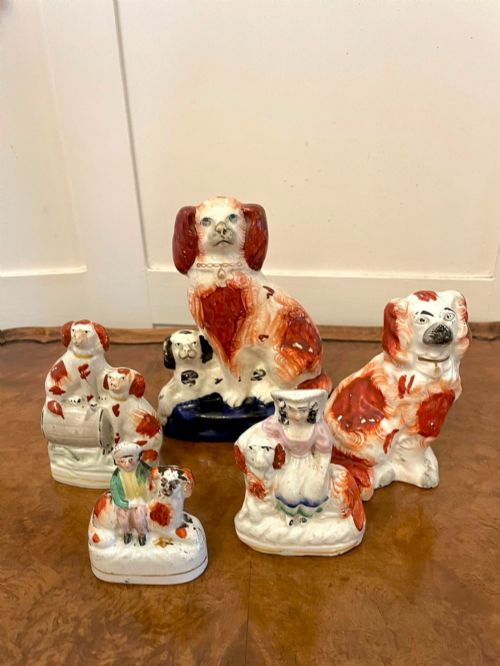
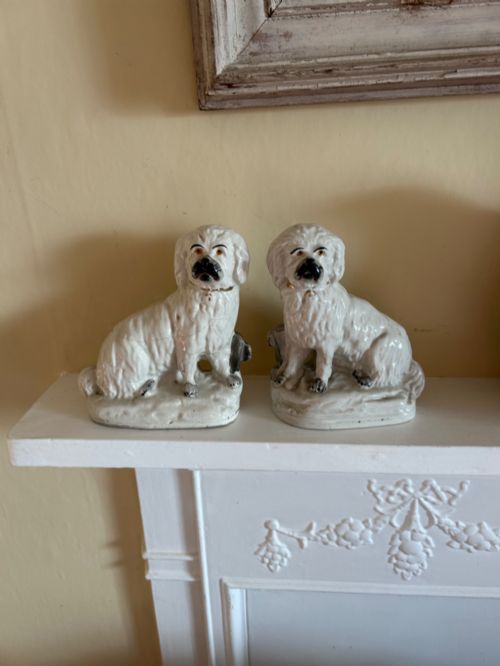
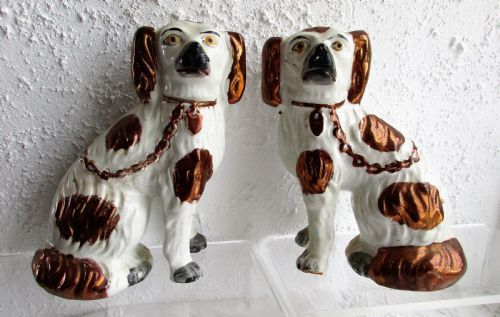
These painted earthenware dog figurines bring nineteenth century Staffordshire spaniels and terriers straight to the mantelpiece.
Painted Earthenware Dog Figurines
Painted earthenware dog figurines represent Victorian pottery output, focusing heavily on spaniels, Maltese terriers, pugs, and dalmatians made across the nineteenth century. Buyers searching for painted earthenware dog figurines will encounter seated pairs and single decorative figures originating from the 1860s through to 1900.
The selection on this page centres primarily on Staffordshire ceramic figures and pottery spaniels, often styled as comforter dogs meant for domestic display. Collectors find both matched pairs and larger individual sculptures spanning various decades of the Victorian era.
Materials and production methods
Makers shaped these painted earthenware dog figurines from ceramic earthenware, adding surface detail through glaze, enamel paint, and occasional gilt highlights. Some pieces incorporate copper lustre finishes or terracotta bodies to achieve distinct colouration.
Production relied on traditional pottery moulding techniques before artists applied hand-painted enamel decoration. This combination of ceramic shaping and manual painting creates the varied appearances seen across nineteenth century examples.
Painted Earthenware Dog Figurines Retail Price Guide 2026
Typical asking prices for painted earthenware dog figurines among the pieces listed under this phrase on Sellingantiques today, from the lower quarter to the upper quarter. They describe what is for sale here now, not the wider market.
The listings on this site span multiple decades from 1860 to 1900, entirely within the Victorian period.
Distinctions in quality
The presence of matching pairs, distinct colour varieties such as red and white, and unusual breeds like dalmatians or Maltese terriers also elevate individual pieces within the range.
Bernard Bloch Austria
The Painted Earthenware Dog Figurines Glossary
- Earthenware
- A porous type of pottery fired at lower temperatures, commonly used for nineteenth century Staffordshire figures. It forms the ceramic body underneath the glaze and enamel paint.
- Comforter spaniel
- A popular nineteenth century pottery figure type modelled after the king Charles spaniel. These dogs sat on hearths and mantelpieces in Victorian homes.
- Enamel paint
- A glossy, opaque paint applied over the fired ceramic body to add colour to the figures. It creates the distinct red, white, and black markings on the dogs.
- Copper lustre
- A metallic glaze technique producing a shiny, coppery sheen on pottery surfaces. It appears on select decorative objects from the period.
- Terracotta
- A reddish-brown unglazed or glazed fired clay used for sculptural ceramic figures. This material provides a heavier, dense alternative to standard earthenware.
Painted Earthenware Dog Figurines: Frequently Asked Questions
What are Staffordshire dogs?
Staffordshire dogs are ceramic animal figurines produced in the English pottery district during the Victorian period. They typically depict seated spaniels intended as decorative ornaments.
Potters manufactured these figures in pairs to flank the fireplace or sit upon living room mantelpieces.
How old are these figurines?
The pieces span the nineteenth century, with specific dates clustering around the 1860s, 1880s, and 1900. Victorian examples form the bulk of the available selection.
Manufacturing dates draw upon stylistic evidence and period production methods recorded in the listings.
Why were they called comforter spaniels?
Comforter spaniels refer to nineteenth century ceramic figures modelled after lapdogs kept by Victorian owners. The pottery versions served as domestic companions for the hearth.
These decorative objects brought the presence of household pets into parlours across England.
What breeds appear in the collection?
Spaniels dominate the selections, alongside Maltese terriers, pugs, and dalmatians. Red and white colourways are particularly common among the spaniel figures.
Different breeds reflect the popularity of specific household pets during the Victorian era.