
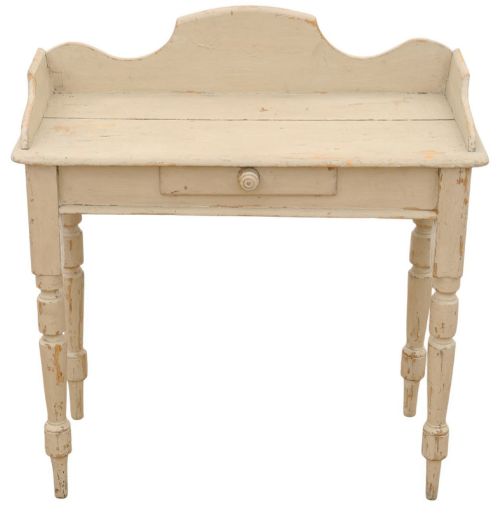
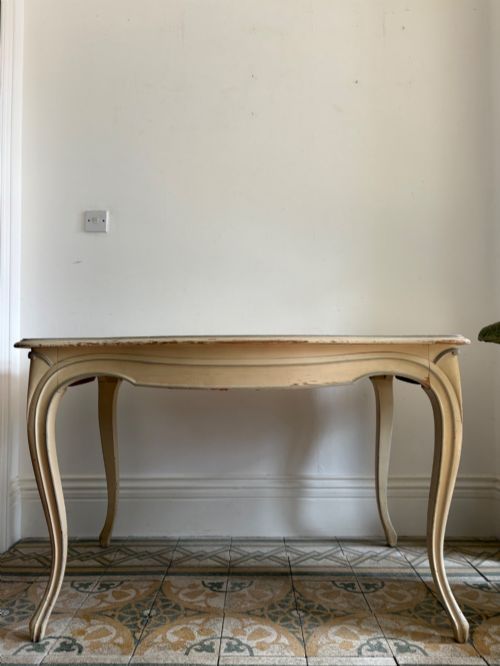
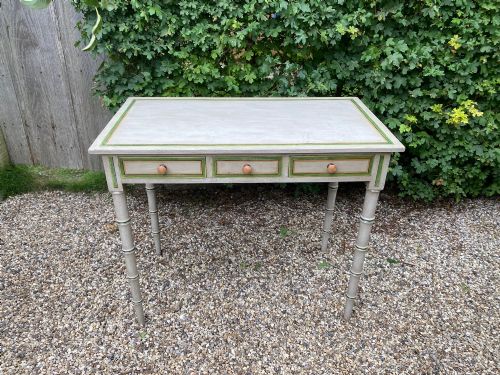
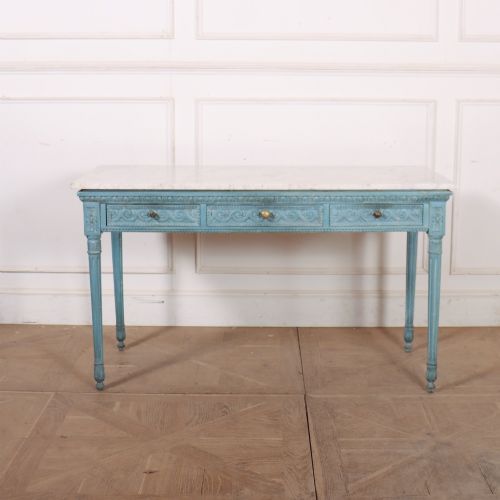
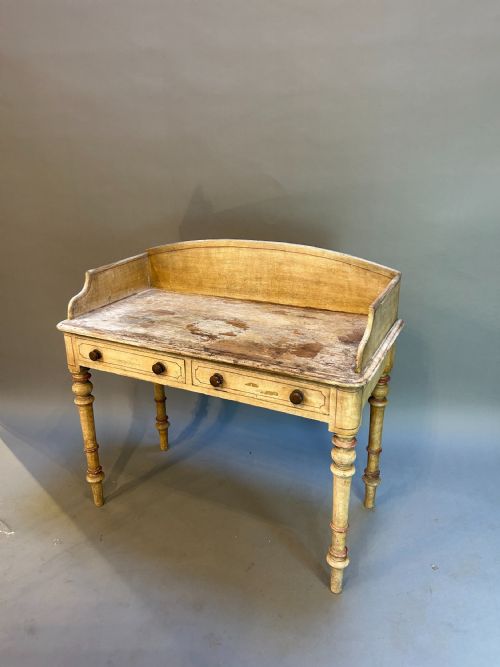

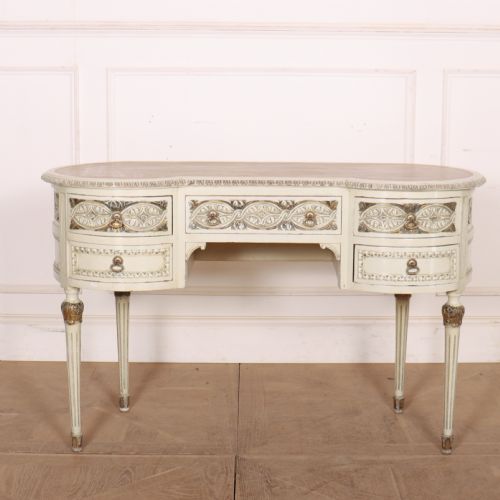
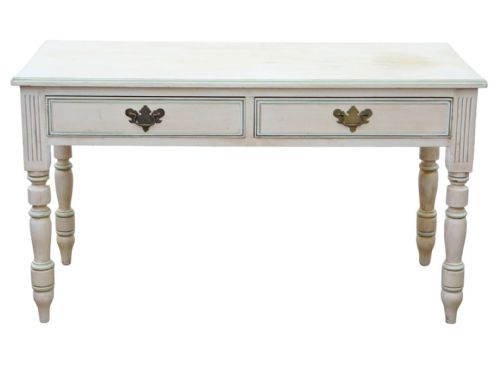


Painted Dressing Table Desk
A painted dressing table desk brings dual-purpose surface space and decorative colour to a room, combining the practicality of a writing desk with the vanity of a dressing station.
Painted Dressing Table Desk
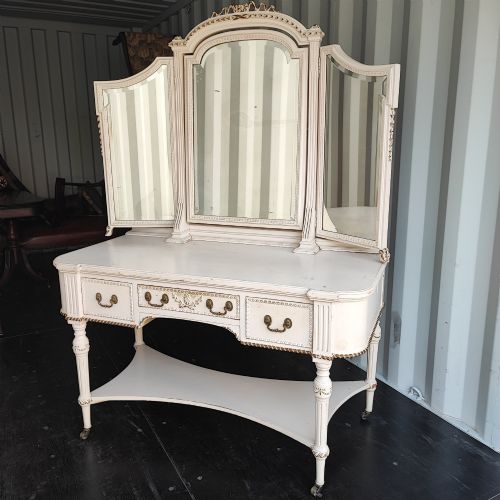
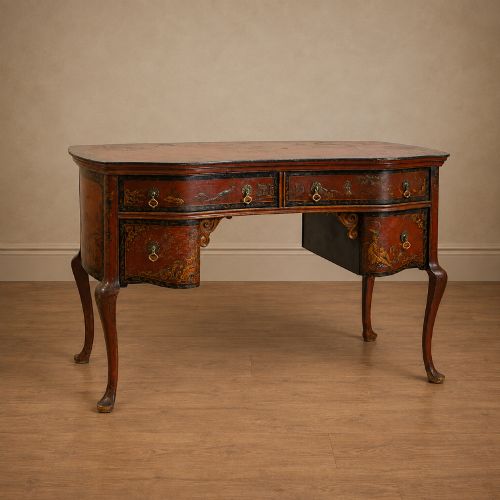
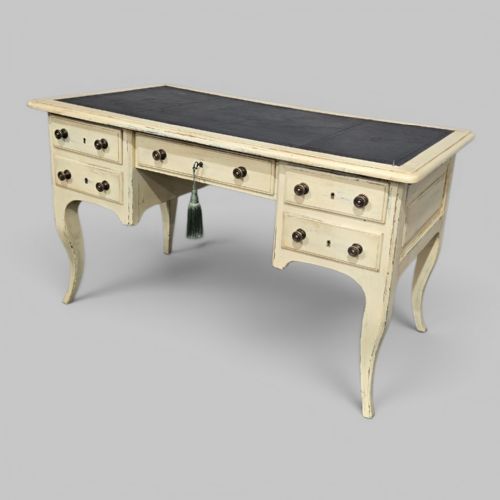
A painted dressing table desk serves as a versatile piece of furniture that functions equally well for correspondence and grooming. The pieces appearing under this search phrase span forms from simple side tables and kneehole desks to kidney-shaped dressing tables with mirrors and drawers.
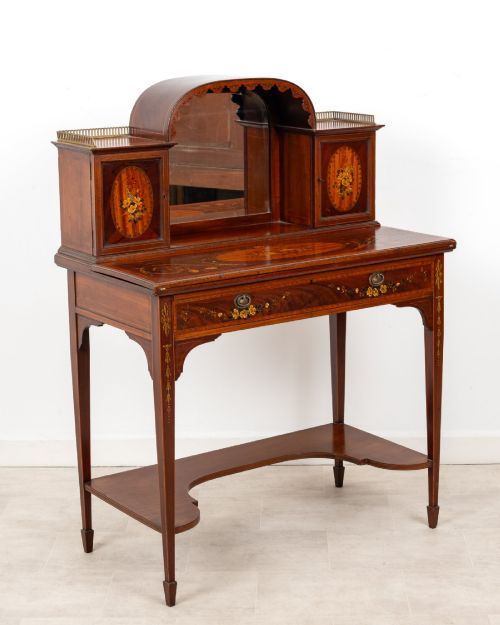
Surviving examples range across periods from the Georgian era through the Victorian period and into the early twentieth century. Buyers encounter styles such as French Provincial, English Country, Regency, Chinoiserie, and Edwardian satinwood variations.
The domestic origins of these items vary from English country houses to French chateaux, bringing distinct regional decorative traditions to the painted surfaces. Many pieces integrate drawers or superstructure elements like triple mirrors to aid their dual function.
How they were made
Carpenters utilised native and imported timber foundations including pine, mahogany, satinwood, birch, and walnut before applying decorative paint finishes. Construction techniques involve traditional joinery for drawers and frames, paired with hand-painted, lacquered, or stencilled surface decoration.
Metal hardware such as brass embellishments frequently accents the woodwork, while specialised insets like suede provide dedicated writing surfaces. Surface treatments range from cream and grey painted schemes to elaborate Chinoiserie lacquer and faux bamboo detailing.
Listings feature pieces spanning from the Georgian and Regency periods through the Victorian era up to the 1930s.
What varies in quality
The distinction between standard examples and top-tier items rests upon the execution of the decorative surface and the integrity of the underlying timber. Hand-painted geometric motifs, detailed Chinoiserie lacquer, and original painted schemes elevate a piece well above plain utilitarian conversions.
Design sophistication also dictates standing, with kidney-shaped configurations, serpentine fronts, and integrated mirrored superstructures marking out finer workshops. The survival of original brass mounts and untouched period paint surfaces adds considerably to the standing of any desk or dressing table.
Maples of London and Paris
The Painted Dressing Table Desk Glossary
- Chinoiserie
- European decorative style employing Chinese-inspired motifs and lacquering techniques. It often appears on Victorian and early twentieth-century dressing tables.
- Superstructure
- An upper structure attached to the main desk or table surface, such as a mirrored dressing table attachment. These additions held looking glasses and small cosmetic drawers.
- Kneehole desk
- A freestanding desk featuring a central recess for the user's legs, flanked by pedestals of drawers. They provide symmetrical storage beneath the writing surface.
- Satinwood
- A durable hardwood with a lustrous, yellow-gold sheen used extensively in fine Edwardian and Georgian furniture. It frequently served as a pale canvas for delicate hand-painted decoration.
- Lowboy
- A small eighteenth-century English table with drawers, often utilised as a dressing table or side table. These compact forms prefigure later kneehole and vanity designs.
Painted Dressing Table Desk: Frequently Asked Questions
What is a painted dressing table desk?
A painted dressing table desk is a hybrid piece of furniture designed to accommodate both writing and grooming tasks. These items combine the drawers and surface area of a desk with the decorative paint finishes typical of vanity furniture.
Such pieces often feature integrated mirrors, kneehole recesses, or specialised writing inserts like suede. They bridge the gap between functional office furniture and decorative bedroom or boudoir furnishings.
How do I date an antique painted desk?
Dating requires examining the underlying wood, the style of the construction, and the nature of the paint finish itself. Georgian and Regency pieces show different proportions and joinery compared to Victorian or Edwardian examples.
Design motifs also offer clear clues, such as the distinct Chinoiserie lacquer of the late nineteenth century or the satinwood inlays favoured during the Edwardian era. Hardware like brass handles and escutcheons further helps anchor a piece to a specific decade.
Were these originally painted or decorated later?
Surviving pieces include both items with original period paint schemes and older furniture that received later decorative painting. Original finishes often display authentic wear and craquelure that match the age of the timber underneath.
Some pieces from the Georgian period onward were decorated later in their history to suit changing aesthetic tastes. Examining the interface between the paint layers and the underlying wood helps determine whether a finish is original to the piece.
Where should I place a painted dressing table desk?
These versatile pieces suit bedrooms, dressing rooms, or studies where both surface area and visual charm are required. Their decorative painted finishes allow them to function as focal points against neutral walls or within eclectic interior schemes.
Desks featuring finished backs can stand freely in the centre of a room rather than being pushed against a wall. When paired with a matching chair, they create a functional station for writing or personal grooming.