



Painted Desk Clock
A painted desk clock brings together precision engineering and delicate hand-crafted artistry to anchor any writing surface or mantelpiece.
Painted Desk Clock
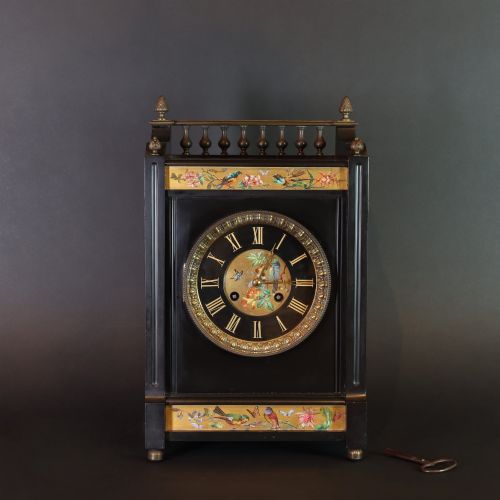
A painted desk clock primarily takes the form of a mantel clock or small timepiece, with many examples originating from nineteenth-century France and twentieth-century workshops. These pieces frequently combine timekeeping with decorative arts, functioning as miniature ornaments as much as practical instruments.
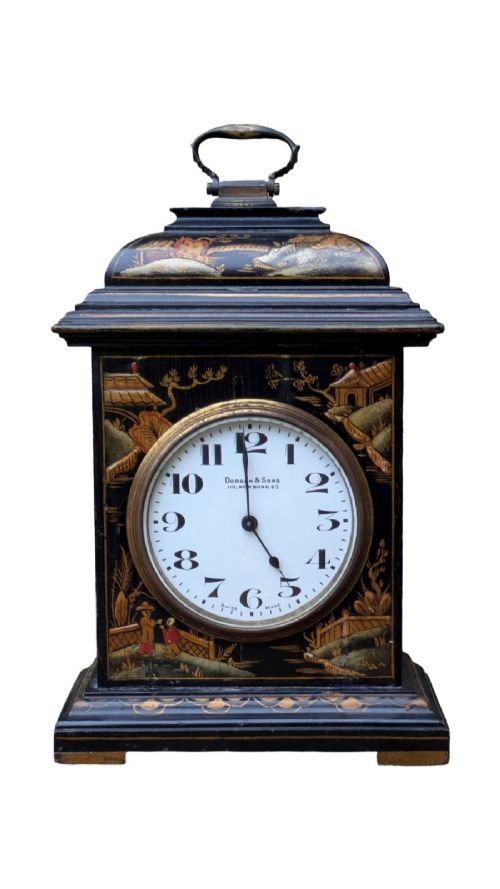
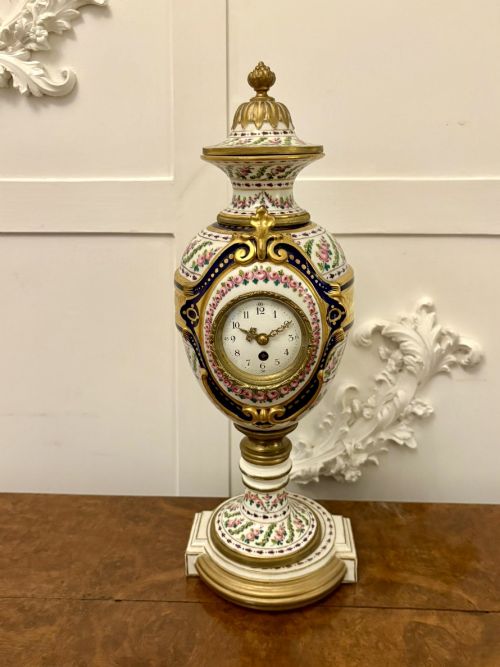
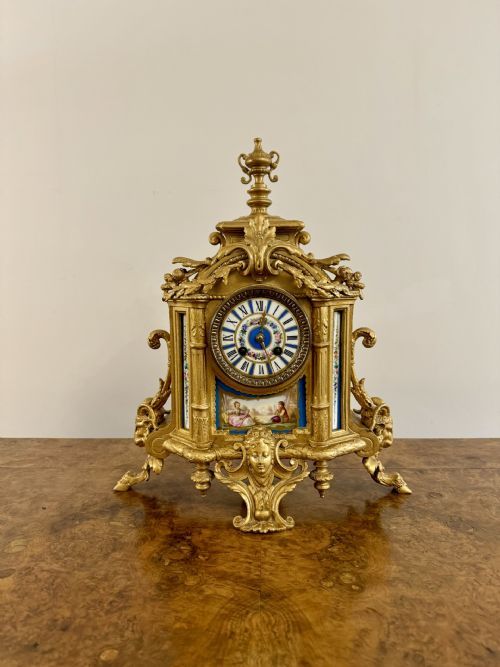
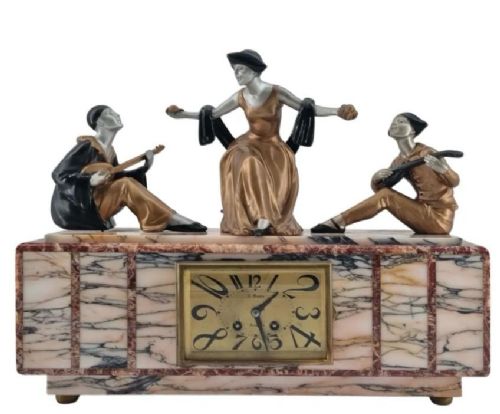
The selection ranges from robust Victorian porcelain urn-shaped clocks to slender Edwardian easel clocks and later Art Deco figural pieces. Makers utilised materials like gilt bronze, porcelain, and glass to house movements intended for desks, boudoirs, and mantelpieces.
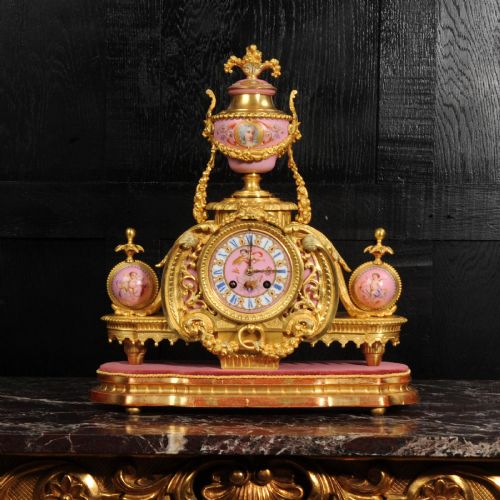
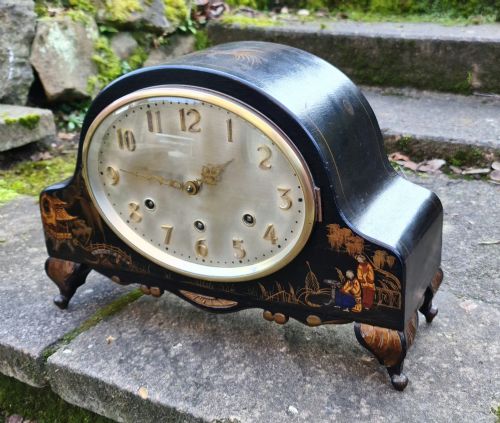
Buyers encounter distinct stylistic revivals, particularly French Rococo and Louis XVI styles, alongside Chinoiserie lacquered finishes and minimalist Art Deco designs. Each piece reflects the interior taste of its decade, spanning from the mid-nineteenth century through the 1930s.
Materials and construction
Metalworking formed the structural core for many pieces, utilising ormolu, gilt brass, and bronze to create ornate cases and plinths. Artisans cast these metals into intricate scrollwork and architectural frames, often finishing them with fire gilding.
Porcelain and enamel served as the primary canvases for hand-painted details, seen on Sèvres-style panels, dials, and ceramic urn bodies. Miniature painting required steady brushwork with mineral pigments before firing, while glass and opalescent panels protected delicate dials.
Painted Desk Clock Retail Price Guide 2026
Typical asking prices for painted desk clock among the pieces listed under this phrase on Sellingantiques today, from the lower quarter to the upper quarter. They describe what is for sale here now, not the wider market.
Some nineteenth-century desk clocks feature miniature painted clowns and romantic figures frozen mid-dance beside the dial.
Determining quality
Quality rests significantly on the precision of the hand-painted decoration and the crispness of the metal casting. Finer pieces display subtle tonal blending in miniature portraits or floral panels, whereas lesser examples rely on stencilled or hurried brushwork.
The integration of the movement within its housing also defines standard. Superior pieces coordinate the clockmaker's mechanical output with heavy ormolu or porcelain mounts that fit flush and hold their alignment over decades.
Achille Brocot·Sega·Rene Lalique·Marti
The Painted Desk Clock Glossary
- Ormolu
- A gilded bronze technique popular in French clockmaking. It provides a rich golden surface finish that resists tarnish.
- Champlevé
- An enamelling technique where troughs are dug into a metal surface and filled with vitreous enamel before firing. This creates colourful decorative patterns across clock bezels and frames.
- Crystal regulator
- A mantel clock housed in a glass-panelled brass frame that allows light to pass through the movement. These pieces gained popularity during the late nineteenth and early twentieth centuries.
- Strut clock
- A portable timepiece featuring a hinged prop on the back for desk or table display. They are frequently made in miniature formats with enamel or silver mountings.
- Sevres
- A type of porcelain associated with French royal manufactories, frequently painted with delicate floral motifs or figures. It appears on numerous nineteenth-century clock panels and dials.
Painted Desk Clock: Frequently Asked Questions
How do I wind a painted desk clock?
Most mechanical desk clocks utilise an eight-day movement requiring a specialised key inserted into the dial holes. Turn the key gently until resistance signals the mainspring is fully wound.
Avoid over-winding, as this can strain historical springs. Ensure the clock sits on a level surface so the pendulum or balance wheel ticks evenly.
Where should I place a painted desk clock?
These clocks suit studies, drawing rooms, and dressing tables where their painted porcelain and gilt mounts are easily appreciated. Keep them away from direct sunlight, which can fade hand-painted enamel and delicate lacquered finishes over time.
Maintain a stable room temperature to protect antique wood and metal components from humidity shifts. A secure mantelpiece or heavy desk prevents accidental knocks to delicate glass panels.
How do I date an antique desk clock?
Dating relies on examining the combination of decorative style, movement signatures, and case materials. Pieces reflecting Rococo Revival or heavy Victorian porcelain generally point to the mid-to-late nineteenth century.
Art Deco geometric forms and Chinoiserie lacquer indicate a shift towards the 1920s and 1930s. Maker stamps on the backplate often confirm the active period of the workshop.
What is the difference between a timepiece and a clock?
In horological terms, a timepiece is a clock that indicates the time without a striking mechanism for hours or quarters. Many smaller boudoir and desk pieces were built as simple timepieces to avoid disruptive chimes.
Clocks with larger movements often include bells or gongs. Both share similar hand-painted dials and decorative exterior housings.