



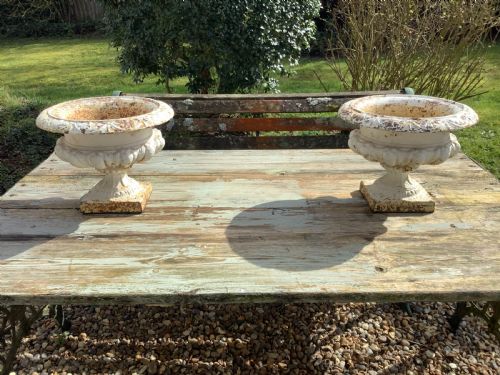


Painted Cast Iron Urns
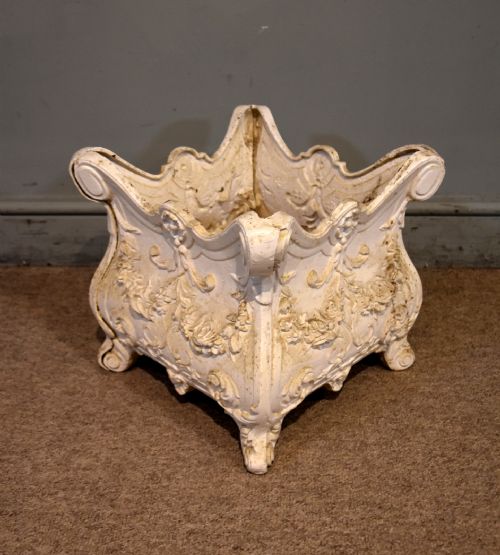
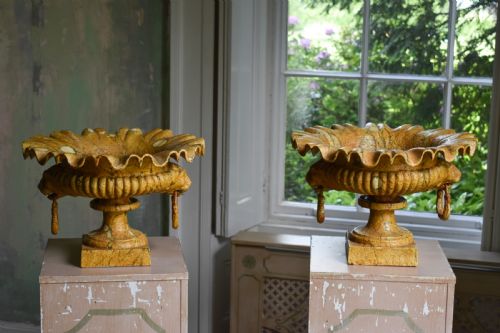
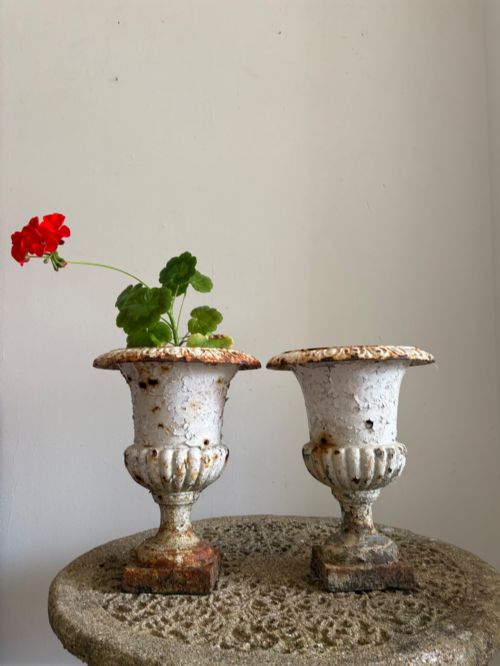
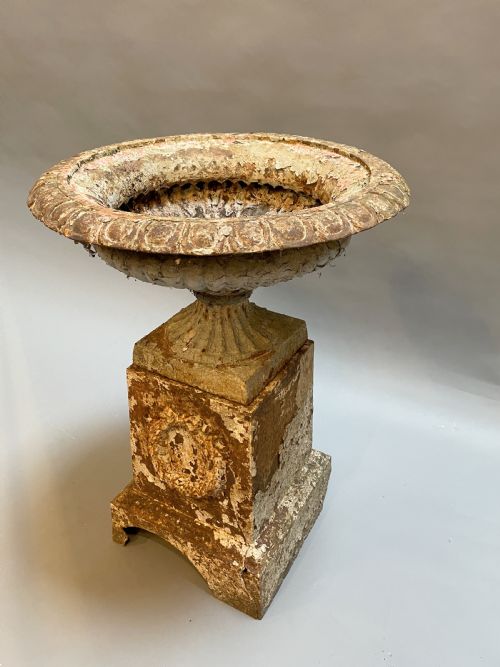
These painted cast iron urns bring classical presence to a terrace or garden through durable metal forms finished with historic paint.
Painted Cast Iron Urns
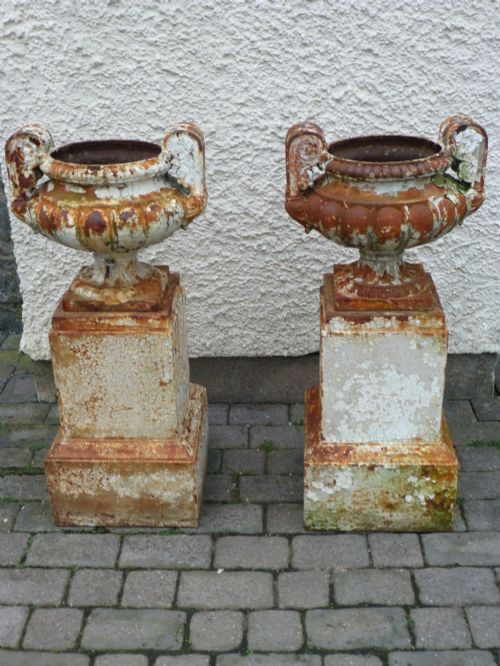
The pieces on this page span the nineteenth century, the Victorian era, and the early twentieth century, originating from British foundries and French workshops. You are most likely to meet pairs of garden urns on pedestals or plinths, often bearing weathered paint surfaces.
Judging Quality
Quality rests in the crispness of the cast ornamentation and the presence of original components like matching plinths and stands. Finer examples display sharply rendered classical details rather than softened or worn casting lines.
The integrity of the ironwork and the survival of early painted surfaces distinguish superior items. Complete pairs carrying matched proportions hold greater presence than single vessels.
Listings feature items spanning the nineteenth century through the 1940s, executed entirely in cast iron with painted finishes.
Falkirk Carron foundry·Coalbrookdale
The Painted Cast Iron Urns Glossary
- Campagna urn
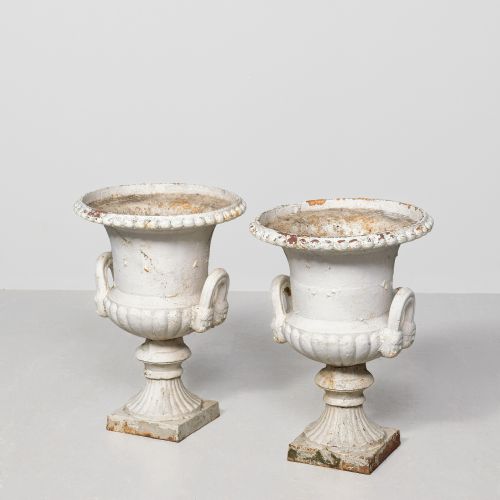
- A bell-shaped garden vessel with a flared rim, frequently mounted on a pedestal base. This classical silhouette originates from ancient Roman pottery forms.
- Gadrooned
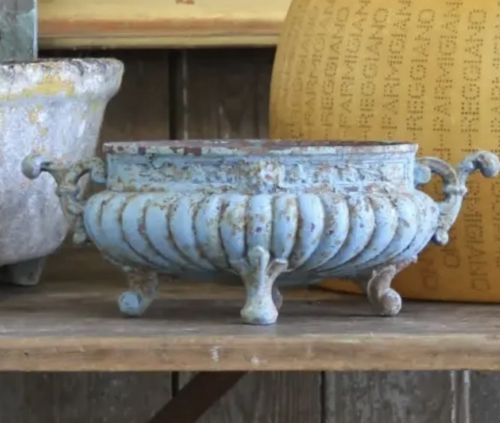
- Decorated with a series of convex vertical curves or flutes. This ornamental carving style appears frequently around the bowl of larger urns.
- Plinth
- A heavy rectangular or square base supporting an urn or pedestal. It elevates the vessel and provides architectural stability on the ground.
- Jardiniere
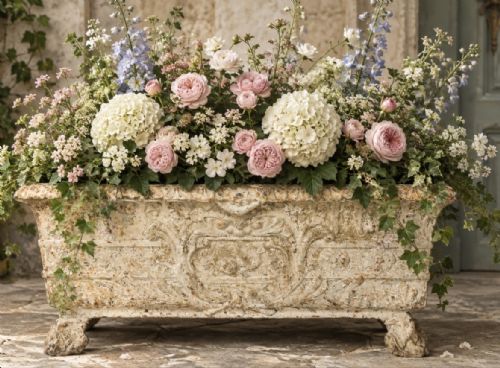
- An ornamental pot or stand designed to hold growing plants or flowers. These vessels often sit indoors or upon garden terraces.
- Acanthus leaf
- A classical foliage motif carved into stone or cast in metal. It decorates the lower bodies and handles of traditional garden vessels.
Painted Cast Iron Urns: Frequently Asked Questions
Can these urns stay outdoors year-round?
Cast iron endures winter weather well because the heavy metal resists frost cracking when properly drained. Placing them on gravel or stone prevents moisture retention at the base.
Over time, exposure causes the painted surfaces to weather further, which many collectors prefer for an authentic garden patina.
How do I spot a Victorian piece?
Victorian examples typically display deep casting definition and heavy proportions, often featuring classical motifs like acanthus leaves or gadrooning. Foundry marks and original plinths can also point toward nineteenth-century manufacture.
Weight serves as another indicator, as nineteenth-century pieces tend to be substantially heavier than twentieth-century reproductions.
Should I repaint an original surface?
Preserving original distressed paint maintains the historic character and visual depth accumulated over generations. Many buyers actively seek out pieces showing weathered layers of old paint.
If rust threatens the structural integrity of the iron, touching up bare spots with a protective coating helps preserve the metal.