

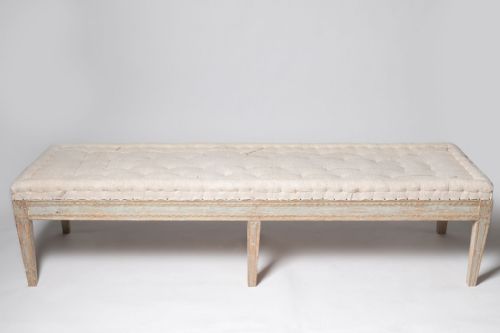

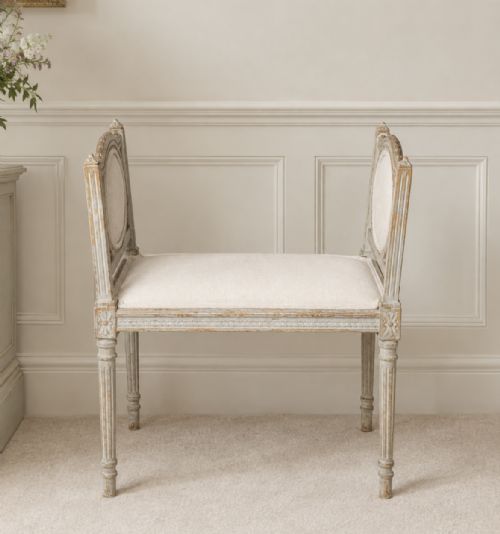


Painted Bedroom Bench
A painted bedroom bench offers practical seating with historic character, most commonly found here as a French-influenced or Victorian piece.
Painted Bedroom Bench
A painted bedroom bench encompasses various seating forms such as window seats, stools, and small settees designed for domestic spaces. These items often feature painted wood finishes alongside cane, fabric, or linen upholstery.
The selections available range from 19th-century French provincial and neoclassical styles to Edwardian and Victorian examples. Buyers frequently encounter variants like long stools, caned sofas, and carved window seats spanning several decades.
Originating predominantly from 19th-century and early 20th-century periods, these benches combine decorative woodwork with functional utility. The integration of painted surfaces defines the overall aesthetic across different regional traditions.
How they were made
Construction relies on traditional timbers such as beech and pine, shaped through hand carving and joinery techniques. Woodwork is then finished with paint layers to achieve the desired decorative appearance.
Seating areas incorporate woven cane work or are prepared for fabric and linen upholstery projects. These combined materials reflect the craftsmanship of periods ranging from the Regency era to the Edwardian years.
Painted Bedroom Bench Retail Price Guide 2026
Typical asking prices for painted bedroom bench among the pieces listed under this phrase on Sellingantiques today, from the lower quarter to the upper quarter. They describe what is for sale here now, not the wider market.
Materials recorded across the inventory include beech, pine, cane, linen, and painted wood finishes.
What varies in quality
The refinement of hand-carved decorative details separates standard utility items from more ambitious furniture. Superior examples display intricate profiling on the wooden frames and balanced proportions.
The integrity of the painted finish and the preservation of original canework or structural wood influence the standing of an individual bench. Pieces retaining harmonious painted surfaces demonstrate greater fidelity to their period style.
The Painted Bedroom Bench Glossary
- Cane
- Woven material made from peeled rattan used for seating panels. It provides a light, flexible surface common on period chairs and benches.
- Neoclassical
- A style drawing inspiration from classical antiquity, prominent in French and Edwardian revival pieces. It emphasises symmetry and restrained decorative carving.
- Window seat
- A long, narrow form of seating traditionally placed beneath a window. These are often upholstered or fitted with canework.
- Regency
- A British design period associated with the early 19th century. Furniture from this time often shows distinct classical influences.
Painted Bedroom Bench: Frequently Asked Questions
Where do people place a painted bedroom bench?
These benches sit comfortably at the foot of a bed, beneath a window, or along an empty hallway wall. Their slender proportions make them versatile for smaller domestic spaces.
They also function well in dressing rooms where extra surface space or temporary seating is required without blocking room flow.
How do I identify a French provincial style bench?
French provincial pieces typically display softer curves, painted wooden finishes, and subtle carved motifs inspired by Louis XVI or Régence designs. The woodwork often shows distressed paint layers accumulated over decades of use.
Craftsmanship on these items prioritises decorative charm alongside everyday utility.
What is the difference between a window seat and a stool?
A window seat is generally longer and designed specifically to span the width of a window recess or serve as a low settee. Stools are more compact and intended for movable, occasional seating.
Both forms frequently share similar painted wooden frames and caned or upholstered tops.
Are these benches suitable for daily seating?
Most period benches provide sturdy construction suitable for regular use, provided the wooden frame and joints remain stable. Caned panels and upholstered tops offer comfortable support for short periods.
Checking the underlying beech or pine structure ensures the piece handles everyday domestic demands safely.