






Padded Blanket Chest
A padded blanket chest offers practical storage with a cushioned top, bringing traditional textile work and solid timber together in one functional piece.
Padded Blanket Chest
A padded blanket chest combines the enclosed storage of a traditional trunk with the upholstered seat of a footstool or ottoman. Buyers searching for a padded blanket chest typically encounter Victorian and nineteenth-century examples alongside early twentieth-century pieces.
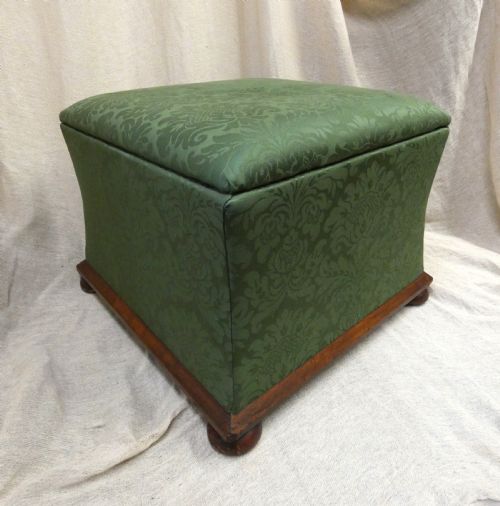
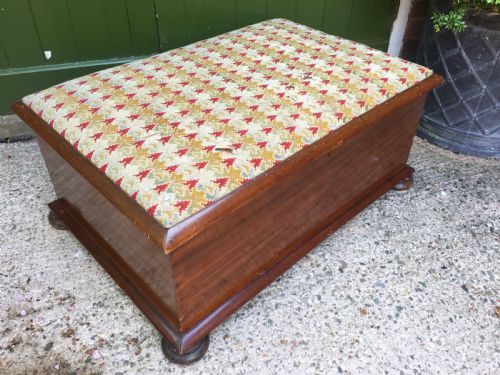
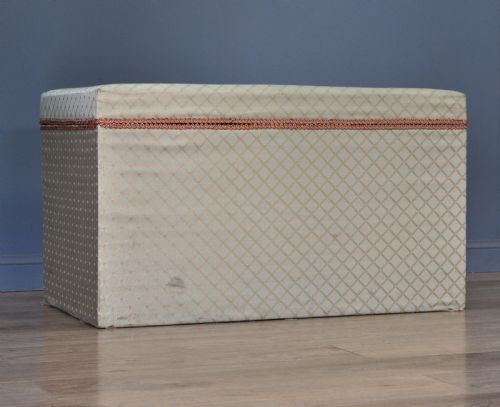
The surviving forms range from simple pine toy boxes and oak silver chests to finely framed mahogany, birch, and rosewood ottomans. Many feature hinged tops covered in leather, linen, damask, or gros-point needlework, often finished with deep buttoning.
Origins span the Regency era through to the 1930s, encompassing traditional English styles and Victorian revivals. These dual-purpose items served bedrooms and drawing rooms alike as seating and linen storage.
How they were made
Carpenters constructed the structural carcasses from hardwoods and softwoods including mahogany, rosewood, oak, birch, and pine. Iron bands reinforce utilitarian trunks, whilst formal furniture employs moulded timber frames and decorative foot details such as lions paw feet.
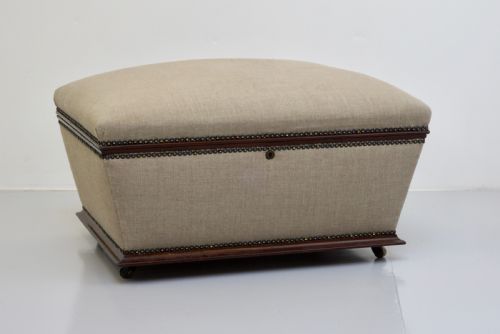
Upholstery techniques define the upper sections, utilising padded foundations beneath textile coverings of leather, damask, or needlework. Deep buttoning secures the internal stuffing and creates a textured surface on the hinged lids.
Padded Blanket Chest Retail Price Guide 2026
Typical asking prices for padded blanket chest among the pieces listed under this phrase on Sellingantiques today, from the lower quarter to the upper quarter. They describe what is for sale here now, not the wider market.
Current listings span the nineteenth and early twentieth centuries, incorporating periods from the Regency era through to 1930.
What varies in quality
The choice of primary timber sets the foundational grade of the piece, moving from utilitarian pine to select cuts of figured mahogany and rosewood. Finer examples display concave shaping, carved wooden details, and substantial brass hardware.
Upholstery execution separates standard domestic boxes from high-status items. The complexity of the textile covering, such as hand-dyed leather or original gros-point needlework, dictates the refinement of the finished seat.
The Padded Blanket Chest Glossary
- Ottoman
- A low upholstered seat or bench without a back or arms, often featuring a hinged lid for interior storage. This form serves as the primary seating variation for textile-topped blanket boxes.
- Gros-point
- A type of needlepoint embroidery worked on canvas with a heavy wool yarn, frequently seen on Victorian stool and ottoman tops. This tactile textile provides a durable and decorative surface for daily use.
- Deep buttoned
- An upholstery method where stitches pull the fabric and padding down into recessed points in a geometric pattern. It secures the internal stuffing while creating a cushioned, textured finish.
- Kist
- A traditional wooden storage chest or box, particularly associated with Scottish and northern English vernacular furniture. These robust containers frequently utilised pine or local hardwoods for household storage.
Padded Blanket Chest: Frequently Asked Questions
What is a padded blanket chest?
A padded blanket chest is a dual-purpose piece of furniture combining interior storage space with an upholstered seat on the lid. These items function as blanket boxes, ottomans, or footstools depending on their height and proportions.
Carpenters built the box section to hold textiles or household goods while the cushioned top provided a place to sit. They appear in various timbers and upholstered finishes spanning the nineteenth and early twentieth centuries.
How were these chests used historically?
Historically, these chests sat at the foot of beds or in reception rooms to store blankets, linens, and personal possessions. The cushioned top allowed the trunk to double as a convenient seat when dressing or resting.
Utilitarian versions stored heavy silver or household items, whilst refined mahogany and rosewood variations belonged in formal drawing rooms. Their combination of concealment and surface utility made them versatile household additions.
How do I identify a Victorian ottoman?
Victorian ottomans often feature dense timbers like mahogany, rosewood, or birch combined with elaborate upholstery details. Characteristics include deep buttoning, turned wooden legs, and occasionally carved motifs or shaped carcasses.
Mid-Victorian examples frequently incorporate needlework tops or leather upholstery alongside robust internal framing. Comparing the timber species and construction methods helps separate these nineteenth-century pieces from later revivals.
How should I care for antique upholstery and wood?
Maintenance involves protecting timber surfaces from direct sunlight and moisture while dusting regularly with a dry cloth. Leather requires occasional specialist conditioning to prevent drying, whilst fabric and needlework benefit from gentle surface cleaning.
Avoiding excessive weight on the hinged mechanisms helps preserve the original framework and joints. Keeping the chests in stable environmental conditions protects both the internal wood construction and the exterior textiles.