

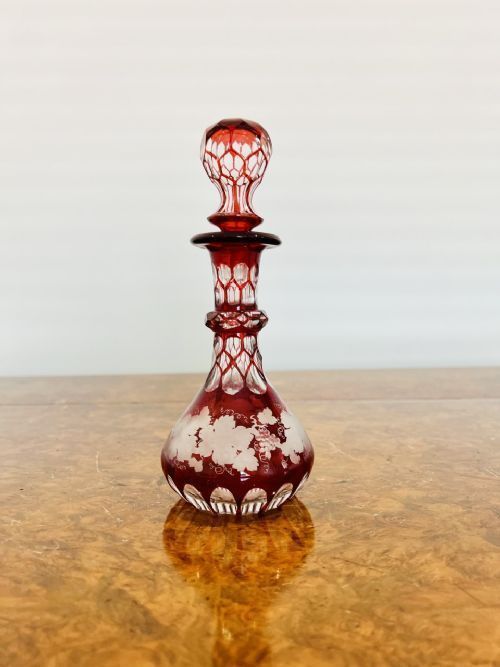


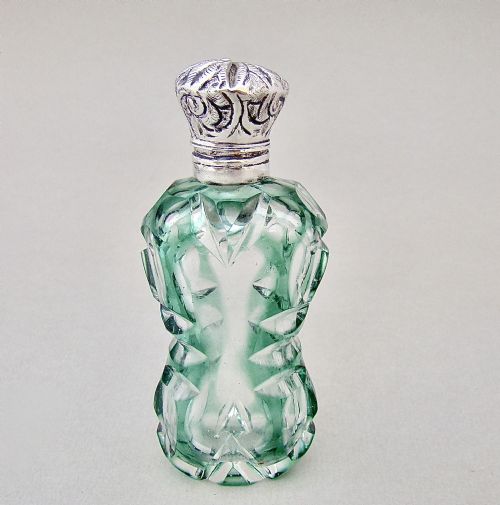


Overlay Glass Scent Bottle
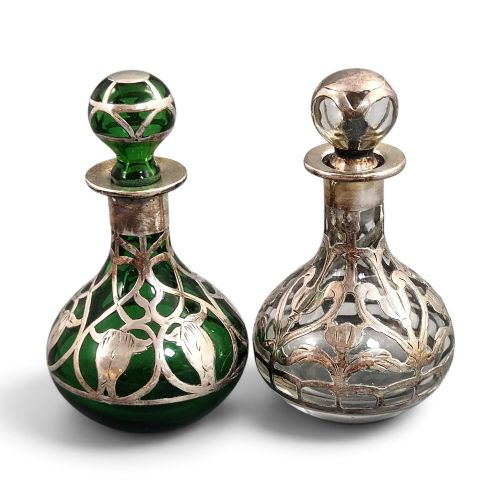
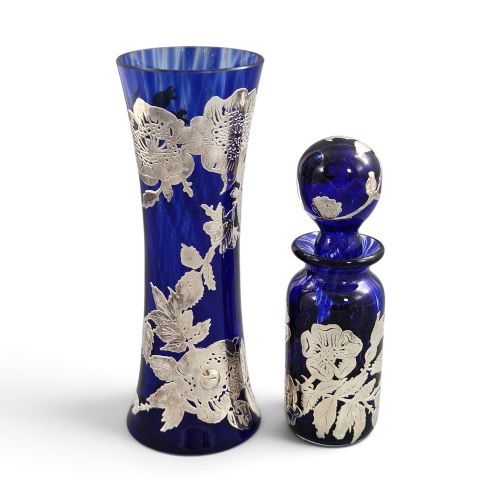
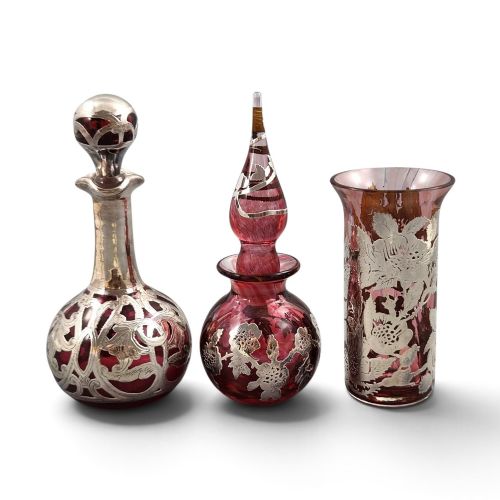
An overlay glass scent bottle brings together coloured glass and pierced metalwork in a compact Victorian form.
Overlay Glass Scent Bottle
An overlay glass scent bottle typically combines a vibrant inner vessel with an exterior layer of contrasting glass or metal. These portable containers served personal vanity needs during the nineteenth and early twentieth centuries.
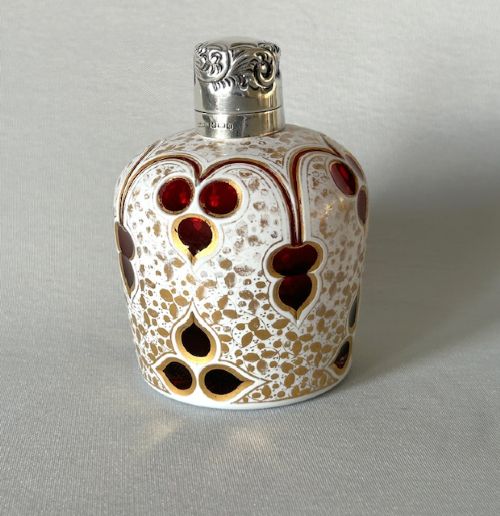
Victorian and Edwardian examples dominate the selection, often featuring deep jewel tones such as cranberry, green, blue, and amethyst. French and Bohemian makers produced distinct variations of these cased glass vessels for domestic markets and export.
Miniature formats designed for chatelaines appear alongside larger pocket or table bottles. Many retain their original sterling silver mounts, collars, and stoppers.
How they were made
Glassmakers fused a layer of coloured glass over a clear or contrasting body before cutting through the outer layer to expose the base colour beneath. This cased technique created sharp geometric or floral patterns in relief.
Silversmiths then applied sterling silver mounts, collars, and pierced metal jackets directly onto the glass body. The silver overlay was frequently worked in organic Art Nouveau plant motifs or geometric scrollwork.
Overlay Glass Scent Bottle Retail Price Guide 2026
Typical asking prices for overlay glass scent bottle among the pieces listed under this phrase on Sellingantiques today, from the lower quarter to the upper quarter. They describe what is for sale here now, not the wider market.
Tiny chatelaine bottles let Victorian ladies carry potent floral aromas through crowded drawing rooms without spilling a single drop.
What varies in quality
The precision of the glass cutting and the thickness of the outer layer dictate the definition of the pattern. Crisp wheel-cut facets create sharp contrast against the inner core, whereas softer edges indicate simpler production.
The weight and intricacy of the silver overlay alter the character of the piece. Heavy cast or pierced silver mounts secured firmly to the glass neck represent a higher standard of craftsmanship than thin, stamped foil.
Gorham·Laugharne Glass·Alvin·The Boots Company·Charles May·The Mousley Brothers·George Brace·Abrahams And Co
The Overlay Glass Scent Bottle Glossary
- Overlay glass
- A vessel formed from two or more distinct layers of glass fused together during production. The outer layer is often partially cut away to reveal the contrasting colour underneath.
- Cased glass
- A method of blowing glass with multiple concentric layers of different colours. This technique forms the blank structure used for subsequent cutting and silver mounting.
- Sterling silver overlay
- A decorative metal jacket applied to a glass or ceramic body. The silver is typically pierced, chased, or cast in organic plant and floral motifs.
- Chatelaine
- A decorative belt hook worn with suspended utility items including scent bottles, keys, and watches. Miniature bottles made for this purpose feature secure screw caps and specialised hanging loops.
- Stopper
- The small internal plug designed to seal the neck of a perfume bottle. Matching cut glass or silver-topped stoppers complete the original assembly.
Overlay Glass Scent Bottle: Frequently Asked Questions
What is an overlay glass scent bottle?
An overlay glass scent bottle is a small personal container formed from multiple fused layers of glass. The outer coloured layer is cut away to create contrasting patterns.
These pieces were made primarily during the Victorian and Edwardian periods for carrying perfume. They frequently feature pierced sterling silver mounts enclosing the glass body.
How do I identify a chatelaine scent bottle?
Chatelaine scent bottles are distinguished by their exceptionally small scale and fitted loops for suspension from a belt hook. They were designed for portability by women in the nineteenth century.
Most examples include a secure screw-down silver cap to prevent leakage while worn. Their diminutive size sets them apart from larger vanity table bottles.
Where were overlay glass scent bottles made?
Production centred on major European glassmaking regions during the nineteenth century. Bohemia and France produced the majority of coloured cased glass blanks.
English and American silversmiths subsequently added the metal overlay mounts and hallmarks. Birmingham silversmiths were particularly prolific in mounting these imported glass bodies.
How should I clean the silver on my bottle?
Silver mounts require gentle cleaning with a soft cloth to avoid damaging the adjacent glass surface. Liquid silver dips should be avoided to prevent seepage between the metal and the glass.
Keeping moisture away from the interior cement or cork lining preserves the structural integrity of the neck mount.