


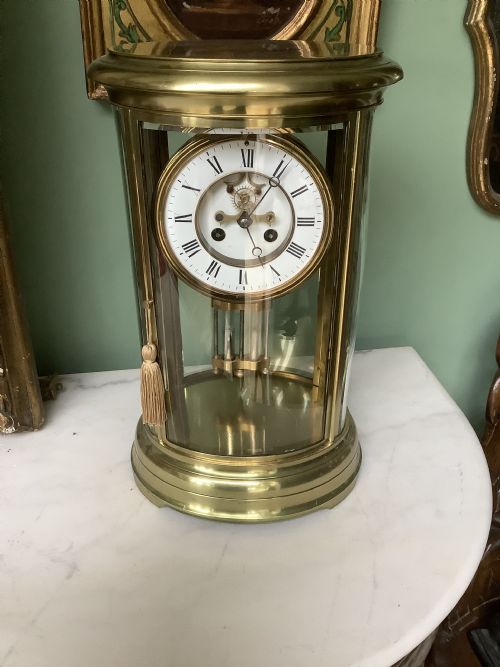


Oval Table Clock
These oval table clock examples combine brass cases with bevelled glass panes, bringing nineteenth-century timekeeping directly to your mantelpiece.
Oval Table Clock
An oval table clock typically takes the form of a brass-framed carriage clock, a four-glass mantel clock, or a strut desk clock. These timepieces were designed for domestic interiors during the Victorian and Edwardian periods.
The most common examples you will encounter on this page are French brass and glass designs featuring enamel dials, alongside English interpretations from the mid-nineteenth century onwards.
Makers housed these movements in curved metal housings, often utilising crystal panels or cloisonne enamel decoration to catch the light from every angle.
How they were made
Casework relies heavily on cast and gilt brass, frequently formed into smooth oval shapes to hold multiple thick glass panels securely in place. Enamel dials provide a crisp white or cream surface for roman or arabic numerals.
Makers applied decorative techniques such as cloisonne enamel work and surface gilding directly onto the metal frames to elevate the visual appeal of each mantel clock.
Interior mechanical assemblies utilise brass plates and cogwheels, sometimes incorporating striking mechanisms or repeater functions housed within miniature or giant proportions.
Oval Table Clock Retail Price Guide 2026
Typical asking prices for oval table clock among the pieces listed under this phrase on Sellingantiques today, from the lower quarter to the upper quarter. They describe what is for sale here now, not the wider market.
Materials recorded across the inventory include brass, gilt brass, glass, cloisonne enamel, and silvered metal.
What varies in quality
The precision and weight of the cast brass housing distinguish standard production models from finer examples, particularly where decorative gilding or heavy bevelled glass is concerned. Superior cases feel solid and maintain tight joints around every curved glass panel.
Dial execution dictates much of the visual hierarchy, with hand-painted enamel numbers and intricate hands sitting far above plain stamped metal alternatives. The presence of signed movements from established makers adds further distinction to individual pieces.
Howell & James London·AD Mougin
The Oval Table Clock Glossary
- Four glass
- A style of mantel clock featuring transparent glass panels on the front, back, and both sides to reveal the internal movement. This form became particularly popular during the Victorian era.
- Carriage clock
- A portable spring-driven timepiece originally built for travel by horse-drawn carriage. They typically feature a rectangular or oval brass case with a carrying handle on top.
- Cloisonne
- An ancient decorative technique where metal wire is soldered to a metal base to create compartments, which are then filled with coloured enamel paste and fired. Pieces featuring this work display vibrant patterned borders.
- Repeater
- A mechanical complication that allows the clock to chime the last hour or quarter-hour on demand when a button or lever is pressed. This feature required advanced skill from the horologist.
- Strut clock
- A timepiece supported by a hinged prop or stand attached to the rear of the case, intended for placement on a desk or dressing table rather than hanging on a wall.
Oval Table Clock: Frequently Asked Questions
What is an oval table clock?
An oval table clock is a portable or mantel timekeeper housed within a rounded brass and glass case. These items served both practical timekeeping and decorative purposes in nineteenth-century homes.
They sit flat on surfaces like mantelpieces, desks, or tables, using transparent panels to showcase the internal mechanics.
How do I tell Victorian from Edwardian?
Victorian examples date from the mid to late nineteenth century and often display heavier brass castings, ornate gilding, or rich cloisonne decoration. Edwardian pieces tend to lean towards slightly later stylistic interpretations around the turn of the twentieth century.
Examining the overall weight, casework design, and dial typography helps establish the correct period.
Where should I place it?
These clocks belong on stable, level surfaces away from direct sunlight, drafts, and sources of moisture. Mantelpieces, sideboards, and study desks offer ideal settings.
Placing them on a level foundation ensures the pendulum or escapement mechanism beats evenly and keeps accurate time.