




Oval Sideboard Tray
An oval sideboard tray brings timeless elegance to serving, offering a graceful shape designed to complement refined dining rooms.
Oval Sideboard Tray
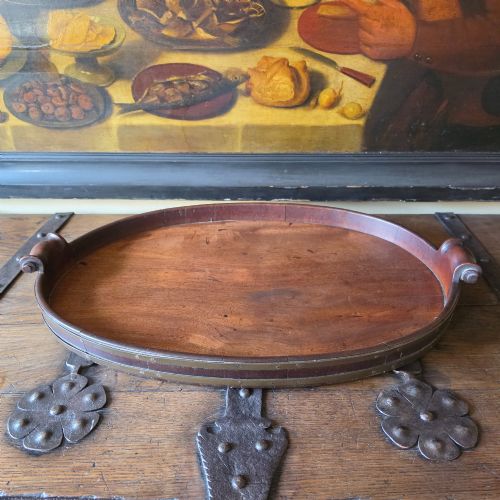
When you search for an oval sideboard tray, you encounter serving pieces spanning the eighteenth century through to the early twentieth century. These items include mahogany tea trays with inlaid satinwood details and galleried edges alongside robust metal platters.
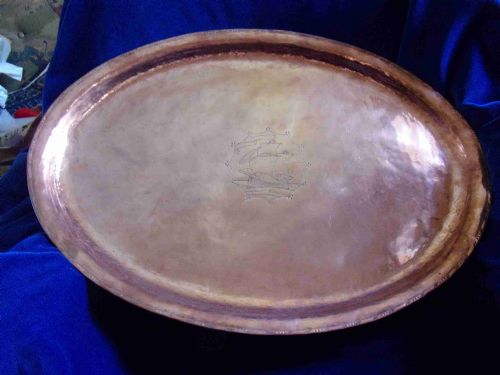
The Edwardian era and the nineteenth century dominate the current selection, showing both classic mahogany construction and distinctive Arts and Crafts metalwork. Formations range from simple serving dishes to substantial two-handled copper trays intended for practical use or display on a sideboard.
How they were made
Makers utilised rich timbers such as mahogany, frequently incorporating delicate satinwood inlay to add geometric or decorative borders to wooden tea trays. Joinery and gallery construction required skilled woodworking to shape raised rims and secure handles firmly to the timber base.
Metal versions relied on copper, brass, pewter, and silver plate, shaped by hand or hammered during the Arts and Crafts movement. Workshops applied EPNS and silver plating over base metals to achieve a polished finish that emulated solid silver without the prohibitive weight.
Oval Sideboard Tray Retail Price Guide 2026
Typical asking prices for oval sideboard tray among the pieces listed under this phrase on Sellingantiques today, from the lower quarter to the upper quarter. They describe what is for sale here now, not the wider market.
Listings feature mahogany, copper, silver plate, and pewter across periods from the eighteenth century to the early twentieth century.
What varies in quality
The distinction between standard utility items and finer examples lies in the crispness of the woodworking, the integrity of the gallery rails, and the subtlety of any inlay work. Mahogany trays with well-preserved satinwood details command attention for their visual balance and tactile warmth.
In metalwork, quality shows in the weight of the copper or pewter, the articulation of hand-hammered surfaces, and the survival of original silver plating. Pieces bearing identified workshop signatures demonstrate superior craftsmanship that elevates them above anonymous factory production.
Hugh Wallis·Liberty and Co
The Oval Sideboard Tray Glossary
- Galleried tray
- A serving tray featuring a raised wooden or metal rim around its perimeter to prevent items from sliding off. This structural border is often pierced or fitted with integrated handles.
- Satinwood inlay
- A decorative technique where lighter contrasting wood is set flush into a darker mahogany surface to create geometric patterns or decorative motifs. It requires precise carpentry skills.
- EPNS
- Electroplated nickel silver, a common base metal method used to apply a thin layer of silver to items like serving dishes and trays. It provides the appearance of solid silver at a different cost.
- Arts and Crafts
- A design movement celebrating handcraftsmanship, simple forms, and honest materials rather than mass-produced ornamentation. It produced distinctive copper and pewter serving wares.
Oval Sideboard Tray: Frequently Asked Questions
What is an oval sideboard tray used for?
These trays served primarily for carrying tea sets, glassware, or serving dishes from the kitchen to the dining room. They also stood permanently on sideboards to display silver or ceramic items.
Over time, their decorative qualities became as important as their utility, allowing homeowners to display rich mahogany grain or hammered copper surfaces in formal reception spaces.
How do I care for a mahogany tray?
Keep wooden trays away from direct sunlight and extreme temperature fluctuations to prevent the timber from warping or the satinwood inlay from lifting. Dust them gently with a dry cloth and apply occasional wax formulated for antique furniture.
Avoid submerging wooden trays in water or using harsh chemical cleaners, as moisture damages both the polished finish and the structural joints.
How do I clean copper and pewter trays?
Metal trays benefit from gentle cleaning using products specifically formulated for copper, brass, or pewter to remove tarnish without stripping the surface. Avoid aggressive scrubbing that might erase hand-hammered textures or maker signatures.
For silver plated pieces, use a soft cloth and a mild silver polish, taking care around engraved areas where the plating might be thinner.
How do I identify an Edwardian tray?
Edwardian pieces, dating from around nineteen hundred, often combine classic mahogany frames with refined inlay work or feature the characteristic metal aesthetic of the Arts and Crafts movement. Construction methods from this period show a blend of traditional cabinetmaking and early industrial techniques.
Examining the underside, fixing methods, and materials helps distinguish Edwardian items from earlier eighteenth-century or Victorian predecessors.