



Oval Serving Tray Table
An oval serving tray table brings together a portable tray and a dedicated stand, offering a practical surface for hospitality that shifts easily between rooms.
Oval Serving Tray Table
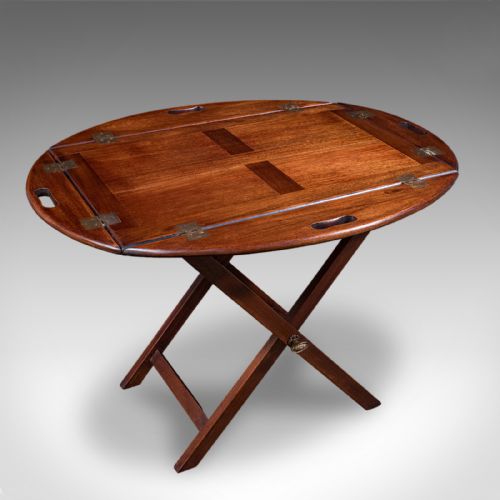
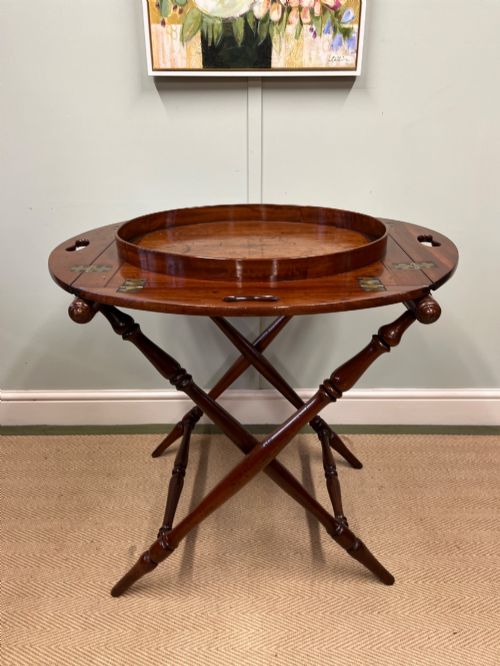
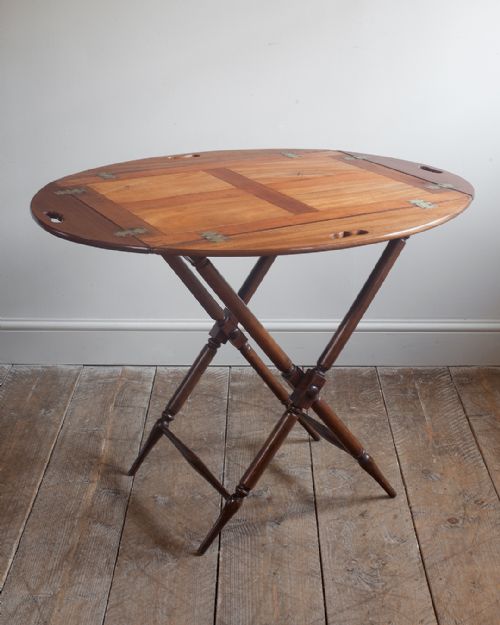
When you search for an oval serving tray table, you encounter forms that merge utilitarian serving trays with stable occasional tables, often featuring raised rims or galleries. The pieces on this page span the Georgian, Regency, and Edwardian eras through to the 1930s, reflecting a long domestic history of serving food and drink.
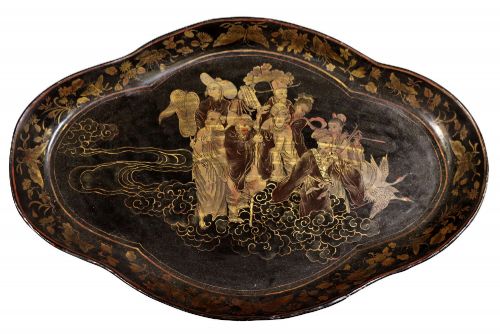
Most examples combine a removable tray top with either a fixed frame or a folding stand, creating a versatile piece of furniture suited to drawing rooms or studies. Mahogany and satinwood predominate, alongside occasional brass and papier-mâché, while styles range from restrained Georgian simplicity to Sheraton Revival inlay and Chinoiserie decoration.
Tray tables and associated etageres or serving stands appear alongside standalone trays that sit upon separate stands, providing flexible options for modern interiors. The designs prioritize both portability and stability, allowing a servant or host to carry provisions from the kitchen before mounting the tray securely upon its base.
How they were made
Cabinetmakers constructed the tray tops using solid timbers such as mahogany and oak, often applying fine veneers of satinwood or employing marquetry and inlay to create decorative geometric or floral motifs. Raised galleries were carved from the solid wood or assembled with delicate pierced brass rails to secure glassware and porcelain during transit.
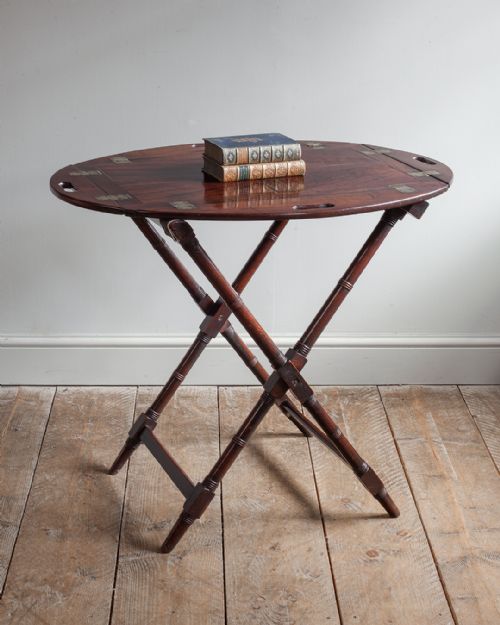
Stands were engineered either as rigid tables with tiers or as folding frames utilising cross-braced legs for compact storage when not in use. Joinery techniques included dovetailing for tray corners and secure tenon joints for the supporting stands, ensuring the structure could bear the weight of heavy silver or ceramic service without loosening.
Oval Serving Tray Table Retail Price Guide 2026
Typical asking prices for oval serving tray table among the pieces listed under this phrase on Sellingantiques today, from the lower quarter to the upper quarter. They describe what is for sale here now, not the wider market.
Materials range from traditional mahogany and oak to polished brass, silver plate, and patterned papier-mache.
What varies in quality
The distinction between standard domestic pieces and finer examples rests primarily on the choice of timber and the precision of the decorative elements. Selected Cuban mahogany and finely figured satinwood indicate a higher workshop origin, whereas simpler utility items rely on plain oak or standard mahogany.
Hand-cut inlay, delicate marquetry work, and cast brass drop handles or gallery rails elevate a piece from basic utility to high craftsmanship. The integration between tray and stand also varies, with superior items showing exact tolerances so the tray rests without rocking upon its frame.
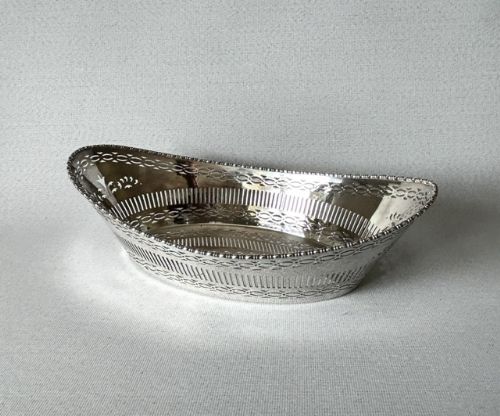
Mappin And Webb
The Oval Serving Tray Table Glossary
- Butler's tray
- A removable wooden tray with sides or handles, designed to sit upon a folding or fixed stand for serving. These trays often feature hinged flaps that lower when carrying or lift to secure contents.
- Gallery
- A raised rim or border surrounding the edge of a tray or table top to prevent items from sliding off. Galleries can be pierced metal, fretted wood, or solid raised mouldings.
- Etagere
- A piece of furniture consisting of a set of open shelves or tiers for displaying small objects or serving items. These often appear in mahogany and satinwood across Edwardian examples.
- Marquetry
- The art and craft of applying pieces of veneer to a structure to form decorative patterns and pictures. Craftsmen utilise various coloured woods to achieve tonal depth.
Oval Serving Tray Table: Frequently Asked Questions
How do I use a tray table today?
An oval serving tray table functions effectively as a mobile drinks trolley, a bedside table, or an occasional surface beside a sofa. The removable top allows you to carry items easily between the kitchen and living areas.
When placed in a corner or used for entertaining, it provides useful surface area without dominating the room. The traditional folding stands also permit straightforward storage if you need to clear floor space.
Are these trays fixed to their stands?
Most traditional examples feature a completely removable tray resting unattached upon a folding or rigid support frame. This portability was essential for domestic service in large historic households.
Some later or alternative configurations integrate tiers more permanently, such as etageres or side tables with fixed surfaces. Checking the specific construction reveals whether the top lifts off independently.
What woods were used in these pieces?
Mahogany serves as the primary timber across the majority of these listings, often supplemented by satinwood for contrasting borders and decorative stringing. Oak and Cuban mahogany also appear in earlier Georgian and Regency iterations.
Finer decorative items incorporate marquetry details and exotic veneers such as Macassar ebony in later 1930s pieces. These materials dictate the overall tone and weight of the furniture.
How can I tell a Georgian tray from an Edwardian one?
Georgian pieces generally exhibit heavier proportions, simpler mahogany construction, and understated craftsmanship focused on utility and sturdy timber selection. They reflect the straightforward demands of eighteenth-century dining.
Edwardian and Sheraton Revival examples often showcase lighter satinwood banding, delicate stringing, elaborate marquetry, and occasionally pierced brass galleries. These later revivals prioritize decorative elegance and refined interior display.