

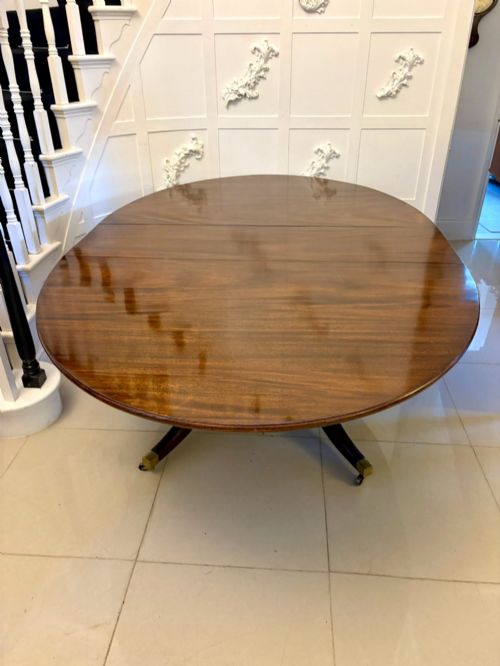
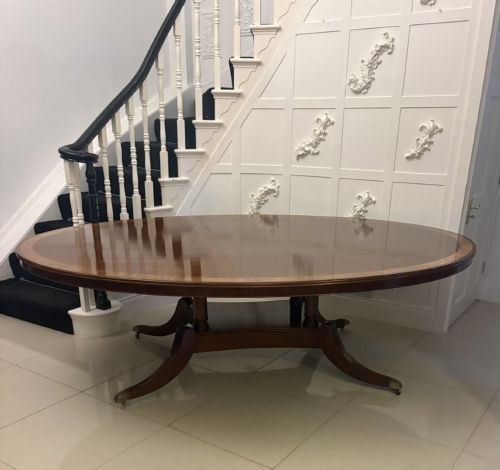
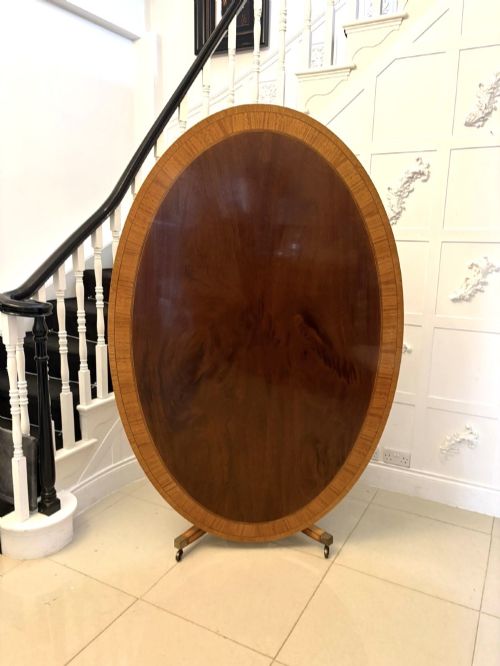
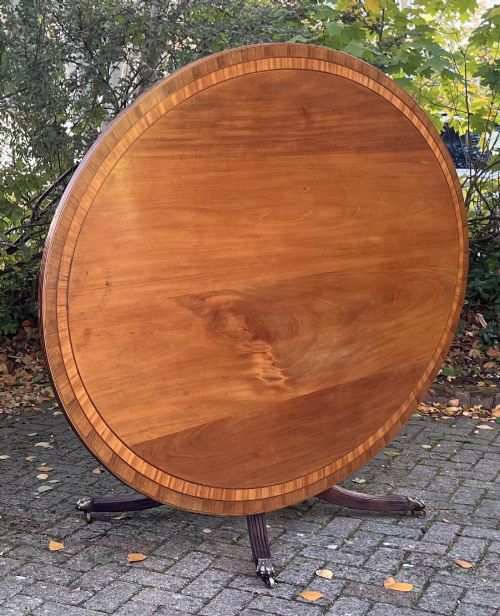


Oval Regency Dining Table
An oval regency dining table brings architectural grace to a room, offering adaptable seating beneath classic mahogany timbers.
Oval Regency Dining Table
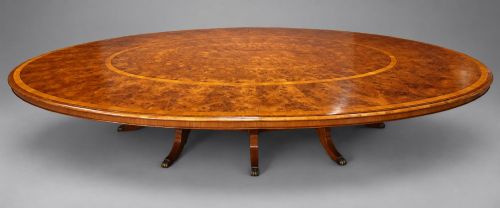
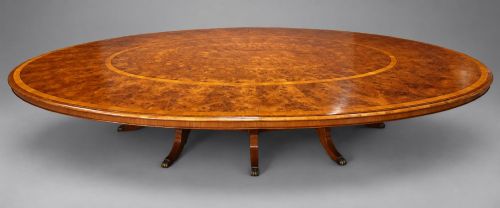
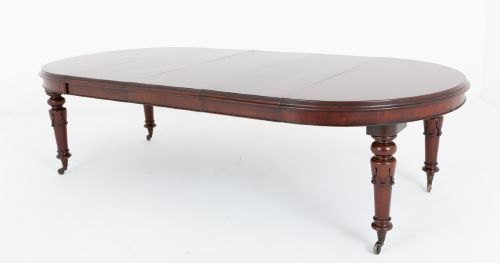
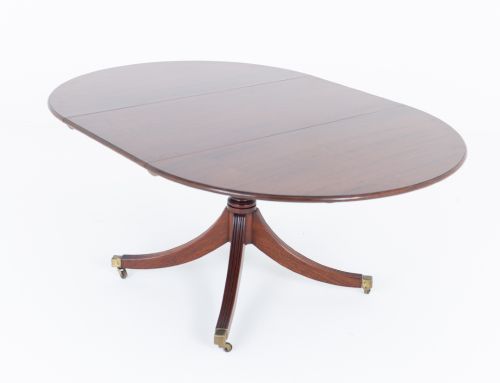
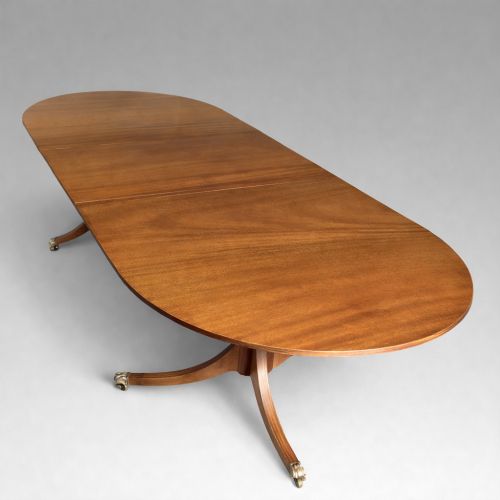
An oval regency dining table is a dining table defined by curved ends and classical proportions, originating from periods including the Regency, George III, and William IV eras. Such tables also appear in later interpretations from the Edwardian period and the 1920s under revival styles. These pieces range from pillar and pedestal forms to extending variants with leaves.
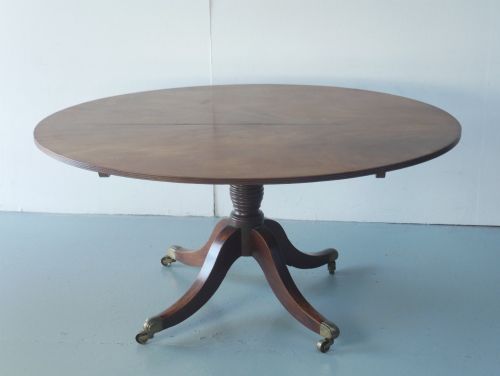
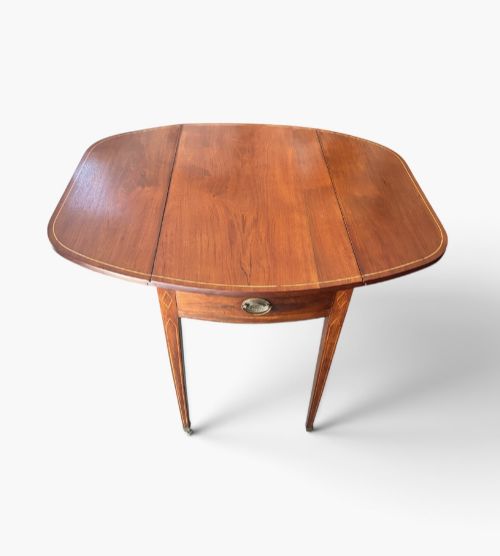
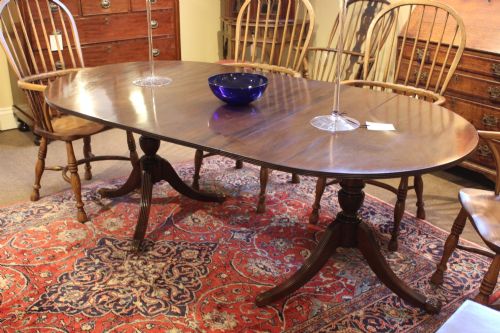
The version most commonly encountered on this page combines a mahogany or flame mahogany veneer body with multi-pillar supports, sometimes incorporating tilt-top mechanisms. Crossbanding in satinwood or boxwood frequently edges the top, alongside subtle brass or ebony stringing. Dining tables of this form span from smaller six-seater breakfast tables to extended ten-seater dining arrangements.
Judgments of quality
Quality rests in the selection of the timber and the precision of the cabinet work, particularly the figuring in the mahogany veneer and the crispness of any boxwood or satinwood crossbanding. Superior examples display seamless integration of extension leaves and balanced grain patterns across the top.
The architectural framing under the top, including the turning of the pillars and the carving of the pedestal bases, separates standard workshop production from finer cabinet work. Hardware integration, such as original brass castors and the smoothness of tilt-top or extending mechanisms, further distinguishes the tier of the piece.
Oval Regency Dining Table Retail Price Guide 2026
Typical asking prices for oval regency dining table among the pieces listed under this phrase on Sellingantiques today, from the lower quarter to the upper quarter. They describe what is for sale here now, not the wider market.
Some tables tilt up entirely so they could sleep by the wall, proving your furniture used to have an off-duty mode.
Gillows
The Oval Regency Dining Table Glossary
- Crossbanding
- A border strip of veneer laid perpendicular to the main grain of the table top, often in a contrasting timber such as satinwood.
- Tilt-top
- A hinged table top mechanism that allows the surface to pivot to a vertical position when not in use, common on breakfast tables.
- Pillar and pedestal
- A support structure featuring a central vertical column rising from a weighted base, frequently split into twin or multi-pillar formats for longer tables.
- Stringing
- Thin inlaid lines of contrasting wood, such as ebony or boxwood, used to outline geometric panels on the table surface.
- Flame mahogany
- A veneer cut from timber where the grain creates a flickering, flame-like pattern, prized for decorative surfaces.
Oval Regency Dining Table: Frequently Asked Questions
How do I know if a table is original Regency?
Original tables show construction methods consistent with the early nineteenth century, including hand-cut joints, native secondary timbers, and period-appropriate brass hardware. Revival pieces from later dates often utilise standardised machine-cut components.
Examination of the timber shrinkage, polish wear, and block construction beneath the top helps distinguish a period piece from a 1920s or Edwardian revival model.
What is the difference between a breakfast table and a dining table?
Breakfast tables traditionally feature a tilt-top mechanism on a single central pedestal, designed to be moved against a wall when not in use. Dining tables are larger, heavier structures built with twin or multiple pillars to support extending leaves.
While both share mahogany construction and classical proportions, the breakfast table serves a more versatile daily function.
How do extending leaves work on these tables?
Extending mechanisms typically rely on a wooden runner system concealed beneath the top, allowing the sections to pull apart and accept one or more drop-in leaves. Brass clips or wooden alignment pins secure the leaves in place.
When closed, the table maintains an oval profile, expanding to accommodate larger gatherings without losing structural balance.
How should I care for a mahogany table top?
Maintain the finish by avoiding direct sunlight and excessive heat sources that can dry out the mahogany timber and veneer. Use coasters and placemats to protect the polished surface from moisture and heat damage.
Periodic application of appropriate wax polish preserves the sheen and feeds the wood without building up heavy residue.