

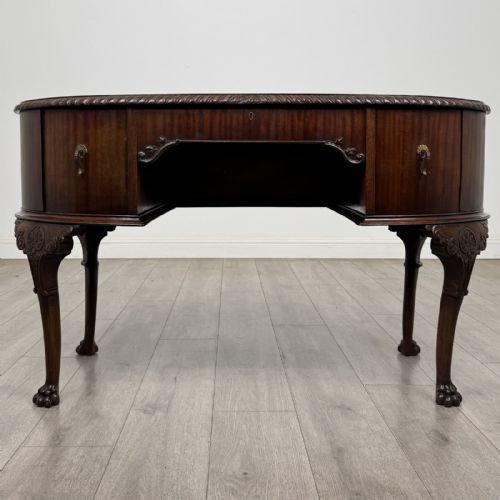


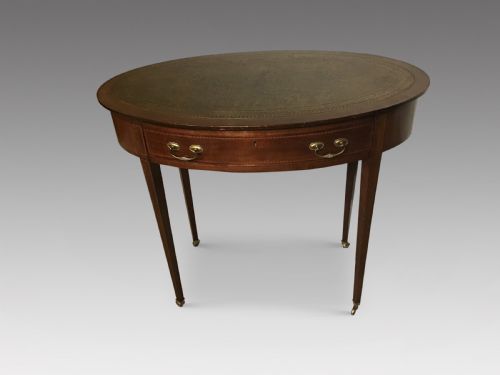


Oval Mahogany Writing Table
An oval mahogany writing table gives a study both generous curve and quiet discipline, built to anchor a room.
Oval Mahogany Writing Table
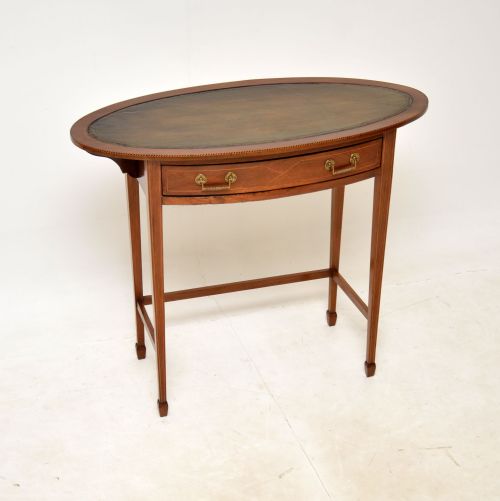
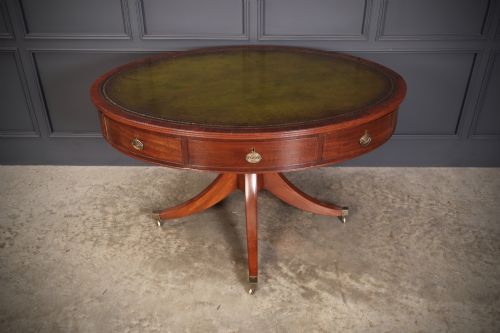
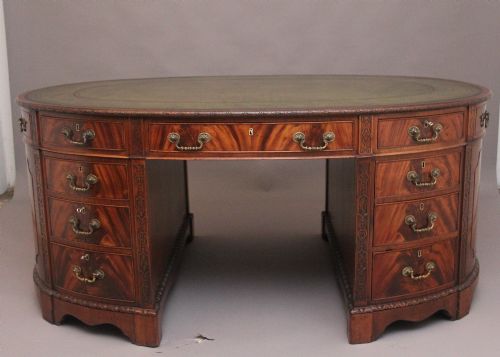
An oval mahogany writing table brings together curvilinear surfaces and rich timber, built to serve as a desk or freestanding centre table. When you search for an oval mahogany writing table, you encounter forms spanning the eighteenth, nineteenth, and early twentieth centuries, including Georgian, Victorian, and Edwardian examples. These pieces range from simple side desks to drum tables and worktables equipped with drawers or compartments.
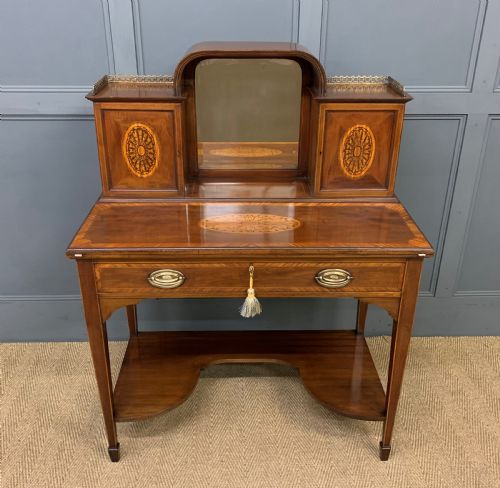
The pieces listed here lean heavily towards Edwardian and nineteenth-century craftsmanship, alongside Georgian origins and Louis XVI Revival influences. Many incorporate inset leather writing surfaces, brass mounts, or delicate satinwood inlay work. They function equally well positioned against a wall or placed in the middle of a room.
Materials and construction methods
Makers utilised solid mahogany and rich mahogany veneers over supportive secondary timbers, achieving deep grain patterns and warm tones. Many examples feature contrasting satinwood inlay and brass mounts, alongside gilt bronze details on French revival pieces.
Working surfaces frequently incorporate inset leather panels for writing, while drum and work tables often conceal internal drawers or rising compartments. Structural joinery relies on traditional cabinet-making techniques suited to curved aprons and solid legs.
Oval Mahogany Writing Table Retail Price Guide 2026
Typical asking prices for oval mahogany writing table among the pieces listed under this phrase on Sellingantiques today, from the lower quarter to the upper quarter. They describe what is for sale here now, not the wider market.
Some worktables hide secret rising compartments inside, ready to catch dropped letters and stray nibs.
Assessing the quality of execution
Superior examples display crispness in their satinwood inlay and precision in the curve of the mahogany top, where timber selection shows deliberate grain matching. Finer pieces command attention through balanced proportions and restrained decorative elements such as subtle brass banding.
Construction depth separates standard utility items from exhibition grade work, seen in the smooth operation of internal compartments and the integration of secondary woods. The handling of hardware and the finish applied to the timber surface dictate the overall presence of the table.
A. Beurdeley
The Oval Mahogany Writing Table Glossary
- Mahogany
- A durable tropical hardwood valued for its rich reddish-brown colour and stable grain. It forms the primary structural and visual material for these tables.
- Inlay
- Decorative technique where contrasting woods such as satinwood are embedded flush into the mahogany surface. This creates geometric or floral borders.
- Drum table
- A circular or oval library table with a deep top containing multiple drawers around the circumference. It traditionally stood in the centre of a room.
- Dropleaf
- A table top featuring hinged flaps that fold down to reduce the footprint when not in use. Brackets or swing legs support the leaves when raised.
- Ormolu
- Gilded bronze mounts applied to the corners and legs of revival pieces. It adds metallic contrast to the dark timber.
Oval Mahogany Writing Table: Frequently Asked Questions
Where should an oval writing table sit?
These tables adapt well to both perimeter placement against a wall and freestanding positioning in the middle of a room. Because the curved oval shape softens room geometry, they work effectively behind a sofa or within a home library.
Freestanding placement highlights the finished back and sides of the piece, particularly for centre tables and drum tables that display detail from every angle.
How do I date a mahogany table?
Dating relies on observing construction methods, timber choice, and stylistic markers such as inlay patterns or brass mounts. Georgian pieces often display simpler, heavier proportions, whereas Edwardian interpretations show refined Edwardian lightness.
Secondary woods inside drawers and the ageing of the mahogany finish provide further physical clues to the century of manufacture.
What is a drum table used for?
A drum table served traditionally as a library or centre table for holding books, writing materials, and correspondence. The deep perimeter allowed for multiple drawers to store papers and small implements.
In modern spaces, they function effectively as central display tables or occasional desks where surface area is required without heavy corners.
How do I care for leather writing surfaces?
Inlaid leather panels require gentle cleaning with a damp cloth and occasional treatment with appropriate leather dressings to prevent cracking. Avoiding direct sunlight helps preserve both the leather dye and the surrounding mahogany.
Keeping writing surfaces free from excessive moisture ensures the leather maintains its supple texture over decades.