

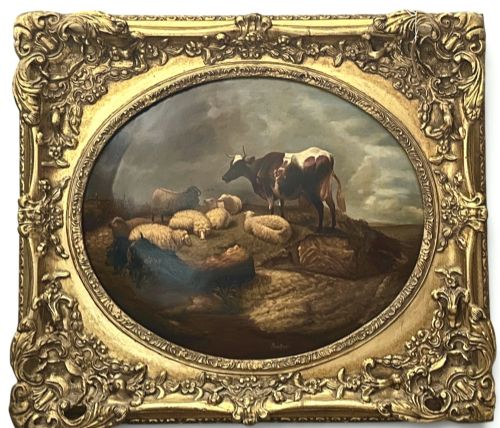
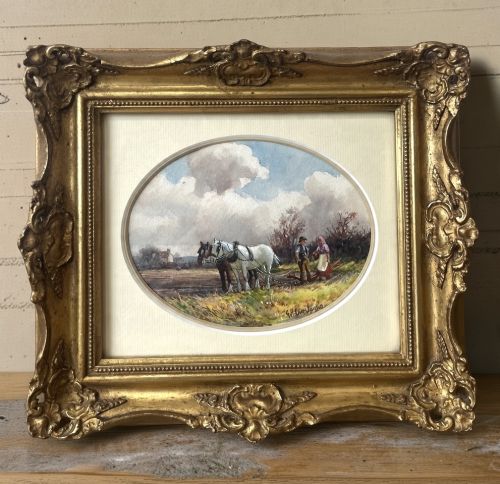
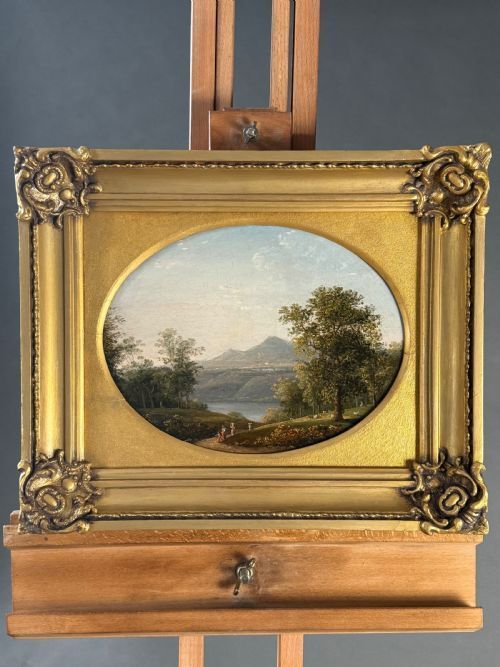
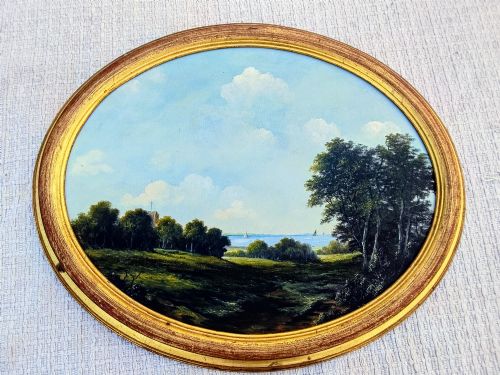
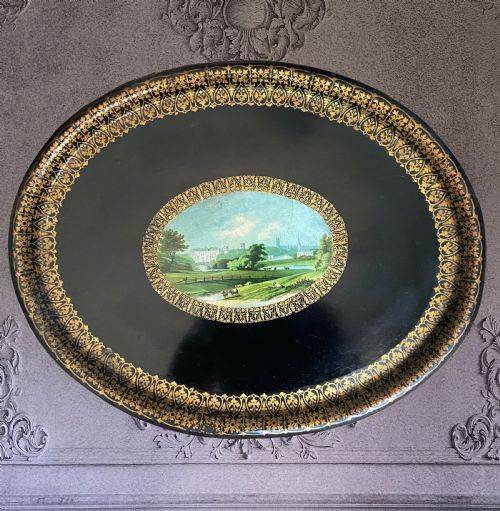


Oval Landscape Painting
An oval landscape painting captures scenery within a curved border, offering buyers a distinct format that softens standard rectangular wall compositions.
Oval Landscape Painting
When you search for an oval landscape painting, you encounter works spanning the eighteenth century through to the mid twentieth century. The selection includes oil on canvas, watercolours, gouaches, and enamel plaques depicting pastoral scenes, sea views, and country landscapes.
The format appears in several distinct objects beyond standard framed canvases. You will find framed artwork, wall plaques, trays, and side tables incorporating these shaped pastoral views.
Origins vary across British, French Second Empire, Italian, and traditional maritime pieces. Creators utilise materials such as giltwood, paper, glass, and gold leaf to house and complement the painted imagery.
Materials and construction methods
Painters apply oil and watercolour pigments onto canvas, paper, and enamel surfaces shaped to fit curved frames. Wood, gilt, and giltwood provide the structural support for the frames and decorative trays.
Master artisans integrate gold leaf and glass to protect and elevate the visual depth of the landscapes. Skilled hands shape specialised surfaces like tole ware trays to hold detailed pastoral and architectural compositions.
Oval Landscape Painting Retail Price Guide 2026
Typical asking prices for oval landscape painting among the pieces listed under this phrase on Sellingantiques today, from the lower quarter to the upper quarter. They describe what is for sale here now, not the wider market.
Materials recorded include wood, giltwood, paper, glass, and gold leaf applied to wall art, trays, and tables.
Judging the work
Execution of detail separates fine painted landscape scenes from simpler decorative output. The precision of brushwork in foliage, water, and figures dictates the overall success of the piece.
The integrity of the surrounding materials defines the grade of the object. High quality items feature well preserved giltwood frames, stable canvas supports, and crisp enamel or watercolour applications.
JACOB PHILIPP HACKERT·JAMES HARDY JUNIOR·James Thomas Linnell·Walter Meegan·Francis Moltino·Royal Worcester
The Oval Landscape Painting Glossary
- Giltwood
- Wood that has been coated with thin gold leaf or a metallic substitute. This material frequently frames eighteenth and nineteenth century artwork.
- Gouche
- An opaque water-based pigment used to create vibrant landscape imagery on paper. It offers heavier coverage than traditional watercolour.
- Tole ware
- Enamelled or japanned metalware shaped into household items like decorative trays. These pieces often feature hand painted pastoral or scenic motifs.
- Enamel plaque
- A smooth surface created by fusing powdered glass to metal under high heat. Artists paint detailed miniature landscapes directly onto this hard finish.
Oval Landscape Painting: Frequently Asked Questions
How do I hang an oval painting?
Oval frames require secure central hanging wire attached firmly to the wooden backing or frame structure. Ensure the wall fixing matches the weight of the giltwood or wood housing.
Position the curved piece at eye level where its unique geometry can contrast effectively with rectangular furnishings or artwork nearby.
What periods do these paintings come from?
The available works span from the eighteenth century through the Victorian era up to the early twentieth century. You will encounter Georgian, Edwardian, and Napoleon III examples among the selection.
Each period brings distinct framing choices and subject matter, ranging from Grand Tour scenes to pastoral farm life.
Are all items traditional oil on canvas?
Canvas forms only part of the medium range for this shaped format. Painters also utilise paper, glass, and enamel plaques to capture landscape scenes.
Some examples appear on functional objects like tole ware trays or integrated into lamp tables rather than standard wall art.
How do I care for watercolour on paper?
Watercolour and gouache works require protection from direct sunlight to prevent fading of the pigments. Keep them in rooms with stable humidity to safeguard the paper and backing.
Ensure the glass pane remains intact to shield the delicate painted surface from dust and atmospheric moisture.