




Oval Inlay Press
These oval inlay press pieces are large storage furniture built to keep household linens orderly and crisp.
Oval Inlay Press
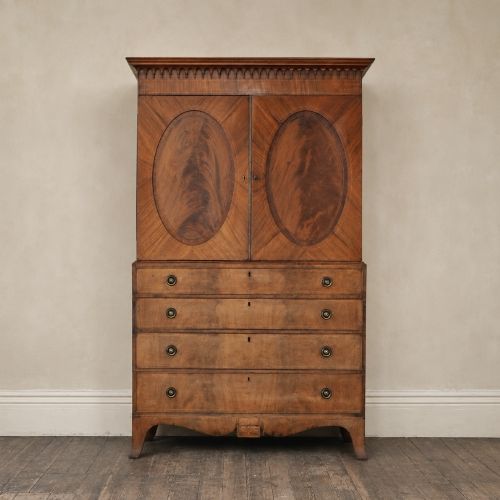
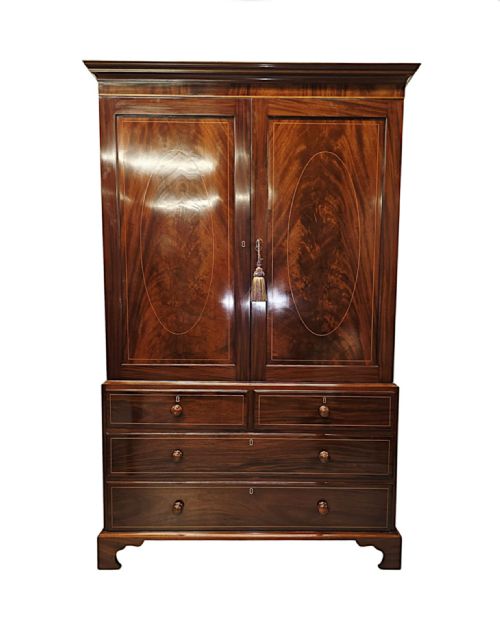
An oval inlay press is a tall storage cabinet designed for linen and garments, frequently incorporating inlaid woodwork detail upon the doors or drawers. Buyers searching this phrase encounter substantial timber furniture intended for bedroom or dressing room placement.
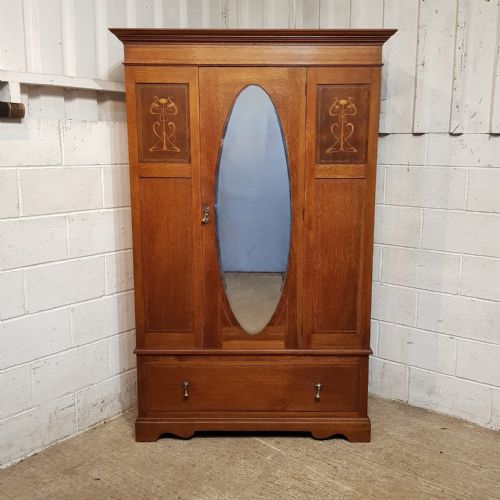
The versions most commonly met on this page date from the eighteenth and nineteenth centuries, with Georgian pieces featuring prominently alongside later Edwardian and Arts and Crafts interpretations. These cabinets typically combine a upper section of sliding trays or shelves with a lower chest of drawers.
How they were made
Makers constructed these presses using solid timbers such as mahogany and oak, frequently applying flame mahogany veneer to large surfaces for visual depth. Structural frames relied on traditional joinery methods suited to substantial domestic furniture.
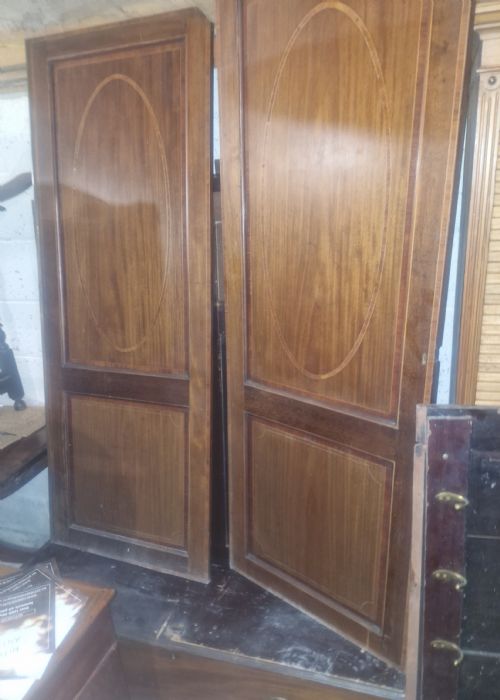
Decorative detailing involved contrasting wood veneers and banding, notably satinwood and boxwood inlay, arranged in geometric or oval motifs. Brass hardware such as escutcheons and drawer pulls completed the assembly of these functional cabinets.
Oval Inlay Press Retail Price Guide 2026
Typical asking prices for oval inlay press among the pieces listed under this phrase on Sellingantiques today, from the lower quarter to the upper quarter. They describe what is for sale here now, not the wider market.
The listings on this site span the Georgian period, the nineteenth century, and the Edwardian era, predominantly featuring mahogany and oak timbers.
What varies in quality
The selection of timber grain and the precision of the inlay work separate standard examples from finer pieces. Superior presses display carefully matched flame veneers and crisp execution of satinwood and boxwood banding.
Proportion and architectural detailing also dictate the character of each cabinet. Pieces featuring refined cornices, swan-neck pediments, and intact original brass fittings demonstrate a higher standard of original design and preservation.
The Oval Inlay Press Glossary
- Linen press
- A tall cupboard featuring upper sliding shelves or trays for folded textiles above a base of drawers. This form evolved to protect household linens from dust.
- Inlay
- A decorative technique where contrasting pieces of wood or other materials are inserted into recessed portions of a timber surface. Satinwood and boxwood provide pale contrast on darker mahogany grounds.
- Flame mahogany veneer
- A sliced timber veneer exhibiting a distinctive flickering flame pattern derived from specific sections of mahogany logs. It was prized for principal door panels.
- Pediment
- The decorative architectural crown at the top of a tall cabinet or bookcase. Swan-neck versions curve upward and outward from a central break.
Oval Inlay Press: Frequently Asked Questions
What is an oval inlay press used for?
An oval inlay press serves primarily as a large wardrobe and linen storage cabinet. The upper compartment traditionally holds folded sheets and tablecloths on sliding trays.
The lower chest of drawers provides additional space for garments. Together, they offer substantial storage capacity within a bedroom or dressing room.
How do I identify a Georgian press?
Georgian presses typically exhibit solid mahogany construction with classical proportions and hand-cut dovetail joints in the drawers. Look for architectural cornices and bracket feet.
Finer examples incorporate satinwood banding and fine inlay work around the doors and drawers. The overall construction reflects eighteenth-century cabinet-making standards.
Where should I place a linen press?
These cabinets require a wall with sufficient height and depth to accommodate their substantial proportions. Bedrooms and dressing rooms suit their original function best.
Keep them away from direct heat sources and strong sunlight to protect the mahogany timber and decorative veneer work.
How do I care for antique mahogany?
Dust the timber regularly with a dry, soft cloth to prevent particulate buildup on the polish. Avoid modern silicone sprays that can damage the antique finish.
Maintain a stable room humidity to prevent the solid mahogany and veneer from warping or cracking over time.