



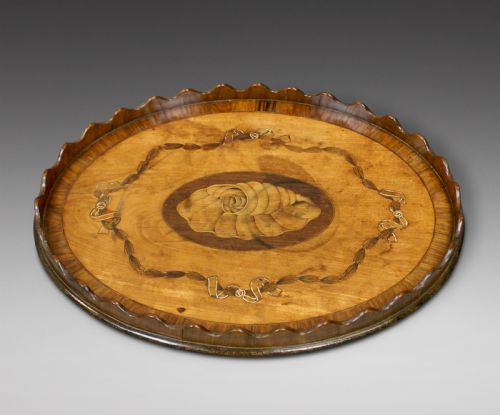


Oval Inlaid Tray
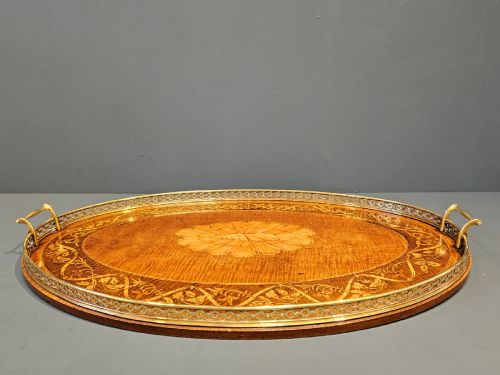
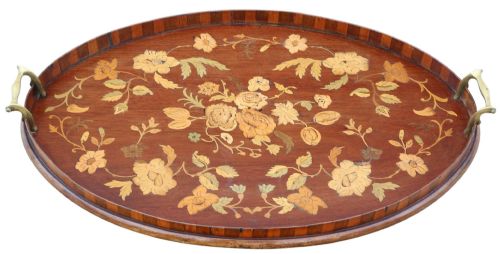
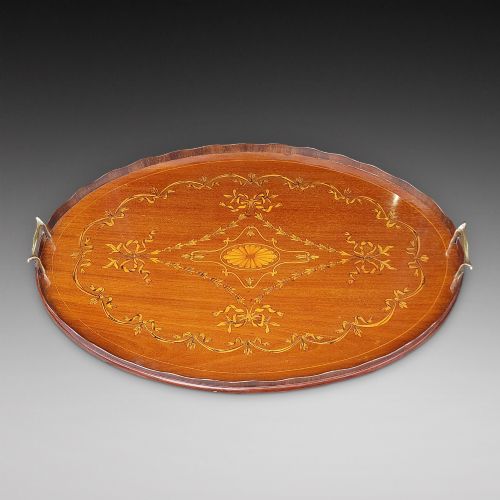
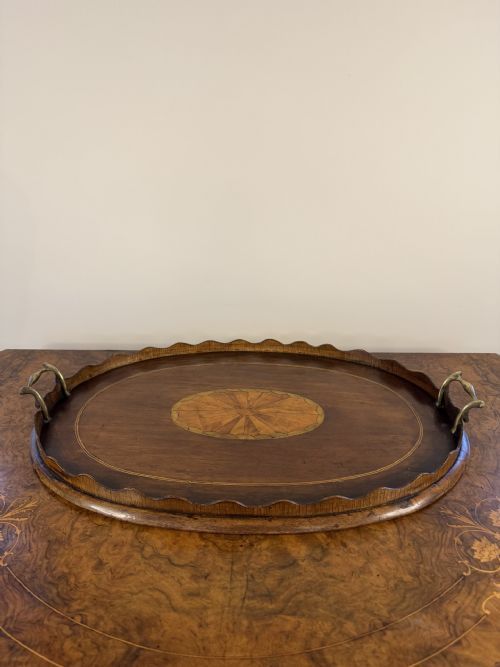
An oval inlaid tray brings the warmth of figured timber and precise marquetry straight to the serving table or coffee table.
Oval Inlaid Tray
An oval inlaid tray is a functional serving piece or tabletop surface designed to display decorative objects or carry tea. These items appear across the Georgian, Victorian, and Edwardian periods, often constructed with generous handles and raised borders.
The versions most common on this page are mahogany and satinwood serving trays alongside occasional tables and etageres that utilise the same oval top. Buyers encounter both portable butler trays and larger pieces adapted to sit on folding or fixed stands.
Makers fashioned these pieces in styles spanning Sheraton Revival and Victorian Chinoiserie, alongside simpler geometric designs. The form suits both traditional interiors and modern rooms seeking a touch of antique timber.
How they were made
Craftsmen built the foundations of these trays in solid mahogany or satinwood, applying contrasting veneers and marquetry inlay to the centre field. Cabinetmakers selected timbers for their distinct grain patterns, arranging panels to catch the light.
Workshops integrated brass galleries, gold leaf, and glass where the design demanded extra protection or formal ornament. Surface finishes relied on traditional polishes that highlighted the natural tone of the wood and the precision of the inlay work.
Some trays double as tables simply by acquiring a stand, proving that Victorians loved moving their tea around almost as much as we do.
What varies in quality
The distinction between standard examples and the finest pieces lies in the crispness of the marquetry and the choice of timber figure. Superior trays display tight, seamless joints where the inlaid motifs meet the primary wood of the base.
The weight and finish of the handles, the presence of heavy brass galleries, and the depth of the mahogany grain separate ordinary production from exceptional cabinetwork. Well-preserved surfaces retain their original polish without obscuring the delicate lines of the satinwood.
The Oval Inlaid Tray Glossary
- Marquetry Inlay
- The art of creating decorative patterns on a wooden surface by fitting together small pieces of tinted wood, shell, or ivory. This technique defines the visual character of many Edwardian and Victorian pieces.
- Satinwood
- A hard, durable timber with a natural golden sheen that makes it popular for detailed inlay work. Cabinetmakers used it to form striking contrasts against darker mahogany fields.
- Etagere
- A piece of furniture consisting of a set of open shelves for displaying small objects. These often take the form of multi-tiered tables utilising a removable tray top.
- Toleware
- Metalware painted and enamelled in imitation of Asian lacquerwork. Trays in this medium bring deep dark grounds and gilt decoration to the serving surface.
- Sheraton Revival
- A late nineteenth and early twentieth century style drawing inspiration from the lighter neoclassical designs of the eighteenth century. It favours satinwood, delicate inlay, and elegant oval forms.
Oval Inlaid Tray: Frequently Asked Questions
What is an oval inlaid tray used for?
These pieces function primarily as serving trays for tea and glassware or as decorative display surfaces on side tables. Many also sit upon dedicated stands to form permanent occasional tables.
The raised rims and sturdy timber construction allow them to carry items securely while adding texture and pattern to a room.
How do I care for antique wood trays?
Keep wooden trays away from direct sunlight and strong sources of heat to prevent the timber from drying and the veneer from lifting. Dust gently with a dry cloth and avoid harsh chemical cleaners.
Applying a traditional wax polish occasionally helps nourish the wood and maintain the subtle lustre of the original surface.
How can I tell the period of a tray?
Examine the timber species, the style of the inlay work, and the construction of the base or handles. Georgian pieces tend to show restrained classical motifs, while Victorian and Edwardian examples often feature richer marquetry or Sheraton Revival influences.
The condition of the polish and the type of secondary woods used on the underside also offer clues to the date of manufacture.
Are these trays sturdy enough for daily use?
Most pieces possess robust mahogany or satinwood foundations built to withstand regular handling. However, older items with delicate marquetry benefit from careful treatment rather than heavy-duty service.
Using them for lighter duties or as stationary display surfaces helps preserve the fine inlay work for the future.