







Oval Gilt Framed Needlework
Oval gilt framed needlework pieces bring centuries of hand-worked silk, wool, and linen into modern interiors.
Oval Gilt Framed Needlework
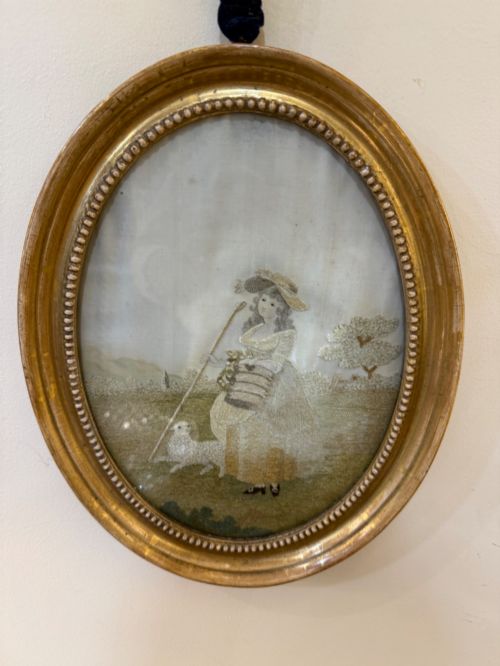
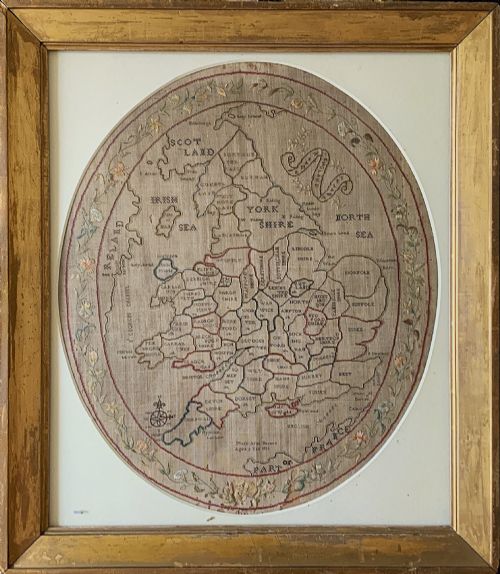
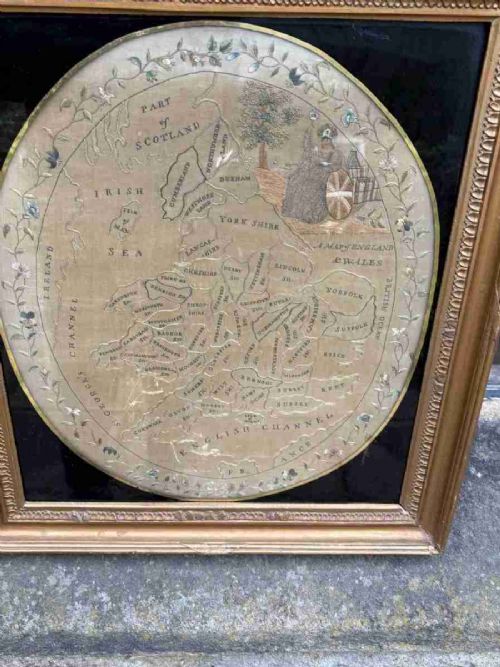
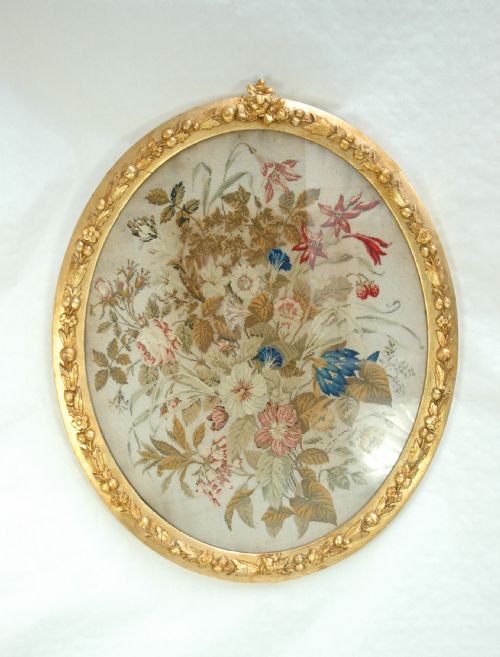
An oval gilt framed needlework combines historical textile art with ornate gilded framing. These works range from delicate silk embroidered pictures and tapestry panels to educational map samplers.
The selections span the eighteenth century, Georgian, and Regency periods, alongside later nineteenth century and nineteen-twenty examples. Common forms include woolwork pictures of figures in gardens, religious scenes, and cartographic works.
Buyers encounter subjects such as silk work landscapes, felt and wool compositions, and embroidered maps of England and Wales. These textile pieces preserve domestic needlecraft traditions inside protective wooden and glass enclosures.
How they were made
The surrounds rely on wood frames finished with gold leaf, water gilding, or black glass techniques known as verre églomisé and mezzotint glass. These protective surrounds often feature original giltwood mouldings tailored to the curved composition.
Oval Gilt Framed Needlework Retail Price Guide 2026
Typical asking prices for oval gilt framed needlework among the pieces listed under this phrase on Sellingantiques today, from the lower quarter to the upper quarter. They describe what is for sale here now, not the wider market.
Materials recorded in these listings include silk thread, wool, felt, linen, wood, gold leaf, and glass.
What varies in quality
The distinction between standard and superior pieces rests on the complexity of the needle technique and the preservation of the silk and wool threads. Finer works display intricate stitch control, particularly in figurative scenes and detailed cartography.
Frame construction also determines overall merit, with water gilded timber and original verre églomisé glass panels elevating the piece. The survival of clear signatures, dates, and maker details enhances the historical weight of the textile.
The Oval Gilt Framed Needlework Glossary
- Verre églomisé
- A process of applying gold or silver leaf to glass combined with engraving and painting. This technique creates a decorative, reflective border surrounding the central textile.
- Needlework sampler
- A piece of fabric embroidered to demonstrate various stitches or proficiency in needlecraft. Many examples from this selection record geographical maps or educational exercises.
- Water gilding
- A traditional framing method applying gold leaf over wet gesso and bole. This produces a brilliant finish that can be burnished to a high shine.
- Silk work
- Embroidery executed primarily using silk threads. These threads offer a distinct sheen that captures light differently than wool or cotton.
Oval Gilt Framed Needlework: Frequently Asked Questions
What periods do these needleworks come from?
The pieces span the eighteenth century, the Georgian era, and the Regency period, with additional examples from the late nineteenth century and nineteen-twenty.
Each era brings distinct stylistic touches to both the stitchwork and the accompanying gilt frames.
How should I hang an oval frame?
Oval frames require secure picture hooks suited to the weight of the timber and glass. Ensure the hanging wire or fixing aligns with the vertical orientation of the oval.
Keep textile art away from direct sunlight to prevent the silk threads and watercolours from fading.
Are map samplers common?
Map samplers form a distinct category within these listings, often created by young scholars depicting England and Wales. These educational works combine geography with needlecraft proficiency.
They offer a documented glimpse into historical education alongside decorative merit.
What is verre églomisé?
Verre églomisé involves painting and gilding directly onto glass panels, frequently used as a decorative matte border on antique frames. It frames the central needlework with reflective metallic detail.
This technique protects the textile underneath while adding depth to the display.