

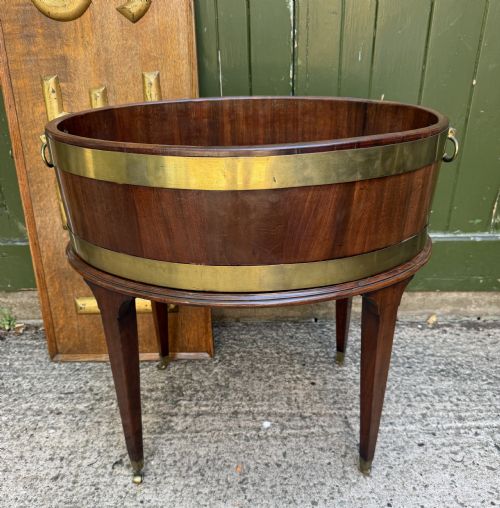


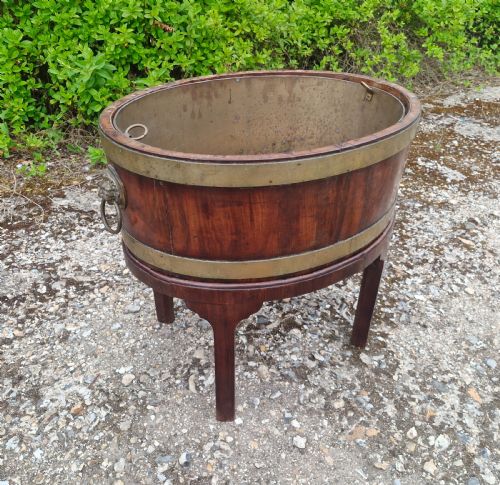


Oval Cellarette on Stand
These oval cellarettes on stand are stately timber vessels built to hold bottles at the dining table, combining fine cabinet-work with practical service.
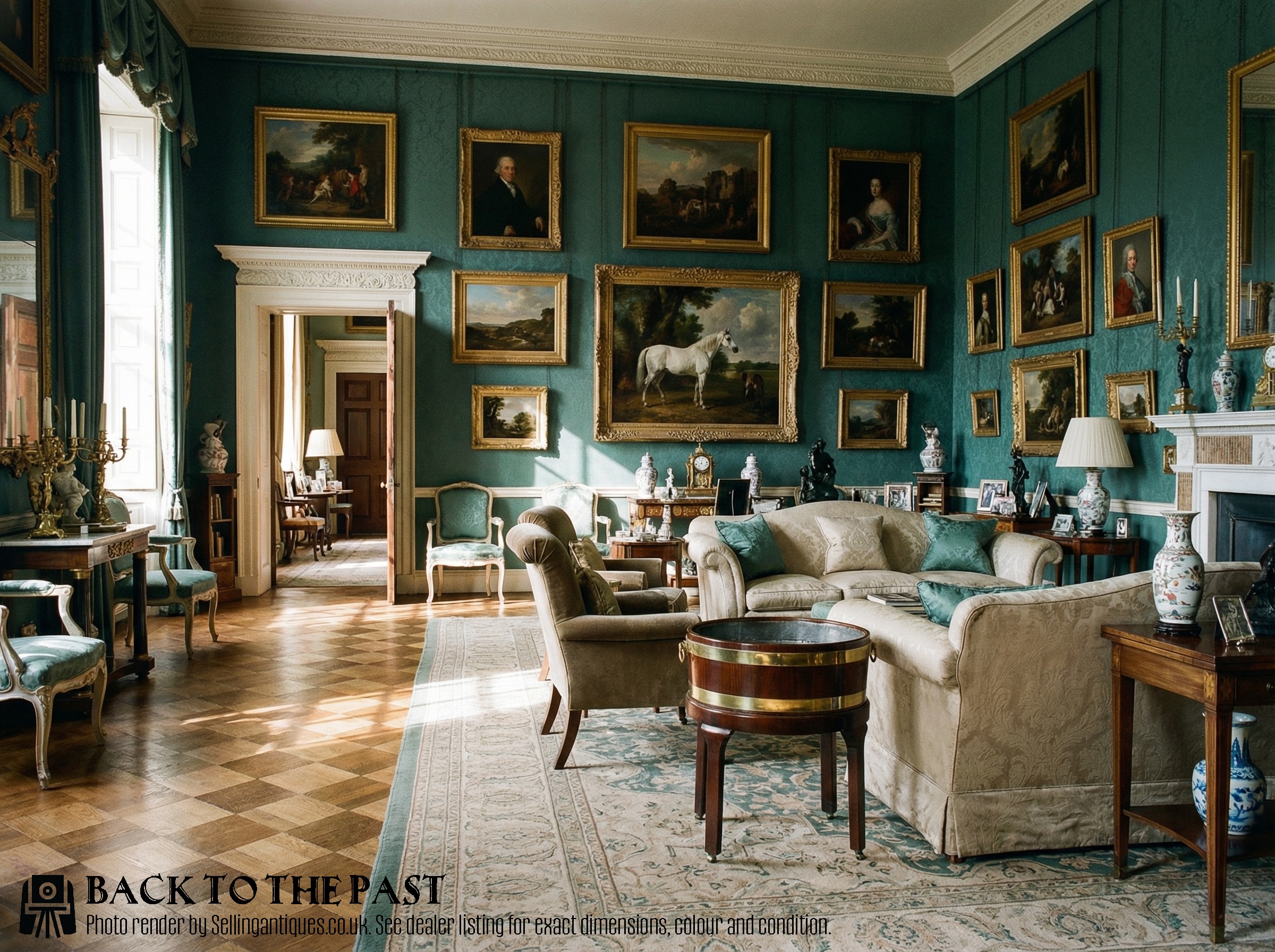
Oval Cellarette on Stand
When you search for an oval cellarette on stand, you are looking at substantial Georgian and late eighteenth-century wine coolers, frequently rendered in rich mahogany. Most examples you will meet on this page date from the Georgian and George III periods, though later revivals and twentieth-century planters also appear.
These pieces typically take an oval form, often bound in brass hoops and supported on a dedicated stand or frame. They served to chill wine at elite dining tables, doubling historically as jardinieres or champagne buckets depending on their interior lining.
How they were made
Cabinet-makers constructed the bodies of these vessels from solid mahogany, sometimes incorporating boxwood stringing and delicate inlay work. Metal components such as brass bands, gilt metal mounts and interior zinc or metal linings provided structural strength and water resistance for holding ice and bottles.
The stands were built to match the timber of the main body, raising the heavy vessel to a convenient height beside the dining table. Traditional joinery techniques ensured the stave construction could withstand the weight of wet ice and wine bottles without splitting.
Oval Cellarette on Stand Retail Price Guide 2026
Typical asking prices for oval cellarette on stand among the pieces listed under this phrase on Sellingantiques today, from the lower quarter to the upper quarter. They describe what is for sale here now, not the wider market.
Materials across these items include solid mahogany, brass bands, zinc liners, boxwood inlay, and gilt metal.
What varies in quality
The distinction between standard examples and superior pieces rests largely on the choice of timber and the crispness of the brass-work. Fine grain patterns in the mahogany, combined with original stands and well-preserved patination, mark out the most accomplished work.
Subtle details such as inlaid boxwood lines, original metal liners, and authentic period brass hoops elevate an item above simpler vernacular versions. The integration between the oval bucket and its original base dictates the overall harmony of the piece.
The Oval Cellarette on Stand Glossary
- Cellarette
- A lockable container used for storing wine bottles near the dining table. These vessels kept expensive vintages close to hand during long meals.
- Jardiniere
- An ornamental pot or stand designed to hold plants or flowers. Many wine coolers were later adapted for this domestic purpose.
- Stringing
- A narrow inlay of contrasting timber used to outline panels and borders. Boxwood is frequently utilised for this decorative linear detail.
- Patina
- The deep surface sheen developed on old wood through decades of handling and polishing. This quality indicates age and careful maintenance.
Oval Cellarette on Stand: Frequently Asked Questions
What is an oval cellarette on stand?
An oval cellarette on stand is a large wooden wine cooler raised on legs, designed for the Georgian dining room. It held ice and bottles during feasts.
Most surviving examples date from the eighteenth century and feature solid mahogany construction with protective metal linings.
How were these coolers used?
Servants filled the timber interior with ice and water to chill wine before serving it to guests at the table. The elevated stand kept the heavy vessel off the floor.
Over the centuries, many of these pieces lost their original purpose and found new life holding large potted plants.
How do I spot a Georgian piece?
Georgian pieces display traditional cabinet-making methods, including hand-cut dovetails and period timber selections like dense mahogany. Brass binding and patination help confirm their eighteenth-century origins.
Later revivals and twentieth-century planters often show lighter construction or different interior fittings compared to genuine Georgian work.
Are the stands usually original?
Some pieces retain their original stands, while others have been paired with stands at a later date. Matching timber and consistent wear between bucket and base offer clues to their shared history.
Checking the joints and mounting points reveals whether the stand was built specifically for that particular vessel.