

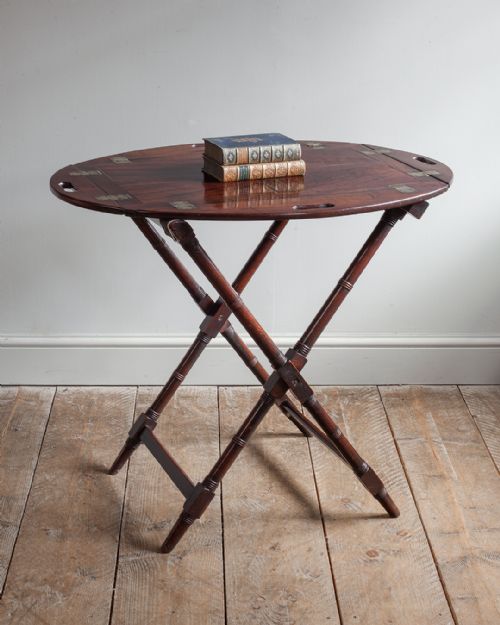


Oval Butler Tray Table
An oval butler tray table is a versatile serving stand and occasional table that brings classic British practicality and elegance to any room.
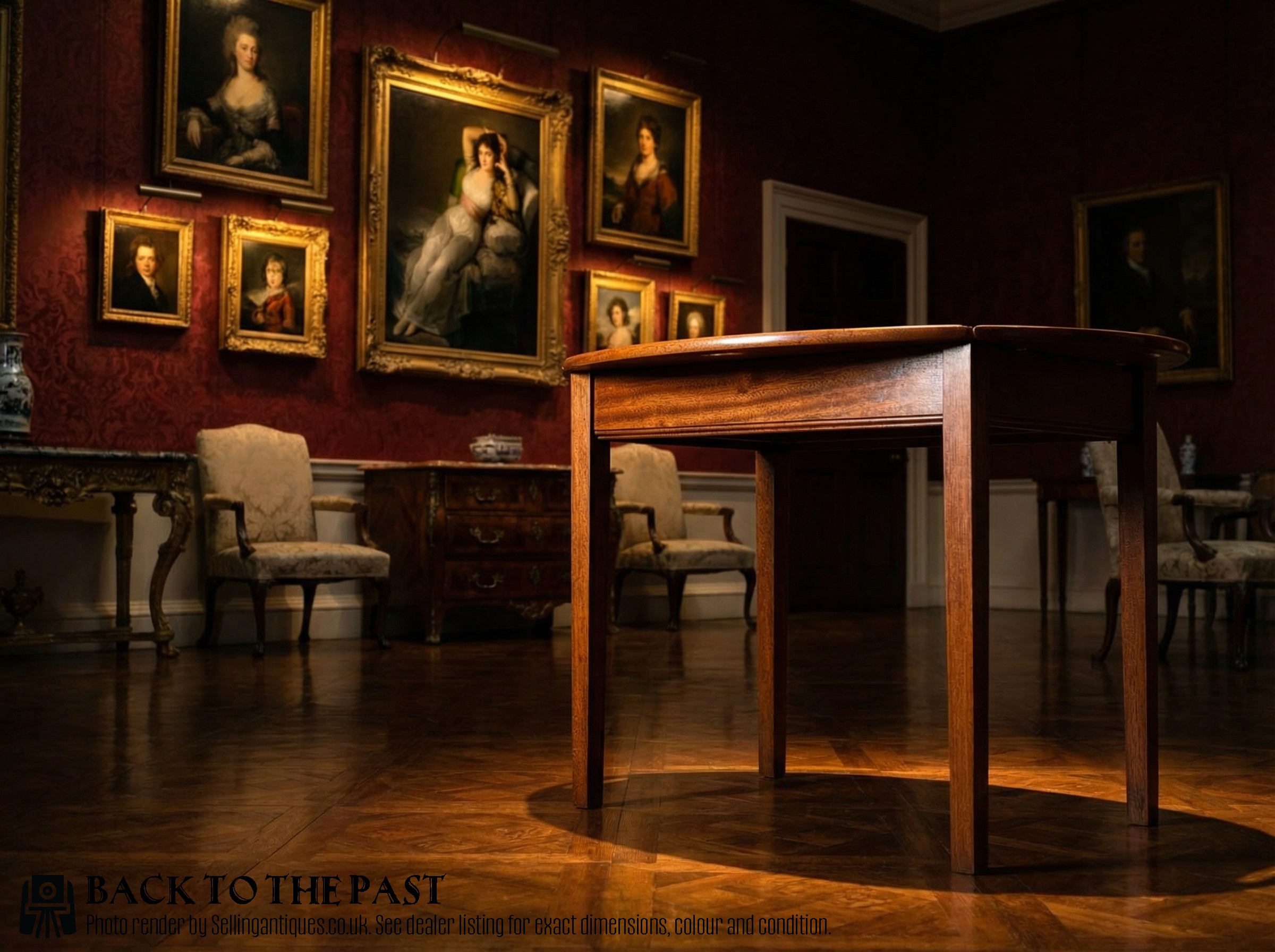
Oval Butler Tray Table
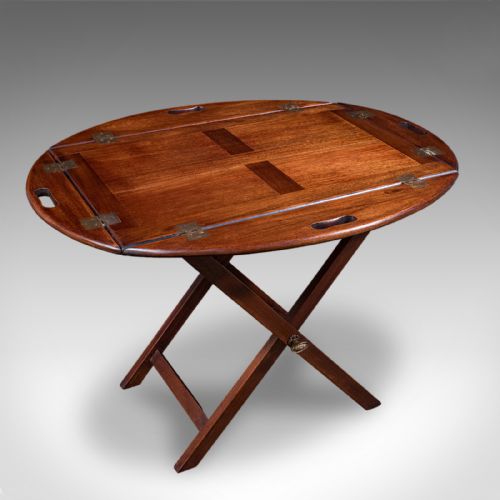
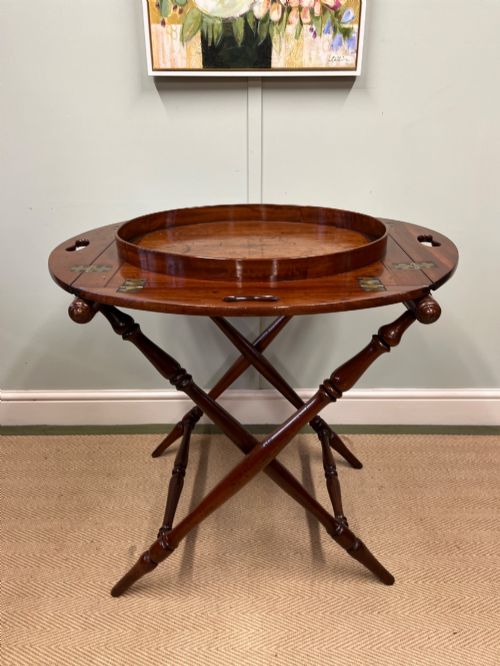
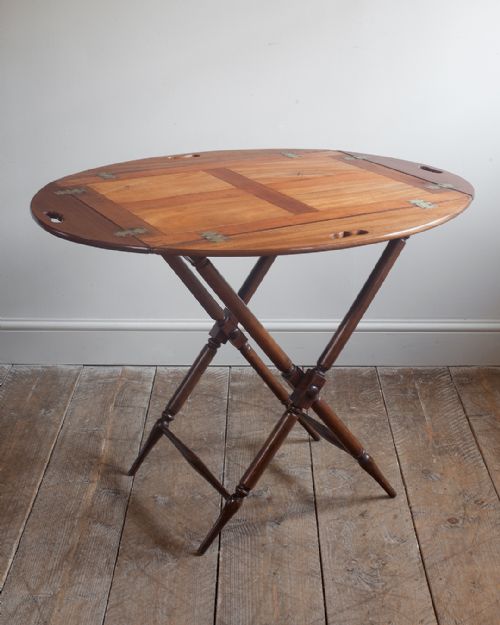
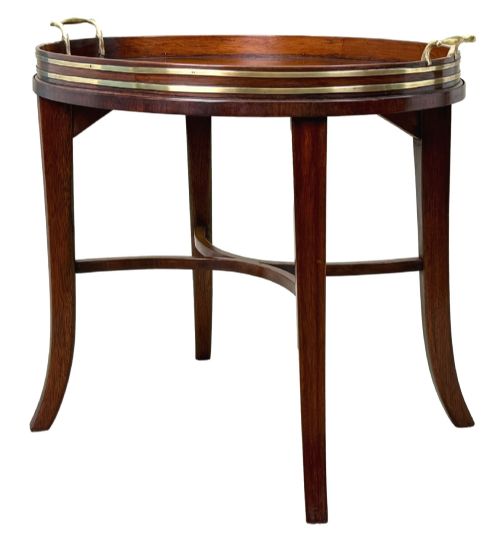
An oval butler tray table combines a removable serving tray with a folding or fixed wooden stand, designed originally for efficient domestic service. When you search for an oval butler tray table, you encounter pieces intended for both functional serving and elegant display in the home.
The selections span from authentic 18th-century George III examples to Edwardian revivals and later interwar iterations. Most pieces met on this page showcase rich timber construction paired with folding stands for adaptable placement.
Materials and construction
Makers predominantly utilised mahogany, often figuring Cuban varieties, alongside satinwood and oak for the tray tops and stands. Brass bound decoration, hinges, and handles appear frequently to reinforce joints and add functional detail.
Joinery techniques focus on sturdy gallery edges and secure drop-flaps, ensuring the portable tray locks safely onto its supporting stand. Selected pieces incorporate intricate marquetry inlay, silver plate, or glass inserts to elevate the decorative finish.
Listings feature timbers including mahogany, satinwood, and oak, alongside brass hardware, glass, and silver plate.
Markers of quality
Quality rests in the depth of timber grain, the crispness of brass fittings, and the integrity of the tray gallery. Superior examples display fine handmade dovetail joints and well-matched veneers rather than plain machine-sawn boards.
The relationship between the tray and its stand also dictates standard; pieces where the folding frame fits the tray with absolute precision represent finer craftsmanship. Original patination on the timber surface separates genuine period items from later revivals.
The Oval Butler Tray Table Glossary
- Drop-flap
- A hinged section on the tray edge that lowers to allow easier serving or raises to contain items securely during transit.
- Galleried tray
- A raised rim surrounding the oval surface, designed to prevent glasses and decanters from sliding off.
- Stand
- The folding or rigid wooden base constructed to hold the removable tray at a convenient height for serving or occasional use.
- Marquetry
- Decorative woodwork where pieces of contrasting veneer are fitted into a design to create patterns on the tray surface.
- George III
- The stylistic period spanning the mid-to-late 18th and early 19th centuries, known for classical proportions and quality mahogany.
Oval Butler Tray Table: Frequently Asked Questions
What is an oval butler tray table used for?
These pieces function primarily as movable serving trays paired with stands, acting as side tables or coffee tables in modern interiors. They provide a portable surface that lifts away from the base entirely.
Historically, servants used the tray to transport items from kitchen to drawing room before placing it onto the folding stand for guests. Today, they suit living spaces where flexible furniture arrangements are useful.
How do I care for a mahogany tray table?
Protect the timber surface from direct heat and moisture by using coasters and mats beneath glasses and hot dishes. Regular dusting with a soft, dry cloth preserves the natural finish without building up heavy chemical residues.
Apply a traditional beeswax polish occasionally to nourish the hardwood and maintain its lustre. Avoid placing the table near direct sunlight or radiators to prevent the timber from drying and splitting.
Are the trays removable from the stands?
Most traditional butler tray tables feature a loose tray that simply rests upon the folding or rigid wooden stand. This allows the top to function independently as a serving platter when needed.
Certain Edwardian and later interpretations incorporate fixed tops or locking mechanisms for added stability as a coffee table. Checking the specific construction reveals whether the tray lifts clear of its base.
How do I distinguish George III from Edwardian pieces?
George III pieces date from the Georgian era, exhibiting heavier Cuban mahogany timber, hand-cut joinery, and restrained brass hardware. They carry the marks of utilitarian service and early cabinet-making techniques.
Edwardian and revival pieces often display lighter satinwood inlays, marquetry decoration, and slightly more refined machine assistance in their manufacture. Examining the wood species and construction methods helps clarify the precise period of origin.