





Oval Brass Handles
Oval brass handles anchor furniture and serving pieces from the Georgian, Regency and Victorian periods.
Oval Brass Handles
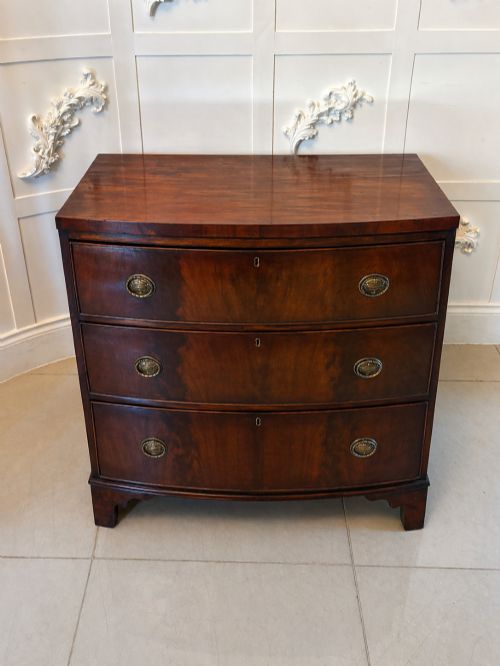
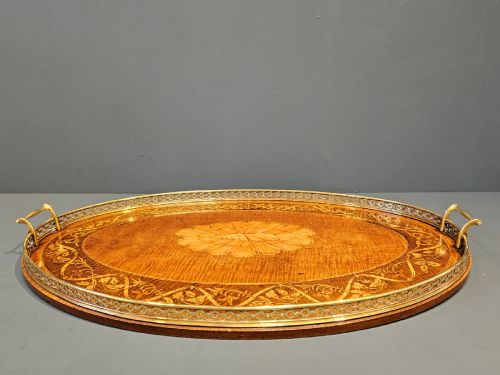
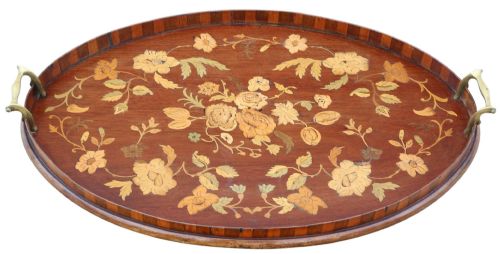
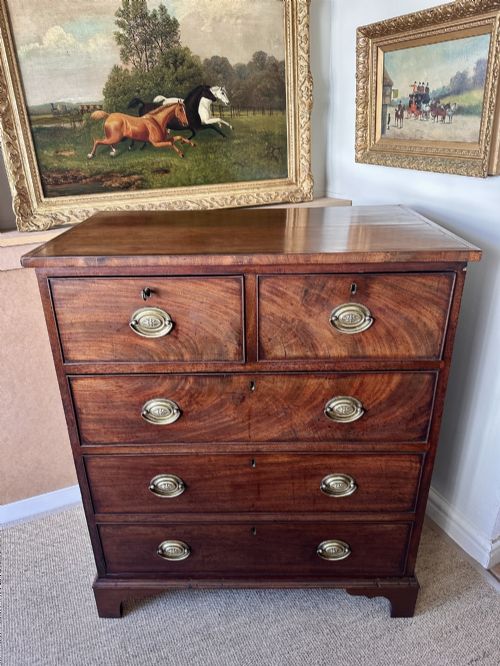
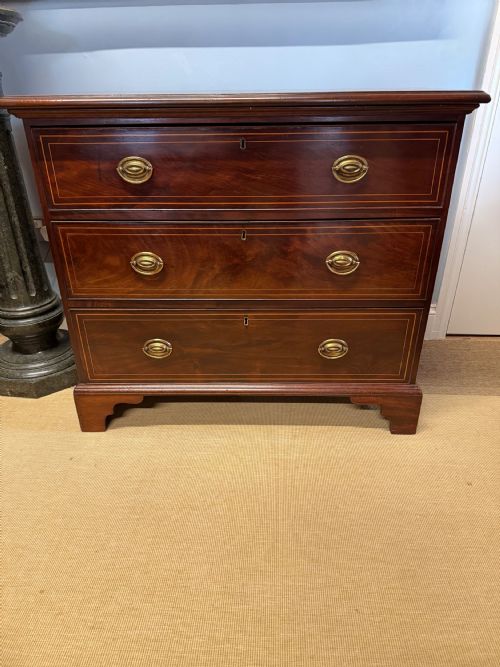
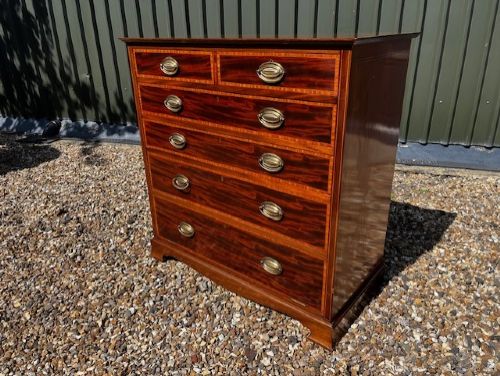
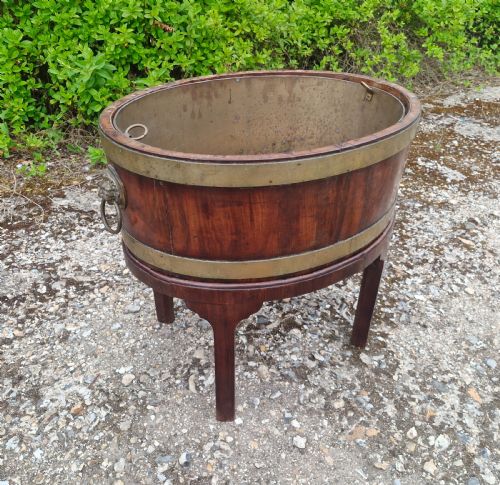
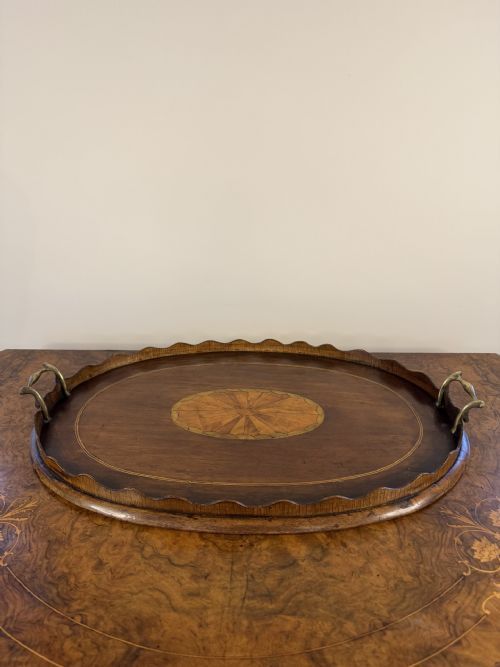
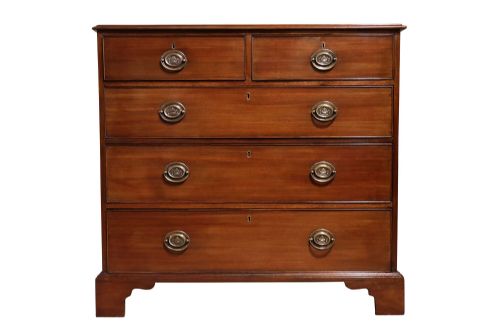
Oval brass handles appear most frequently on chests of drawers, serving trays and tea trays dating from the Georgian, Regency and Victorian eras. These items range from mahogany bow front chests to inlaid wood trays and occasional furniture.
The hardware serves both a practical function for lifting and pulling, and a decorative role that defines the style of the piece. On chests, the handles are typically mounted on stamped brass plates, while trays incorporate them into brass galleries or side mounts.
How they were made
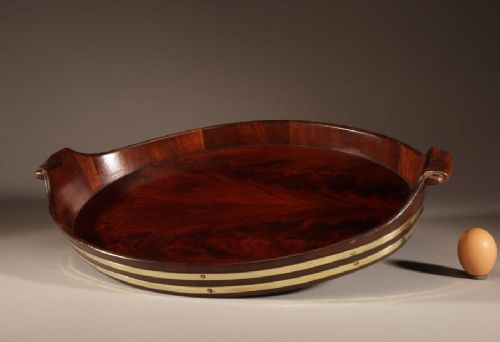
Metal components involve cast or stamped brass, occasionally supplemented by bronze or copper on items such as kettles and foot warmers. The metalwork is paired with timbers including mahogany, oak and satinwood, often featuring marquetry inlay or brass banding.
Cabinet makers and metalworkers joined these materials using period construction techniques appropriate for drawers, coopered trays and framed mirrors. The hardware is secured to the wood structure with pins or threaded fasteners designed to withstand daily use.
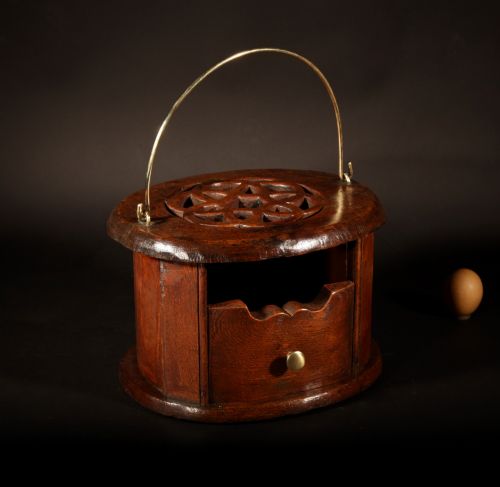
Even Dutch foot stoves carved with Turkish knots required brass handles to move them safely while full of hot embers.
What varies in quality
Quality depends on the crispness of the brass stamping or casting and the retention of original matching hardware across the entire piece. Superior examples feature well-defined plate engraving and secure mounting that aligns properly with the timber grain.
The standard of the surrounding woodwork, from finely figured mahogany veneers to precise marquetry inlay, dictates the overall calibre of the item. Pieces that retain their original secondary woods, such as oak drawer linings, command greater interest.
The Oval Brass Handles Glossary
- Bow front
- A convex curved cabinet front popular during the Georgian and Regency periods. This curved shape alters how drawers and their corresponding handles are fitted.
- Plate handle
- A metal handle configuration where the drop ring or bail is attached to a backplate fixed directly to the drawer face. These plates often feature embossed or engraved detailing.
- Gallery
- A raised raised border or rim around the edge of a tray, frequently made of pierced or solid brass. It prevents items from sliding off the surface during transit.
- Coopered
- Constructed using vertical wooden staves bound with metal bands, a technique shared by wine coolers and buckets. This method provides structural strength for containing liquids or heavy contents.
- Étagère
- A set of open shelves or a small tiered table used for display. These pieces often incorporate decorative brass handles or galleries on their serving surfaces.
Oval Brass Handles: Frequently Asked Questions
How do I date furniture with oval brass handles?
Dating relies on the construction of the furniture piece itself, such as drawer dovetailing and secondary timbers, rather than the hardware alone. Stamped brass plates with specific motifs generally align with Georgian and Regency cabinet-making trends.
Hardware can be replaced over time, so examine the drawer interiors and backplates for original mounting marks. Period specific design details on the surrounding wood provide the most reliable chronological markers.
Are brass handles on trays original?
Original tray handles are securely integrated into the rim or gallery structure, often fastened from the reverse side with screws or rivets. The patina of the brass should match the wear patterns found across the rest of the object.
Replacement handles may show mismatched screw holes or cleaner metal within the recessed areas. Inspect the underside of the tray for evidence of altered fixings.
How should I clean antique brass handles?
Gentle dusting with a dry microfibre cloth removes everyday surface dirt without disturbing the aged patina. Avoid harsh chemical polishes that strip away historical surface character and valuable oxidation.
If cleaning is necessary for hygiene on items like serving trays, use mild soapy water on the brass while protecting the surrounding wood. Dry the metal thoroughly immediately afterward to prevent spotting.
What wood types match these handles?
Mahogany serves as the primary timber partner for brass hardware across Georgian, Regency and Victorian pieces. Satinwood, oak and marquetry inlay also appear frequently on trays and chests featuring this style of metalwork.
Darker polished woods provide a high contrast background that highlights the warm tone of the brass. Lighter satinwood pieces offer a softer visual balance popular in Edwardian revivals.