
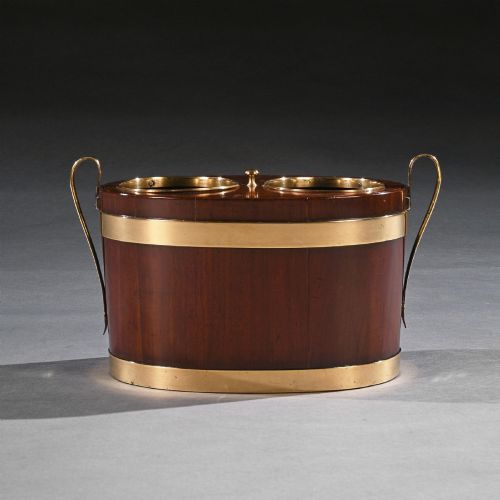
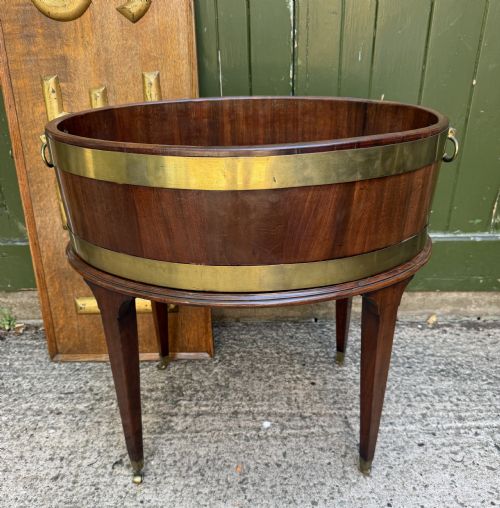

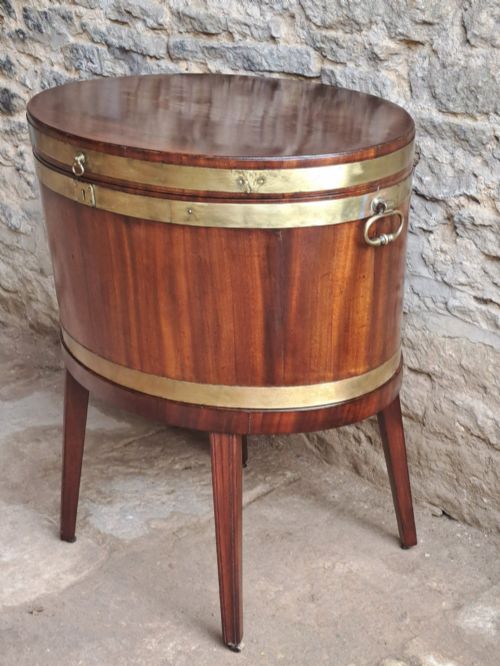
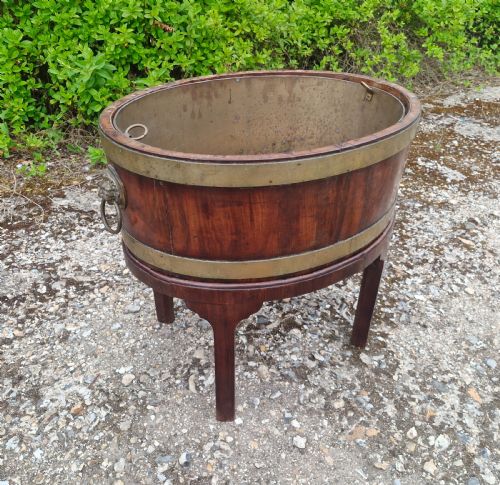

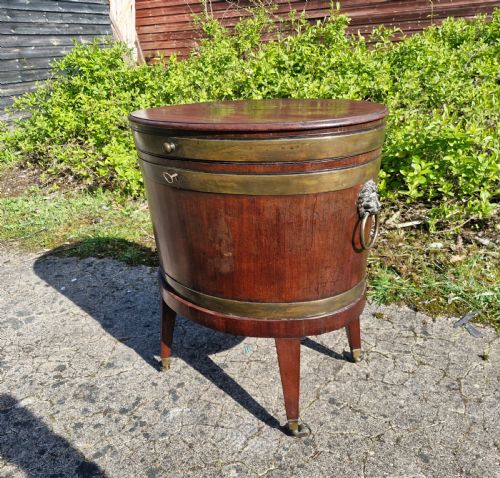


Oval Brass Bound Wine Cooler
An oval brass bound wine cooler brings Georgian proportion and coopered timber into a room with distinct historical utility.
Oval Brass Bound Wine Cooler
An oval brass bound wine cooler is an antique vessel designed to chill bottles at the dining table, most frequently encountered in mahogany from the eighteenth and nineteenth centuries. These pieces appear as coopered buckets or oval bodies, sometimes raised on original stands with square legs, and occasionally function as plant jardinieres.
The selections span the Georgian and Victorian periods, including George III examples and later revivals. Buyers will find open styles and bucket forms that reflect domestic dining customs of the eighteenth century and subsequent decades.
How They Were Made
Craftsmen built these vessels using coopered mahogany staves, shaping individual lengths of timber to form the curved oval body. Metal bands of brass secure the wooden structure tightly around the circumference, functioning both as structural reinforcement and decorative contrast.
Selected pieces incorporate interior zinc linings designed to hold ice and water safely against the timber. Inlays of boxwood and walnut appear on specific examples, adding fine linear detail to the exterior mahogany surfaces.
What Varies in Quality
The distinction between standard examples and the finest pieces rests in the quality of the timber patina and the crispness of the brass banding. Original stands, where present, elevate the desirability considerably compared to vessels that have lost their matching supports.
Subtle details such as inlaid stringing, sound cooperage construction, and the survival of an internal zinc liner separate ordinary utility items from exceptional cabinetwork.
Samual Norman
The Oval Brass Bound Wine Cooler Glossary
- Coopered
- Constructed from curved wooden staves joined together edge-to-edge like a barrel. This technique provides the necessary strength for holding liquids and ice.
- Cellarette
- A lockable container used for storing wine bottles near the dining table. Many examples double in description as wine coolers.
- Jardiniere
- An ornamental pot or stand for holding plants or flowers. Several wine coolers serve this secondary purpose in domestic settings.
- George III Revival
- A later nineteenth-century stylistic movement replicating earlier eighteenth-century forms. These pieces follow the proportions of the Georgian period.
- Patina
- The surface sheen and colour developed by wood over centuries of handling and exposure. Fine patina indicates age and careful maintenance.
Oval Brass Bound Wine Cooler: Frequently Asked Questions
What is an oval brass bound wine cooler used for?
These vessels originally held ice and water to chill wine bottles during long formal dinners in grand houses. Today, collectors utilise them as decorative floor-standing jardinières for large plants or as distinctive umbrella stands.
The deep wooden bodies accommodate substantial interior pots while displaying rich timber grain and polished metalwork in reception rooms.
How do I tell an 18th-century piece from a Victorian copy?
Eighteenth-century examples display hand-cut dovetailing, period timber characteristics, and authentic brass fastenings that show age-appropriate wear. Victorian revival pieces often utilise heavier machine-sawn components and brighter, more uniform brass elements.
Examining the underside and interior construction reveals the hand-planed staves typical of earlier workshop practices.
Did these wine coolers always come on stands?
Many fine examples were manufactured with dedicated wooden stands featuring square legs, raising the vessel off the floor for easier access during dining. Other versions were designed as tabletop buckets or sit directly on the ground without stands.
Both formats are authentic to the period, though pieces retaining their original stands command particular attention from collectors.
Can I use an antique wine cooler for actual ice?
While historic vessels featured zinc linings to contain melting ice, modern usage requires caution to protect fragile antique timber and historic metal banding from moisture damage. Inserting a modern plastic liner inside the original zinc protects the historic fabric.
Many owners prefer dry usage as plant containers to eliminate humidity risks altogether.