



Oval Bedroom Mirror
An oval bedroom mirror offers a gentle, curved reflection, and these pieces bring period charm and practical daily use to a dressing space.
Oval Bedroom Mirror
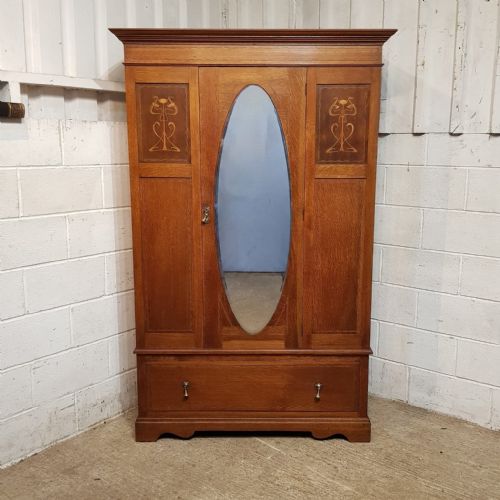
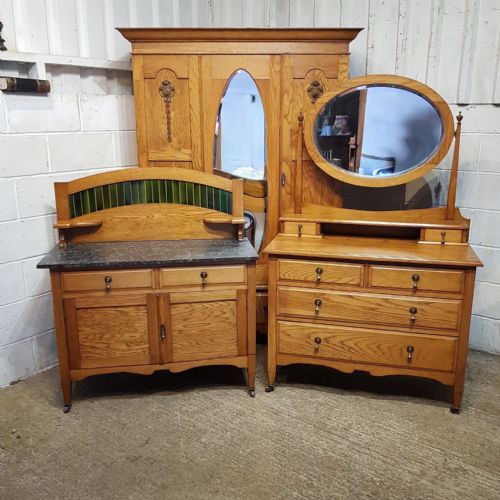
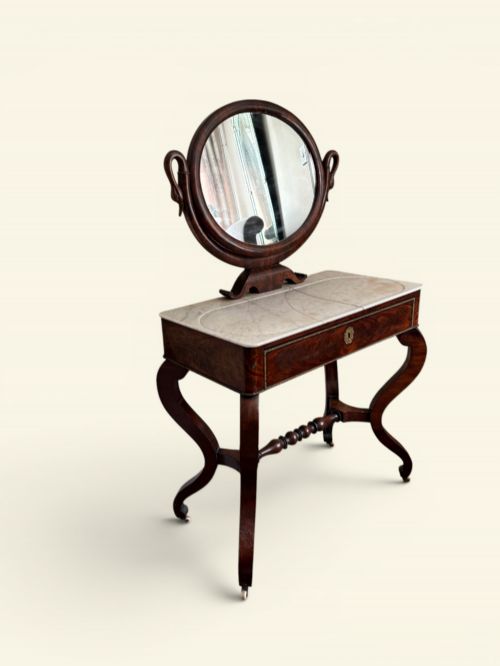
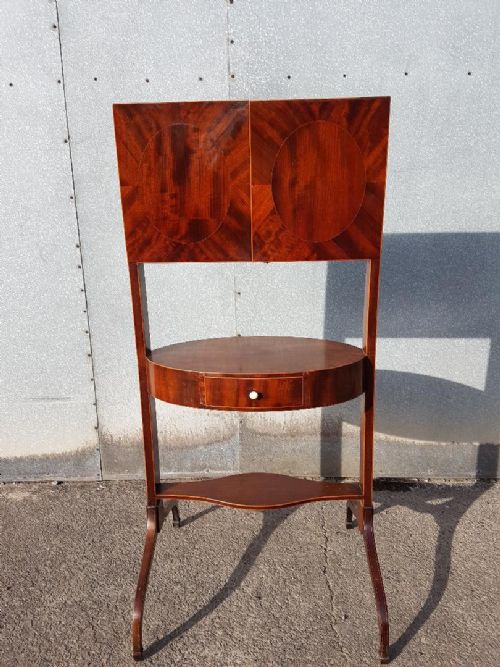
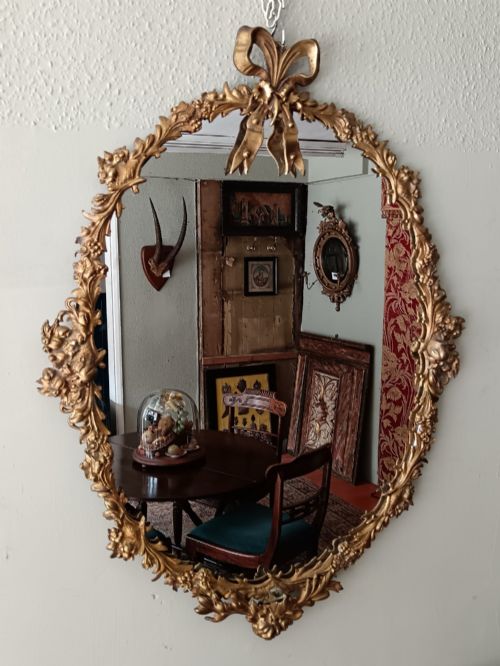
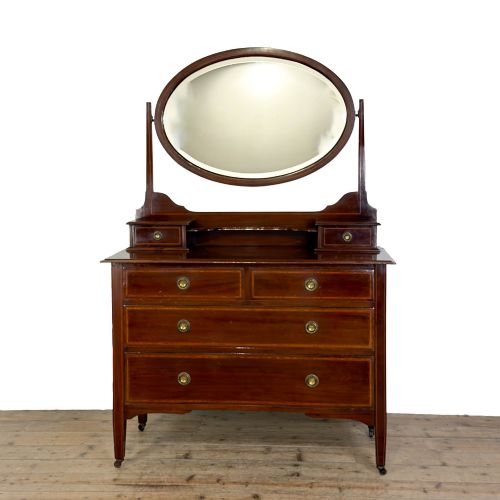
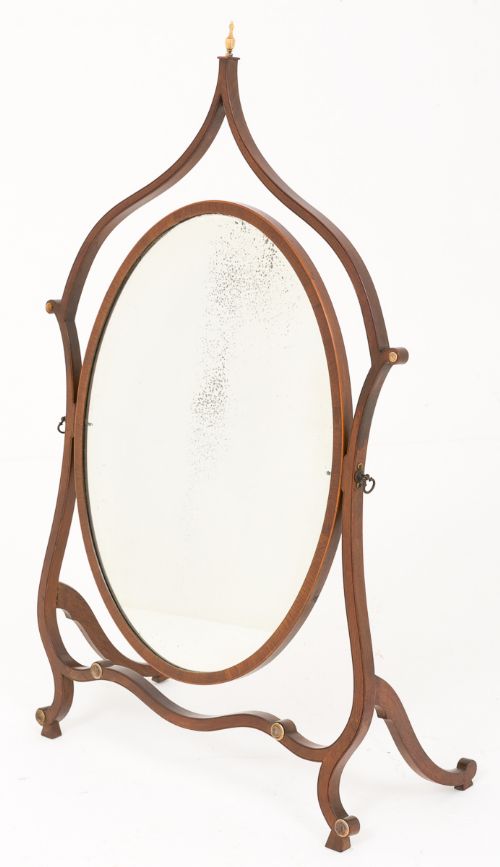
An oval bedroom mirror is a staple accessory for a dressing space, encompassing everything from compact table toilet glasses to large floor-standing cheval mirrors. When searching for an oval bedroom mirror, buyers encounter a variety of forms including wall-mounted frames, dressing table attachments, and freestanding pieces integrated into larger furniture suites.
Materials and construction
Cabinet makers utilised solid timbers such as mahogany, oak, and satinwood to build sturdy frames and supporting stands for the glass. Boxwood inlay and marquetry occasionally provide delicate surface decoration on the Edwardian and Victorian examples.
Mirrors were set into adjustable pivot frames for table models or fixed securely into heavy floor-standing cheval structures. Brass fittings frequently appeared as hinges, brackets, and securing screws to allow the glass to tilt.
Some dressing table mirrors include hidden storage compartments beneath the swing glass for keeping small trinkets safe.
Assessing quality and craftsmanship
Quality shows in the selection of timber veneers and the precision of the boxwood inlay work. Superior pieces display thoughtful grain matching and robust joinery in the supporting frames and stands.
The clarity of the glass and the weight of the supporting brass hardware also separate standard items from finer examples. Well-balanced pivot mechanisms allow the mirror to hold its position firmly without slipping.
The Oval Bedroom Mirror Glossary
- Cheval mirror
- A full-length freestanding mirror suspended on a frame with four legs, allowing it to swing. This form lets a person view their entire outfit.
- Toilet mirror
- A smaller mirror designed to sit atop a dressing table or chest of drawers. These often feature small storage compartments or drawers in the base.
- Triplate mirror
- A three-piece dressing table mirror with a central plate and two adjustable side wings. This setup provides multiple angles for grooming.
- Satinwood
- A yellowish hardwood with a smooth, satin-like sheen, frequently used as a fine veneer in late nineteenth and early twentieth-century furniture.
- Marquetry
- The art of applying pieces of veneer to a structure to form decorative patterns. Craftsmen utilised different coloured woods to create intricate designs on cabinet fronts and mirror frames.
Oval Bedroom Mirror: Frequently Asked Questions
What is a swing mirror?
A swing mirror uses pivot screws on either side of the frame attached to upright arms. This design lets the user tilt the glass vertically to adjust the viewing angle.
These mechanisms are common on dressing table and toilet mirrors from the Victorian and Edwardian periods.
How do I date a wooden frame?
Dating relies on observing the timber species, construction methods, and decorative styles like inlay or carving. Edwardian pieces often use lighter satinwood and delicate boxwood inlay.
Victorian and Georgian examples typically feature heavier solid mahogany or oak with simpler, robust structural lines.
Are these mirrors heavy?
Many pieces feature dense hardwoods like mahogany or oak combined with thick glass plates. Freestanding cheval mirrors and large wardrobe attachments carry significant weight.
Smaller table toilet mirrors are lighter and easily moved between different rooms or dressing tables.
Can I replace the glass plate?
Original glass often shows gentle foxing or age spots, which many collectors prefer to keep as a sign of authenticity. Replacing the plate is possible if the glass is damaged.
Glaziers can cut new mirror glass to fit older wooden rebates while preserving the antique frame.