



Outdoor Wall Lamp
These outdoor wall lamps bring enduring character to facades and porches, offering robust lighting shaped by decades of historical design.
Outdoor Wall Lamp
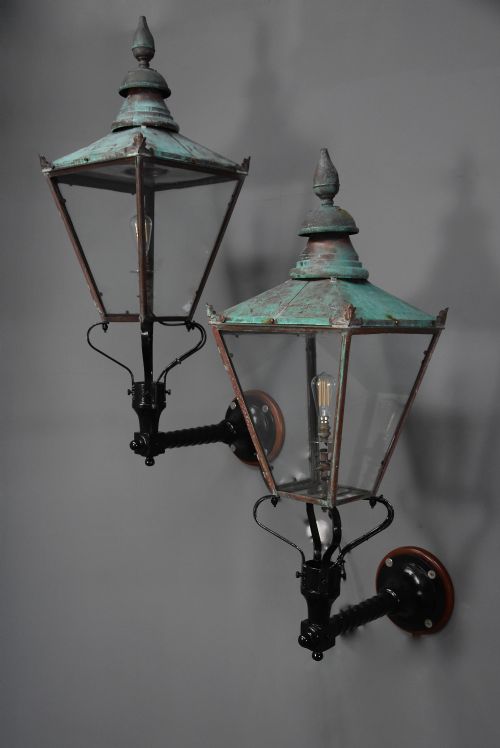
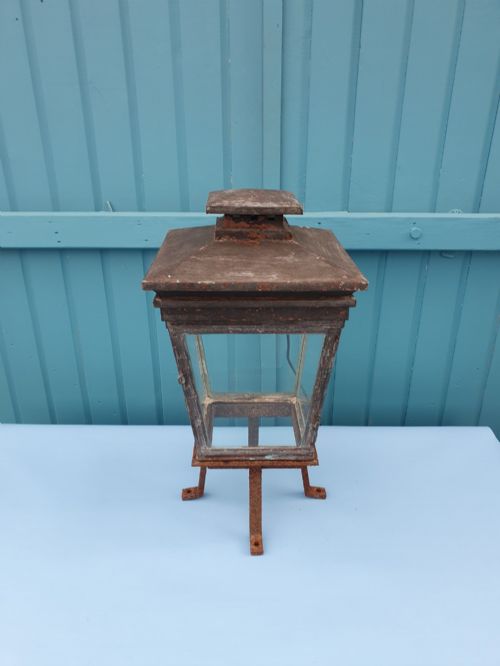
The items span periods from the Victorian era through the 1940s, encompassing styles such as Victorian, Edwardian, French Chateau, and Industrial. Forms range from single-light half lanterns and octagonal wall lanterns to large street lamps supported on spiral twist brackets.
Origins represented in the evidence include British and French designs, reflecting both domestic porch installations and street lighting adaptations. Many of these pieces utilise metals that weather naturally outdoors, maintaining structural integrity over generations.
How they were made
Construction relies heavily on copper, brass, wrought iron, and bronze, often combined with glazed panels of clear or frosted glass. Smiths and metalworkers shaped these materials through sheet metal fabrication and casting to create weather-resistant housings for gas or electric illumination.
Many early examples originate as functional gas street lamps or porch lights subsequently converted for electrical use. Supporting brackets incorporate wrought iron or copper formed into spiral twists and swan neck profiles to mount securely to exterior masonry.
Outdoor Wall Lamp Retail Price Guide 2026
Typical asking prices for outdoor wall lamp among the pieces listed under this phrase on Sellingantiques today, from the lower quarter to the upper quarter. They describe what is for sale here now, not the wider market.
Listings span multiple decades from the 1880s Victorian period through the 1940s, uniting gas adaptations and industrial designs.
What varies in quality
Distinction across the range lies in the weight of the metal gauge, the complexity of the bracket forging, and the integrity of the original glazing. Heavier copper and cast bronze housings demonstrate superior durability compared to lighter constructed alternatives.
Subtleties in proportion and decorative joinery separate standard utility lighting from sophisticated architectural pieces like matched pairs with intricate twist arms. The method of gas conversion and the preservation of original patination also influence the overall character of the fixture.
Revo Tipton
The Outdoor Wall Lamp Glossary
- Half lantern
- A wall-mounted light fixture flat on one side to sit flush against an exterior wall. This form saves space on narrow porches.
- Swan neck
- A curved metal mounting arm resembling the neck of a swan that positions the lantern away from the wall. It directs light outwards.
- Frosted glass
- Glass treated to appear cloudy or opaque, used to diffuse light glare. It softens the illumination cast by early bulbs.
- Wrought iron
- Iron beaten and worked by hand while hot to create strong decorative brackets. This material provides rigid structural support outdoors.
Outdoor Wall Lamp: Frequently Asked Questions
Can I use these outdoors?
These pieces were originally built for exterior installation on porches, facades, and street settings. Their robust metal construction withstands standard outdoor conditions.
Modern electrical installation should be reviewed by a qualified electrician to ensure proper weatherproofing and safety compliance for outdoor use.
How do I mount a wall lantern?
Mounting typically requires securing the attached metal bracket or backplate directly to exterior brickwork or timber framing using appropriate heavy-duty fixings. The weight of copper and iron lanterns demands firm structural support.
Ensure the mounting height allows clearance for doorways and pathways while concealing the electrical supply safely behind the bracket.
Are these converted from gas?
Several period examples began life as gas-fueled street or porch lamps before later conversion to electric lighting. This transition preserves the historical housing while adapting the interior for modern bulbs.
Conversion details are visible in the internal wiring chambers and modified burner assemblies retained within the lantern body.
What styles are available?
The selection includes Victorian, Edwardian, Industrial, and French Chateau aesthetics. These styles reflect the architectural preferences of their respective manufacturing periods.
Forms range from simple octagonal glass boxes to ornate pairs featuring spiral twist brackets and aged bronze finishes.