





Outdoor Stone Feature
These outdoor stone feature pieces range from weathered birdbaths to antique staddle stones, offering instant character and historical presence for the garden.
Outdoor Stone Feature
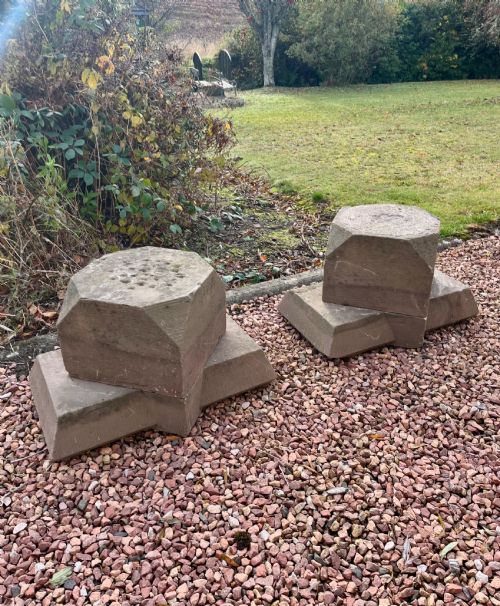
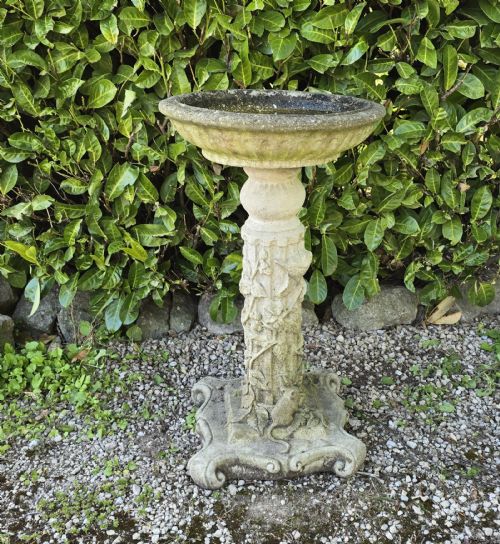
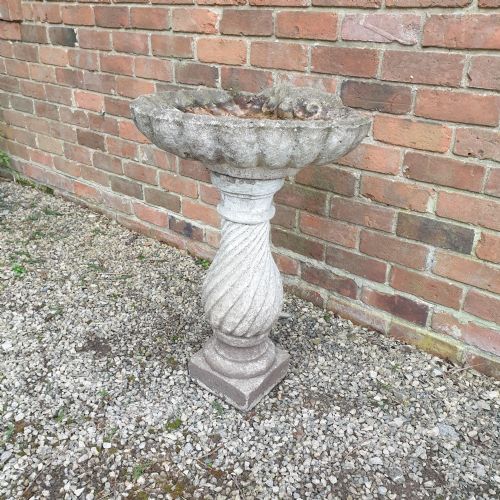
The most common versions met on this page are sturdy staddle stones and weathered birdbaths. These objects bridge the gap between architectural salvage and traditional garden ornament.
Origins stretch from eighteenth-century farmyards to mid-twentieth-century suburban lawns, incorporating vernacular utility and classical revival aesthetics.
How they were made
Masons shaped Cornish granite and sandstone by hand for utilitarian agricultural supports like staddle stones, ensuring immense weight and durability. Later items utilised cast stone and reconstituted stone poured into moulds to achieve neoclassical or shell-shaped forms.
Surfaces acquired their character through natural exposure, developing rich coats of moss and lichen over decades in the elements. This weathering process binds the material to its outdoor setting, blurring the line between human craft and botanical growth.
Outdoor Stone Feature Retail Price Guide 2026
Typical asking prices for outdoor stone feature among the pieces listed under this phrase on Sellingantiques today, from the lower quarter to the upper quarter. They describe what is for sale here now, not the wider market.
Listings incorporate items from the eighteenth century up to nineteen-fifty, spanning granite, sandstone, and cast stone.
What varies in quality
The distinction between ordinary items and superior examples lies in the integrity of the material and the honesty of the weathering. Granites and sandstones carved in the eighteenth century display chisel marks and stone density that mass-produced twentieth-century cast alternatives lack.
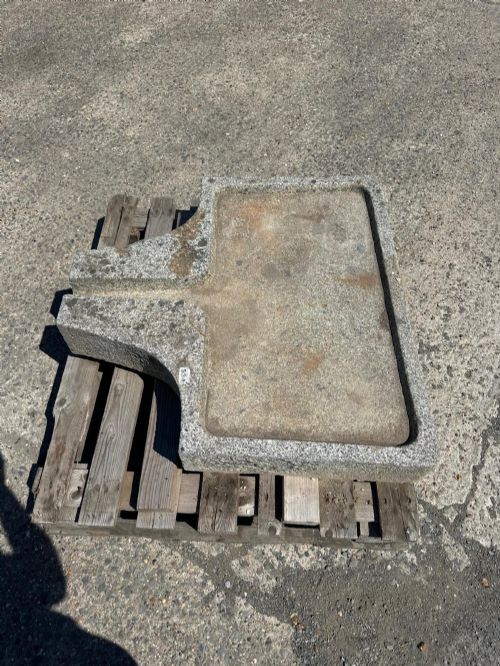
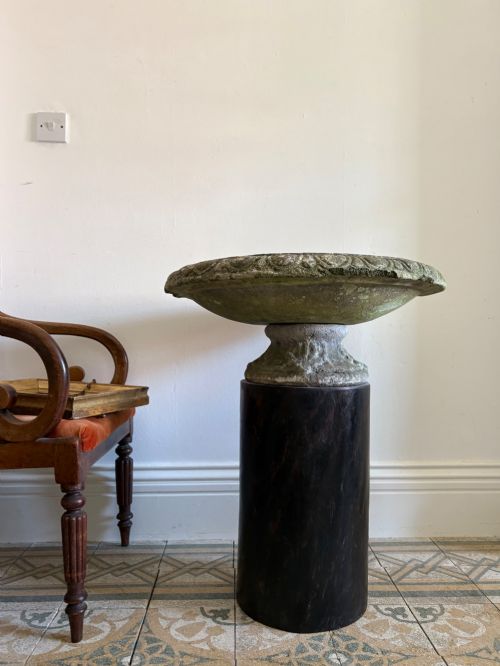
Proportion and form dictate the visual impact of statues and birdbaths. A well-balanced neoclassical silhouette or a genuine agricultural granite press carries a stronger sculptural presence than simpler, utilitarian vessels.
The Outdoor Stone Feature Glossary
- Staddle stone
- A mushroom-shaped stone support once used to elevate granaries off the ground to keep grain dry and vermin-free. They now serve as prominent architectural focal points in traditional gardens.
- Cast stone
- A refined building product manufactured from Portland cement, aggregate, and pigments to mimic natural cut stone. It became popular for decorative garden urns and birdbaths during the early twentieth century.
- Cornish granite
- A hard, coarse-grained igneous rock quarried in Cornwall and prized for its exceptional resistance to frost and weathering. It forms the dense material of older agricultural artefacts.
- Reconstituted stone
- A composite material made from crushed stone bound together with a matrix, allowing manufacturers to cast elaborate classical details economically. It ages outdoors in a manner similar to quarried stone.
- Neoclassical
- A style drawing inspiration from the classical art and architecture of ancient Greece and Rome. In garden ornaments, this manifests in formal urns, draped figures, and architectural birdbaths.
Outdoor Stone Feature: Frequently Asked Questions
How do I clean moss off my outdoor stone feature?
Most dealers and collectors advise leaving natural moss and lichen undisturbed because they provide proof of age and weathering. Scrubbing with harsh chemicals strips away this desirable patina.
If a basin requires clearing for use as a birdbath, gentle brushing with water usually suffices without harming the stone surface underneath.
Are staddle stones frost-proof?
Genuine granite and sandstone staddle stones withstand freezing temperatures indefinitely because of their dense geological composition. They stood exposed in fields for centuries prior to entering the garden market.
Cast or reconstituted stone items require slightly more attention in severe winters, though robust outdoor placement remains standard.
How can I tell an eighteenth-century staddle stone apart from a later one?
Eighteenth-century examples display hand-chiselled tool marks and irregular shaping resulting from manual quarrying and shaping. Later pieces often show the more uniform surfaces of mechanical extraction.
Weight and geological quirks also help distinguish older Cornish granite from modern reproductions or alternative aggregates.
Can I leave a stone birdbath outside all winter?
Solid granite and heavy cast stone birdbaths tolerate winter conditions without trouble. Ensuring standing water does not freeze solid and crack shallow basins is the main precaution.
Lifting lighter bowls off the ground during prolonged hard freezes prevents moisture absorption from the soil from causing stress.