



Ottoman Inlaid Occasional Table
An ottoman inlaid occasional table brings intricate geometric pattern and warm eastern craftsmanship directly into a room.
Ottoman Inlaid Occasional Table
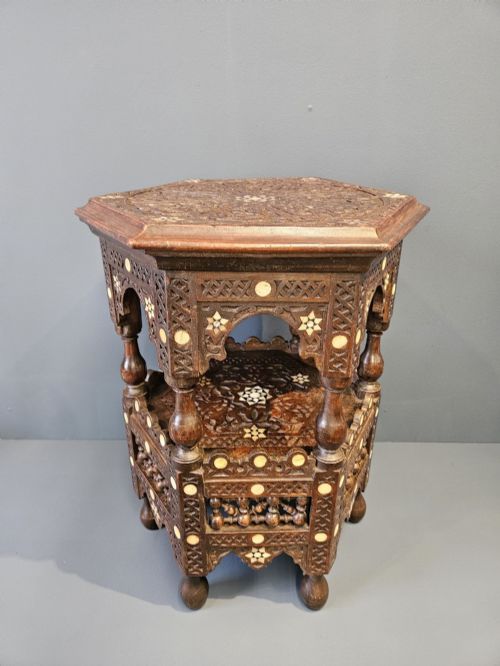
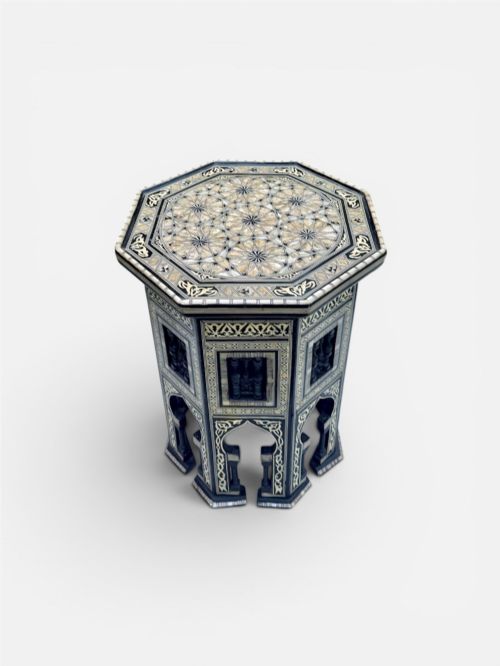
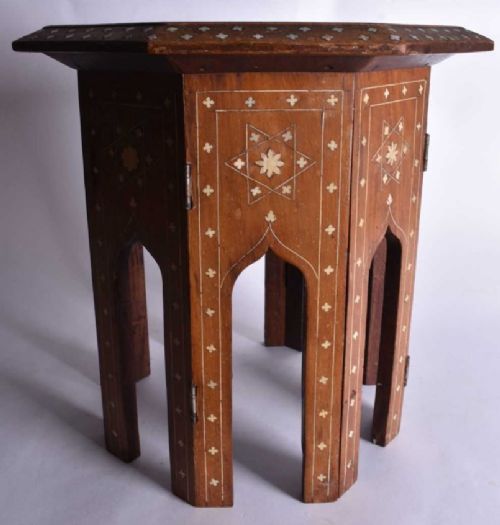
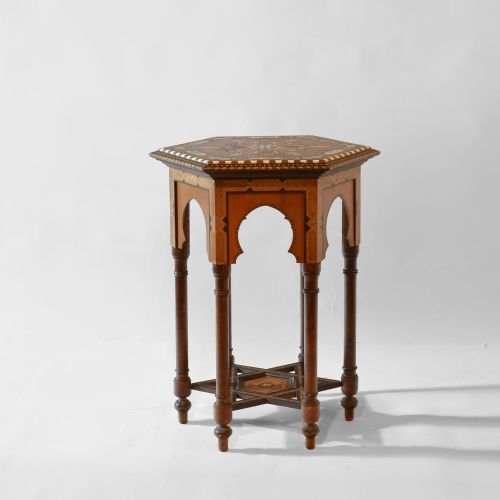
An ottoman inlaid occasional table is typically found in octagonal or hexagonal forms designed for versatile placement around a room. These small side and lamp tables frequently date from the nineteenth century and the early decades of the twentieth century, reflecting a strong period interest in Middle Eastern design.
Most examples you encounter on this page display the characteristic folding bases or tiered structures typical of Syrian and Moorish workshops. They serve as striking accent pieces that double as functional surfaces for lamps or small decorative objects.
Makers working in the Moorish and Islamic revival styles produced these pieces to satisfy a widespread Victorian and Edwardian taste for exotic furnishings. The geometry of the tabletops often incorporates complex multi-sided layouts that draw the eye immediately.
How they were made
The construction of these pieces relies upon solid timbers such as walnut, ebonised wood, and various hardwoods assembled into rigid folding or multi-tiered frames. Carved detailing frequently frames the structural joints and edge panels.
Surface decoration is achieved through the meticulous application of mother-of-pearl, nacre-shell, and bone segments set directly into the wooden substrate. Artisans cut these small geometric tesserae by hand to form dense, continuous patterns across the top and sides.
Ottoman Inlaid Occasional Table Retail Price Guide 2026
Typical asking prices for ottoman inlaid occasional table among the pieces listed under this phrase on Sellingantiques today, from the lower quarter to the upper quarter. They describe what is for sale here now, not the wider market.
Listings demonstrate that walnut, ebonised wood, and general hardwoods form the primary structural timbers for these tables.
What varies in quality
The distinction between standard production and the finest work lies in the density and precision of the mosaic inlay. Superior examples feature tightly fitted mother-of-pearl and bone fragments with minimal filler between the individual pieces.
Depth of carving and the complexity of the underlying timber framework also separate ordinary tables from exceptional ones. Tables attributed to documented retail houses or notable workshops often demonstrate superior joinery and more ambitious architectural silhouettes.
Liberty & Co
The Ottoman Inlaid Occasional Table Glossary
- Octagonal
- Having eight sides. This geometric layout is the most common shape for the tabletops found in this category.
- Nacre-shell
- Iridescent inner shell material used for inlay. It provides the shimmering pearl highlights characteristic of these surfaces.
- Moorish Revival
- An architectural and decorative style popular in the nineteenth century. It borrows heavily from traditional North African and Spanish Islamic design motifs.
- Ebonised wood
- Timber treated to resemble ebony. This dark finish provides a high-contrast background that makes lighter inlay stand out.
- Hexagonal
- Having six sides. Tables with this configuration offer a slightly more compact footprint while maintaining intricate geometric decoration.
Ottoman Inlaid Occasional Table: Frequently Asked Questions
What is an ottoman inlaid occasional table?
An ottoman inlaid occasional table is a small, portable accent surface decorated with geometric patterns of mother-of-pearl and bone. These pieces usually feature octagonal or hexagonal tops supported by folding or tiered wooden frames.
Originating from Middle Eastern and Syrian traditions, they gained immense popularity in Britain during the nineteenth century under the banner of Moorish and Islamic revival styles. Today they remain prized for their intricate craftsmanship and decorative versatility.
How were these tables used originally?
In Victorian and Edwardian homes, these small tables functioned primarily as display surfaces for lamps, ornaments, or smoking accessories. Their portable nature allowed them to be easily moved around reception rooms as needed.
Many examples feature ingenious folding bases designed for storage or quick relocation. This practical aspect made them popular additions to drawing rooms and sitting spaces.
How do you date an antique inlaid table?
Dating relies heavily on material composition, construction methods, and stylistic cues recorded in the specific design. Nineteenth-century examples often display denser hand-cut nacre inlay and heavier hardwood carcasses compared to later twentieth-century iterations.
Attributions to specific retailers or distinct revival periods help narrow the timeline further. Examining the ageing of the timber and the wear patterns on the inlay also provides reliable clues.
How do you care for mother-of-pearl inlay?
Caring for these delicate surfaces requires maintaining a stable indoor environment away from direct heat sources and excessive moisture. Sudden temperature fluctuations can cause the wood to expand and loosen the tiny bone or shell tesserae.
Dusting should be done gently with a dry, soft cloth without applying heavy commercial polishes. Treating the timber base occasionally with appropriate wax helps preserve the wood without harming the delicate mosaic work.