


Ornate Wooden Casket
An ornate wooden casket brings intricate carving, rich timber and secure storage into a room, offering both history and practical use.
Ornate Wooden Casket
The pieces on this page span several centuries, including walnut jewelery cabinets from the eighteenth century, Victorian brass-mounted boxes, and seventeenth-century hardwood storage forms. Each era brings distinct construction methods and decorative schemes, reflecting the taste and craftsmanship of its origin.
Forms vary widely according to their original purpose, encompassing tea caddies, sewing cases, strongboxes and dedicated jewellery boxes. Hardwoods dominate the selection, often enriched with marquetry, brass inlay, or deep relief carving.
Materials and construction
Makers utilised dense timbers such as walnut, rosewood, kingwood, sandalwood and various regional hardwoods to build durable carcases that resist warping. These rich woods often feature prominent natural grain patterns, which serve as the primary visual foundation before any surface ornament is applied.
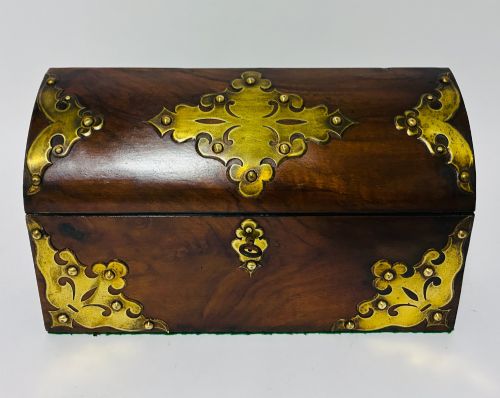
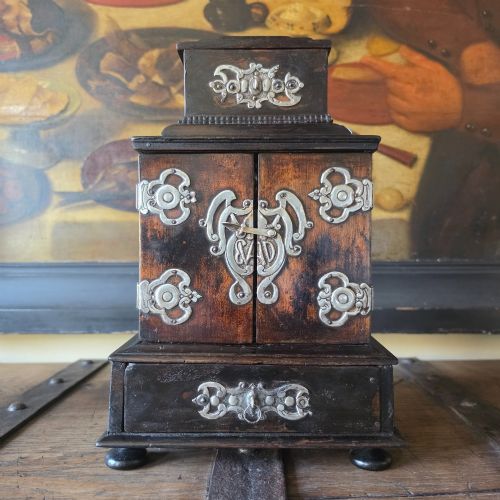
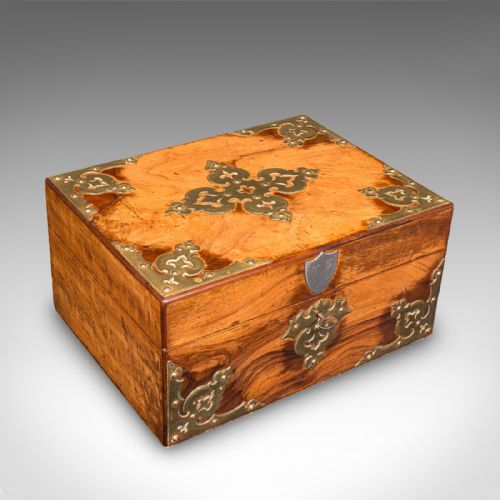
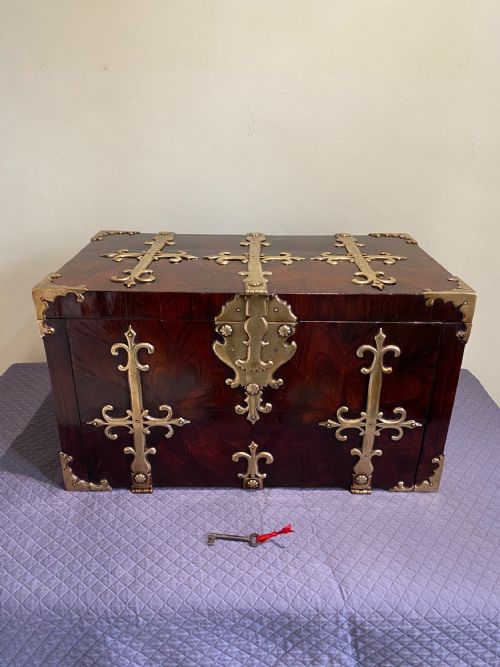
Decoration relied on skilled hand-working techniques including marquetry inlay, brass mounting, silvered metal details, and deep spatial carving. Artisans fitted metal hinges, locks and decorative banding in brass to reinforce corners and secure lids.
Listings feature woods including walnut, rosewood, kingwood, sandalwood, and general hardwoods, paired with brass and silvered metal.
Assessing quality and execution
Quality in an ornate wooden casket rests upon the precision of the joinery and the depth of the decorative work. Finer examples display tightly fitted mitre joints, perfectly flush metal mounts, and hand-carved relief work with crisp, clean edges rather than soft or hurried moulding.
The choice of timber and the complexity of its preparation also separate standard pieces from exceptional ones. Select items incorporate figured burr veneers, intricate multi-wood marquetry, or specialised internal compartments that demonstrate advanced cabinet-making skill.
The Ornate Wooden Casket Glossary
- Marquetry
- The art of applying pieces of veneer to a structure to form decorative patterns and pictures. This technique allows makers to utilise contrasting wood colours and grains.
- Caddy
- A small box or container, historically used for storing tea leaves. These often featured internal compartments and secure locks.
- Strongbox
- A heavily reinforced box designed for the secure storage of money or precious documents. They typically incorporate robust metal banding and secure locking mechanisms.
- Veneer
- A thin slice of superior wood applied to a base of common timber. This method provides a decorative surface while ensuring structural stability.
Ornate Wooden Casket: Frequently Asked Questions
What were ornate wooden caskets used for?
These boxes served multiple domestic functions, primarily safeguarding jewellery, loose tea, sewing implements, and private correspondence. Their secure locks and divided interiors kept delicate valuables organised and protected from dust.
Over time, owners repurposed them according to changing household needs, transitioning from utility storage to prominent display pieces in drawing rooms.
How do I care for antique wooden boxes?
Maintenance requires keeping the timber away from direct sunlight and sudden temperature shifts to prevent wood splitting or veneer lifting. Gentle dusting with a dry, soft cloth preserves the polished finish.
Applying specialised wax very sparingly helps nourish older hardwoods, maintaining their natural lustre without building up heavy residues.
How can I tell different wood types apart?
Identifying timber involves examining the grain pattern, natural colour and weight of the box. Walnut typically shows a rich brown tone with varied grain, while rosewood presents darker purple-brown streaks.
Exotic woods like sandalwood and kingwood offer distinctive aromatic qualities or dense, contrasting colorations unique to their regional origins.
What defines Gothic Revival style?
Gothic Revival pieces draw inspiration from medieval architecture, featuring pointed arches, tracery, and formal structural severity. In woodwork, this translates to robust forms and solemn decorative motifs.
Cabinet-makers applied these architectural elements to domestic items during the nineteenth century to create dramatic, imposing furniture and boxes.