

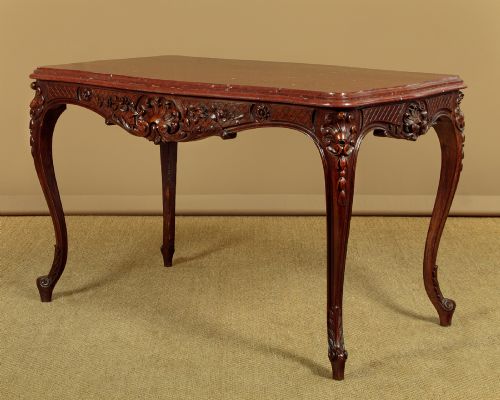
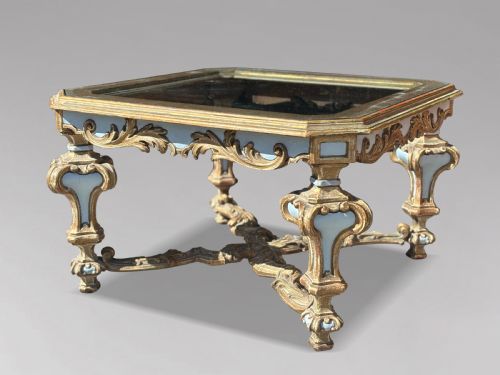


Ornate Wood Centre Table
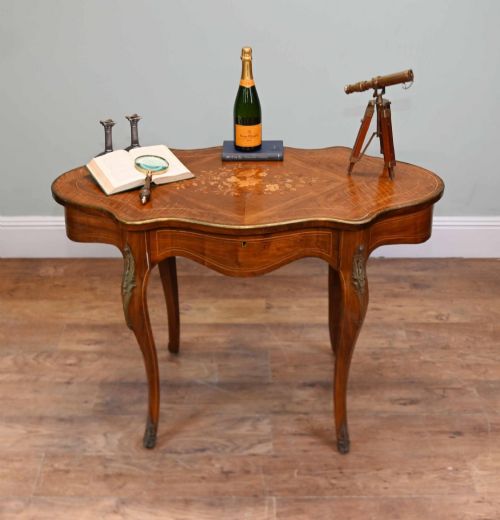
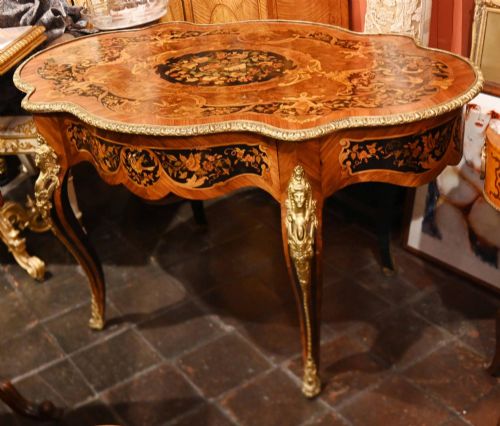
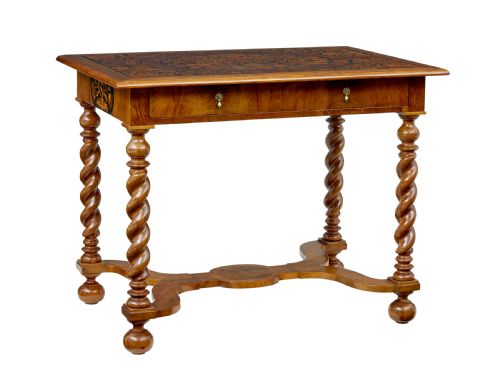
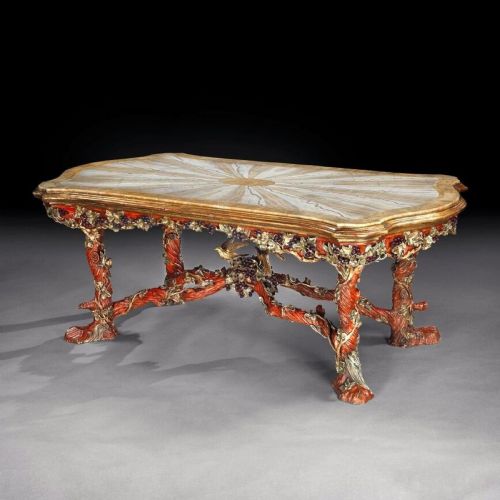
An ornate wood centre table anchors a grand room with heavy walnut, marble tops, and intricate marquetry.
Ornate Wood Centre Table
An ornate wood centre table is a freestanding focal piece designed to sit in the middle of a room rather than against a wall. The examples on this page span the nineteenth century into the early twentieth century, showing heavy influence from French and Italian revival styles.
Buyers will most frequently encounter walnut and mahogany tables featuring marquetry inlay, carved details, and occasional marble or onyx tops. Forms range from traditional centre tables and console tables to desks, writing tables, and occasional coffee tables.
Origins stretch across European workshops, including French, Italian, and Anglo-Indian makers, incorporating distinct regional decorative techniques. These tables served as functional surfaces for display and writing while projecting status through elaborate carving and gilding.
How they were made
Cabinetmakers utilised dense timbers such as walnut, mahogany, and oak as the foundational structure for these tables. Woods were frequently shaped with scroll carving, hand-carved details, and applied gesso.
Surface decoration relies heavily on detailed marquetry inlay using contrasting timbers to create complex geometric or floral patterns. Pietra dura inlay and polychrome finishes also appear alongside gilt wood treatments.
Heavy stone inserts such as rouge marble and onyx provide contrasting table tops, supported by elaborate giltwood, ormolu, and brass mounts.
Ornate Wood Centre Table Retail Price Guide 2026
Typical asking prices for ornate wood centre table among the pieces listed under this phrase on Sellingantiques today, from the lower quarter to the upper quarter. They describe what is for sale here now, not the wider market.
Listings feature nineteenth-century pieces alongside 1920s examples, utilising walnut, mahogany, marble, and ormolu.
What varies in quality
The precision of the hand-carved woodwork and the complexity of the marquetry inlay set the standard for finer pieces. Crisp lines in scroll carving and tight joints indicate superior workshop production.
Materials dictate the upper tier, particularly where heavy marble or onyx slabs are integrated seamlessly with carved wooden frames. The inclusion of specialised elements like Baccarat crystal or pietra dura elevates a piece.
Finer examples maintain structural integrity across complex forms without relying on heavy modern reinforcement, preserving the original balance of timber and decorative mounts.
Amleto Bertoni·Harrods
The Ornate Wood Centre Table Glossary
- Marquetry
- The art of applying pieces of veneer to a structure to form decorative patterns. Craftsmen used various coloured woods to create pictorial scenes on table tops.
- Ormolu
- Gilded bronze mounts applied to furniture for decorative effect. This technique was common in French cabinetmaking.
- Pietra Dura
- Inlay work using cut and fitted polished coloured stones to create images. This technique appears on Florentine tables.
- Gesso
- A plaster-based material applied to wood surfaces before gilding or painting. It provides a smooth base for intricate carved details.
- Epergne
- A large table centrepiece with multiple branches for holding fruit or flowers. These items often incorporate crystal elements.
Ornate Wood Centre Table: Frequently Asked Questions
Where should an ornate wood centre table go?
These tables are designed to sit freestanding in the middle of a principal room, allowing access from all sides.
They function well as display surfaces or writing desks where the detailed marquetry and carved woodwork can be seen from every angle.
How do I care for a marble top table?
Marble and onyx tops require gentle cleaning with a soft cloth and neutral soap to avoid damaging the stone surface.
Keep liquids away from unsealed edges and use coasters to prevent staining on older stone.
What is the difference between a console and a centre table?
A centre table is finished on all sides for placement in the middle of a floor space.
A console table typically stands flat against a wall, often supported by scroll carved legs at the front.
How do I identify a revival style table?
Revival tables borrow decorative motifs from earlier periods, such as Louis XV curves or Italian Baroque scrollwork.
Examine the timber shrinkage, carving depth, and joinery to understand the actual period of manufacture.