


Ornate Walnut Credenza
An ornate walnut credenza brings tactile warmth and high-relief carving to a drawing room, offering glazed display space alongside fitted interior drawers.
Ornate Walnut Credenza
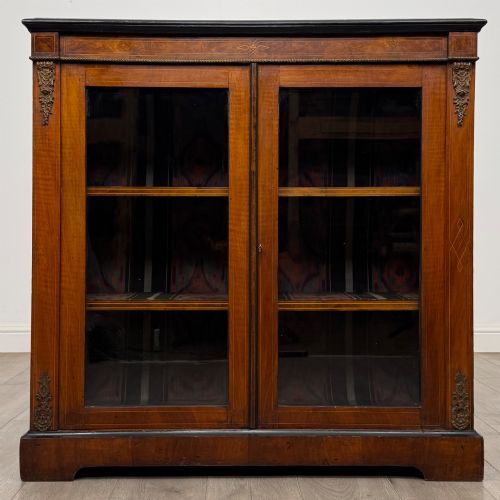
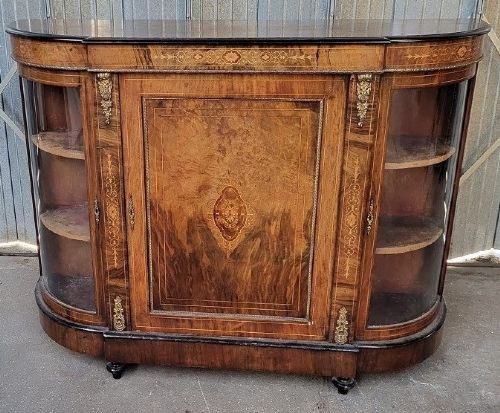
An ornate walnut credenza is a low freestanding cabinet designed for storage and display, frequently taking the form of a serpentine or glazed pier cabinet originating from the Victorian period.
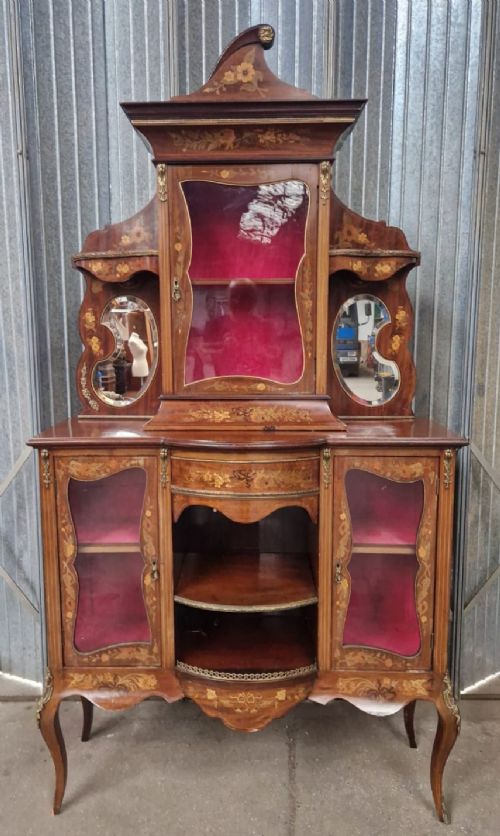
The selections encountered here span from the mid-nineteenth century through to the 1930s, encompassing Renaissance Revival designs alongside French revival side cabinets.
Makers utilised rich timber foundations, pairing figured timbers with intricate marquetry and glazed doors to create focal points for formal reception rooms.
Materials and construction methods
The primary material is walnut, often selected as burr or figured veneer to create dramatic grain patterns across the front panels and doors.
Cabinet makers integrated cast ormolu mounts, brass details, and boxwood inlay to accentuate the architectural lines of the revival styles.
Marble tops appear alongside mirrored backs and detailed wood carving, showing the heavy reliance on mixed media during the Victorian era.
Listings feature walnut, burr walnut, and ormolu across Victorian and Renaissance Revival styles.
Judging the standard of manufacture
Quality rests upon the choice of veneer and the precision of the boxwood inlay, where tighter grain patterns and symmetrical figuring elevate a piece above standard production.
The crispness of the hand-carving and the integration of ormolu mounts determine whether a cabinet represents high Victorian craftsmanship or simpler workshop output.
The Ornate Walnut Credenza Glossary
- Burr walnut
- A wood harvested from walnut tree growths, producing swirling, highly decorative grain patterns highly prized by nineteenth-century cabinet makers. It provides distinctive visual texture to large cabinet doors.
- Ormolu
- Gilded bronze mounts applied to furniture for decorative contrast against dark timbers. These cast metal ornaments define the French revival aesthetic.
- Pier cabinet
- A narrow display cabinet designed to fit against the wall space between windows. These glazed pieces protect porcelain and silver collections.
- Marquetry
- The art of applying thin pieces of wood veneer to a structure to form decorative patterns. Boxwood and tulipwood were common additions for contrasting colour.
- Credenza
- A low dining or reception room cabinet used for serving or display, typically featuring central glazed doors flanked by side cupboards.
Ornate Walnut Credenza: Frequently Asked Questions
What is an ornate walnut credenza used for?
These cabinets served primarily to display porcelain and silver behind glass doors while concealing household items within the lower wooden compartments.
Today, they function well in living spaces as focal display units or media credenzas that retain period character.
How do I date a Victorian walnut cabinet?
Dating relies on combining stylistic clues such as Renaissance Revival carving with construction traits like drawer linings and timber selection.
Cabinets from the middle of the nineteenth century frequently employ heavy ormolu mounts and burr veneers, whereas later examples show shifts in marquetry patterns.
Where should I place a credenza at home?
A credenza requires a substantial wall where its carved details and mirrored backs can be appreciated without obstruction from surrounding furniture.
Placing the piece away from direct sunlight protects the walnut veneer and inlay from fading over time.
How do I care for antique walnut furniture?
Maintenance involves keeping the timber away from extreme temperature shifts and applying appropriate wax sparingly to nourish the grain.
Polishing metal mounts requires care to avoid staining the surrounding wood surface.