

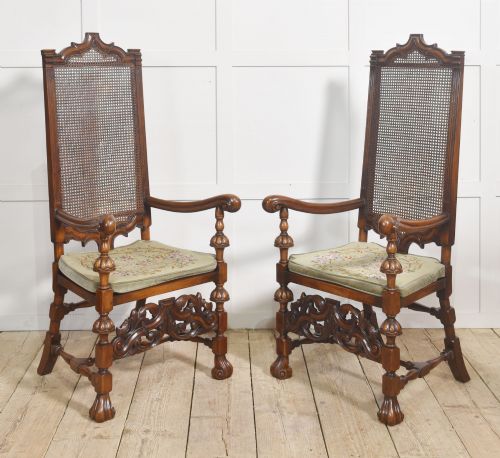


Ornate Victorian Armchair
An ornate victorian armchair brings heavy carved timber, elaborate revival styles and distinct nineteenth-century presence into a room.
Ornate Victorian Armchair
When someone searches for an ornate victorian armchair, they are looking for substantial seating defined by elaborate historical revival styles and deep timber carving. The pieces appearing here span the nineteenth century, including specific dates from eighteen seventy-one onwards, alongside garden furniture and indoor seating.
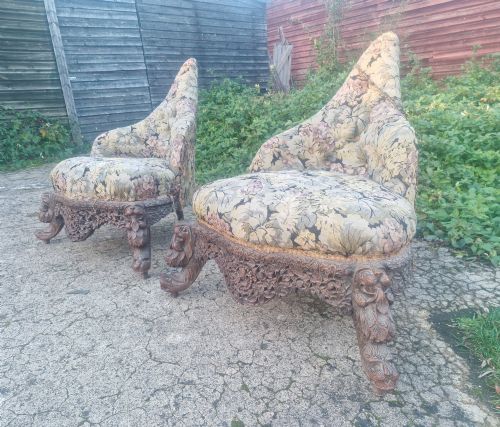
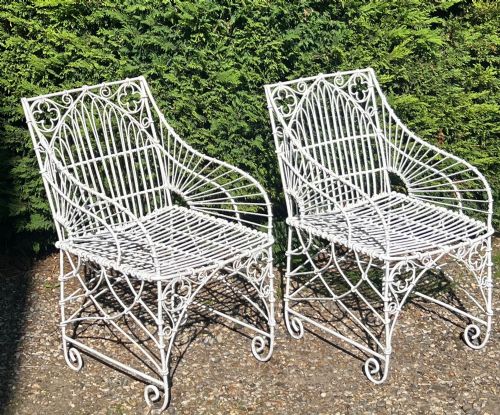
The versions most commonly met on this page include walnut and oak armchairs bearing heavy relief work, alongside iron garden chairs and Anglo-Indian variants. These pieces function as dramatic focal points, combining utilitarian seating with complex decorative programmes ranging from Gothic Revival to Baroque and Art Nouveau.
How they were made
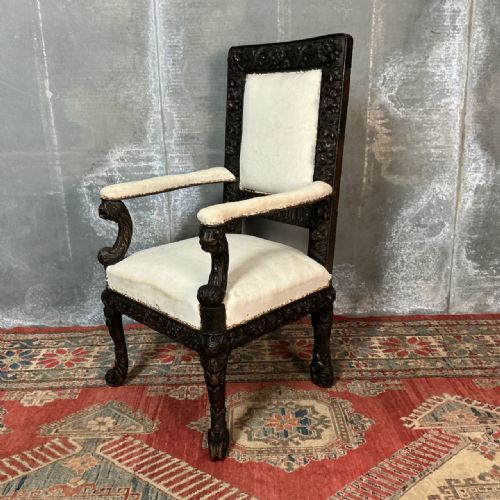
Makers utilised dense hardwoods such as walnut and oak, shaping structural frames through heavy carving and joinery. Surface decoration often involved deep relief work depicting hound motifs or intricate foliage.
Upholstery materials recorded in the evidence include leather and velvet, affixed to frames that sometimes incorporate cane or painted finishes. Cast and wrought iron served for exterior garden chairs, shaped into elaborate structural forms.
Ornate Victorian Armchair Retail Price Guide 2026
Typical asking prices for ornate victorian armchair among the pieces listed under this phrase on Sellingantiques today, from the lower quarter to the upper quarter. They describe what is for sale here now, not the wider market.
What varies in quality
The distinction between ordinary production and finer examples rests upon the ambition and depth of the carving. Relief work executed with crisp detail and three-dimensional depth elevates certain walnut and oak armchairs above simpler versions.
Quality also shows in the ambition of the stylistic execution, whether adhering strictly to Gothic Revival or exploring complex Anglo-Indian and Baroque forms. The integration of high-grade leather, velvet, or specialised framing materials separates standard seating from exhibition pieces.
The Ornate Victorian Armchair Glossary
- Gothic Revival
- A nineteenth-century design movement drawing inspiration from medieval architecture and ornamentation. Pieces in this style frequently display pointed arches and heavy ecclesiastical motifs.
- Anglo-Indian
- Descriptive of furniture produced in India under British influence, typically combining traditional local carving techniques with European forms. These pieces often exhibit dense, intricate floral patterns.
- Art Nouveau
- An international style prominent around nineteen hundred characterised by flowing, organic lines inspired by natural forms. It represents a departure from strict historical revivalism.
- Carolean Revival
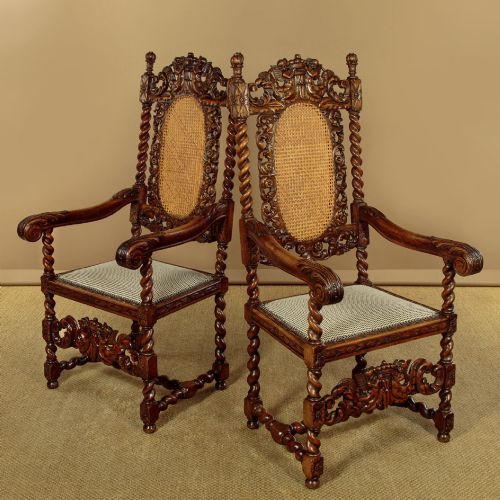
- A style reviving the ornate carved aesthetic of the reign of King Charles the Second. It is typically marked by crown and scroll motifs executed in rich timbers.
Ornate Victorian Armchair: Frequently Asked Questions
What defines an ornate victorian armchair?
These armchairs are defined by heavy timber construction, elaborate hand carving, and adherence to historical revival styles such as Gothic, Baroque, and Renaissance.
They reflect the nineteenth-century taste for dramatic, decorative furniture that served as both a practical seat and a display of craftsmanship.
How were these armchairs used originally?
Such pieces were designed for principal rooms, halls, or specialised exhibition spaces where their decorative impact could be fully appreciated by visitors.
Some variants, including iron examples, were intended for garden use, while grander timber thrones and hall chairs occupied prominent domestic settings.
How do I live with an ornate victorian armchair?
Positioning one of these chairs requires space and a room capable of supporting a strong historical focal point. They pair effectively with simpler modern or traditional interiors to create deliberate contrast.
Protecting the original leather, velvet, or cane surfaces from direct sunlight and excessive wear helps preserve their material integrity.
How can I tell the different revival styles apart?
Gothic Revival pieces utilise architectural motifs like pointed arches and heavy ecclesiastical detailing. Baroque and Carolean revivals favour dynamic scrolls, crowns, and deep foliage carving.
Art Nouveau shifts toward flowing, organic plant lines, while Anglo-Indian chairs display dense, continuous hand-carved ornamentation.