



Ornate Silver Mirror
An ornate silver mirror brings the dramatic weight of Venetian, French, and Victorian rooms straight onto a modern wall.
Ornate Silver Mirror
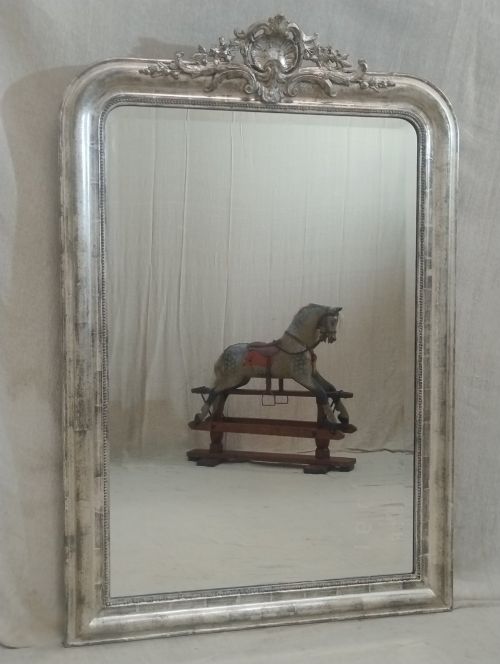
An ornate silver mirror represents a distinct category of reflective wall and table furnishings defined by silver leaf, silver gilt, and carved surfaces. These pieces emerge primarily from periods spanning the eighteenth, nineteenth, and early twentieth centuries, drawing on styles such as Venetian, Baroque Revival, and Rococo. Buyers searching for an ornate silver mirror generally encounter wall mirrors, table mirrors, and easel mirrors framed in wood, gesso, metal, brass, and mirrored glass.
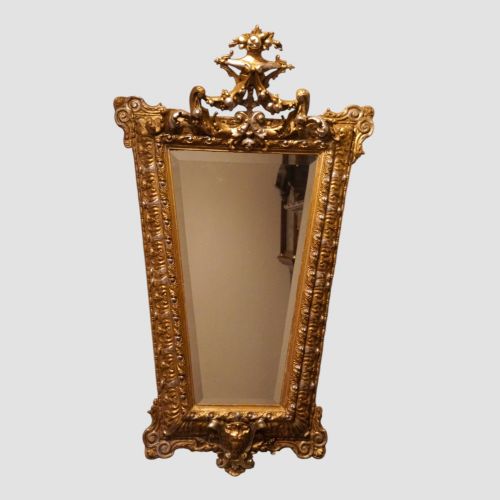
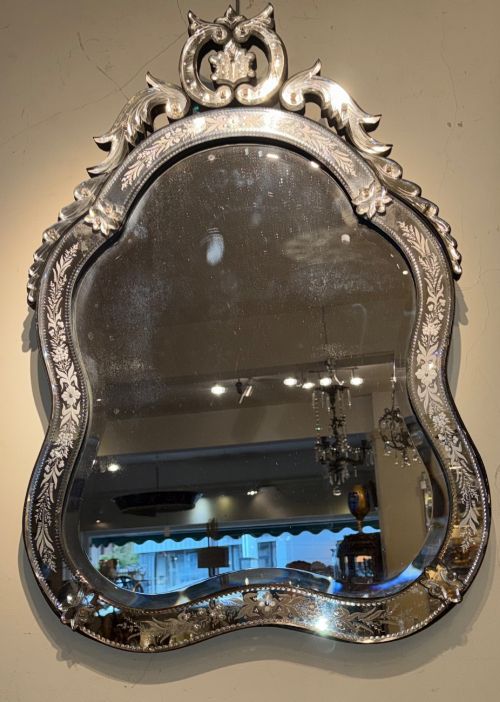
The objects listed on this page encompass substantial architectural wall pieces alongside smaller easel-backed items. Examples range from large French carved wood and gesso creations finished in silver gilt to early twentieth-century Venetian plates and Peruvian colonial revival silver border designs. Forms span traditional rectangular formats, trapezoidal outlines, and intricate carved Venetian silhouettes.
How these mirrors were constructed
Makers built the foundational structures of these pieces predominantly from wood, applying gesso layers to shape intricate relief ornamentation before applying silver leaf, silver gilt, or gold leaf surfaces. Carved wooden frames receive hand-finished metallic leaf applications, creating the textured, light-catching borders characteristic of French chateau and Baroque revival pieces. Metal and brass alternatives utilise cast or shaped frames to hold the glass plate.
The reflective components consist of glass plates, frequently bevelled and occasionally displaying age-related foxing. Venetian examples incorporate specialised glasswork techniques alongside the primary mirror plate, while easel mirrors integrate hinged metal stands for tabletop display.
Listings feature periods spanning the eighteenth century through to the 1950s, utilising wood, gesso, brass, and mirrored glass.
What separates the finest examples
Quality in an ornate silver mirror rests upon the depth and intricacy of the carving within the wood and gesso structure. Superior examples display crisp, hand-carved relief work where the silver leaf adheres smoothly to complex contours without obscuring the underlying form.
The condition and character of the glass plate also define the upper tier of pieces. Original bevelled plates with natural foxing or intact silver borders retain historical integrity, whereas inferior pieces often exhibit crude framing or compromised reflective surfaces.
The Ornate Silver Mirror Glossary
- Silver Leaf
- A very thin sheet of beaten silver applied to wood or gesso surfaces. It tarnishes naturally over time, developing a characteristic patina.
- Silver Gilt
- Silver leaf or silver plating applied over a base material and often warmed with a thin wash to mimic or complement gold tones. This finish appears frequently on nineteenth-century French wall pieces.
- Gesso
- A plaster-like mixture applied to wood frames and carved into ornate relief patterns before gilding. It provides the smooth, malleable base for intricate surface decoration.
- Foxing
- Age-related spots and discolouration within the mirrored glass plate. It occurs when moisture seeps behind the silvering layer over decades.
- Bevelled Plate
- Glass with edges ground and polished at an angle. This treatment catches light and adds visual depth to the border of the mirror.
Ornate Silver Mirror: Frequently Asked Questions
How do I hang a heavy antique wall mirror?
Heavy wall mirrors require secure fixings into structural wall studs or solid masonry using appropriate weight-rated brackets. The substantial wooden and gesso frames demand professional installation to distribute the load safely.
Avoid relying on standard picture wire alone for large seventeenth- or eighteenth-century pieces. Ensure the hanging hardware engages directly with the frame construction.
What causes foxing on old mirror glass?
Foxing develops when atmospheric moisture penetrates the protective backing of the glass and reacts with the silver reflective coating. This chemical process creates dark spots and cloudy patches across the plate.
Many collectors value natural foxing as proof of age and authenticity. It alters the reflection without diminishing the decorative merit of the piece.
How can I tell a Venetian mirror from a French one?
Venetian mirrors typically feature glass elements built into the frame itself, surrounding the central plate with engraved glass slips and decorative crests. French mirrors rely on carved wood and gesso frames finished in silver gilt or paint.
French pieces often emphasise architectural symmetry and deep sculptural relief. Venetian examples focus on reflective complexity and delicate glass craftsmanship.