

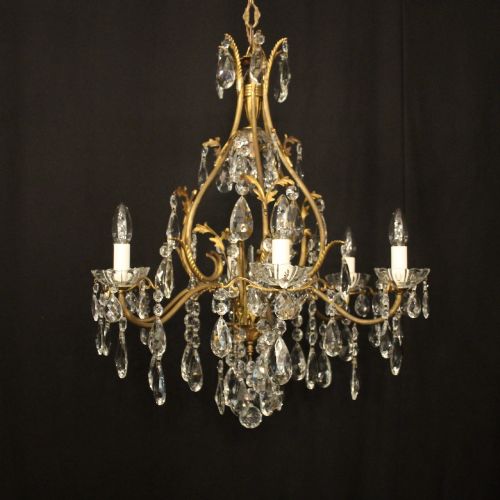
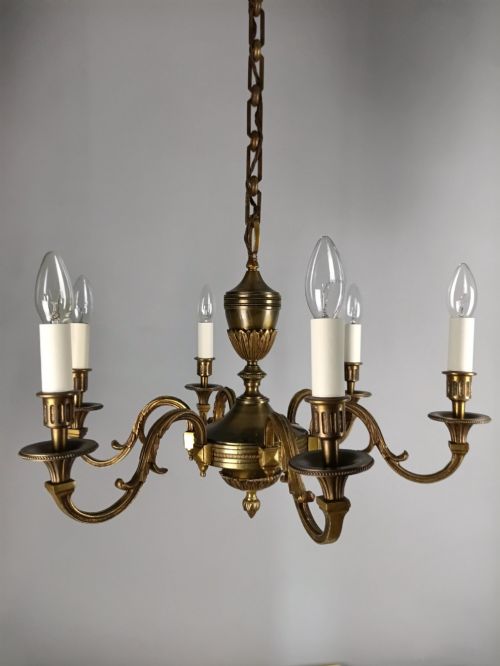
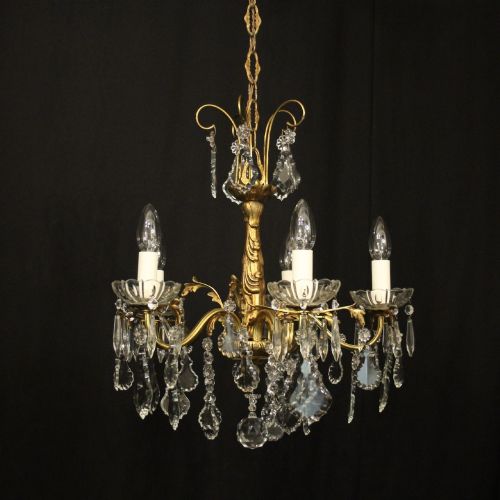
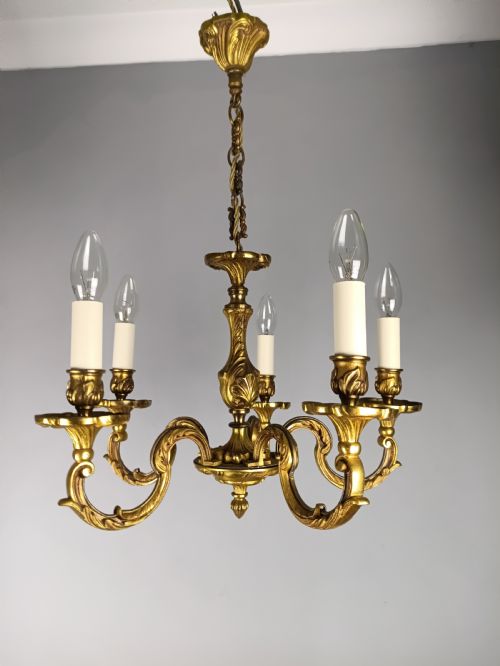


Ornate Metal Fixture
An ornate metal fixture brings heavy French and Italian metalwork, crystal, and glass into a room to anchor the lighting.
Ornate Metal Fixture
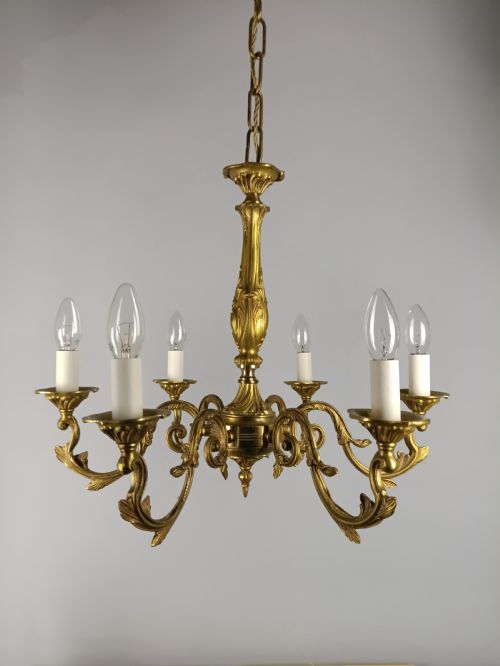
When you search for an ornate metal fixture, you are looking at chandeliers, ceiling lights, lamp bases, and pendant lights built from brass, bronze, and gilt metal. These pieces draw on French Rococo, Italian Florentine, and Victorian styles to create heavy visual weight on ceilings and tables.
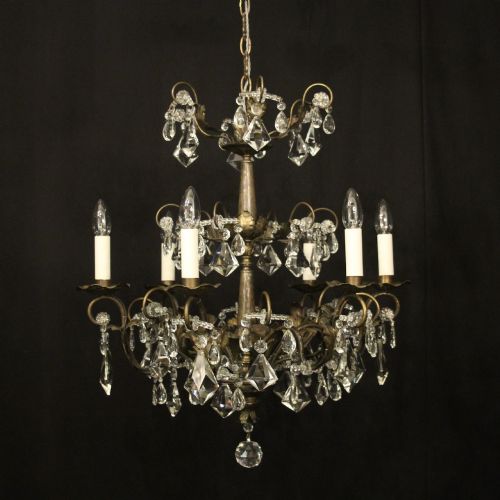
The version you are most likely to meet on this page is a multi-light chandelier in gilt brass or bronze, often hung with crystal and cut glass drops. These date mainly from the early twentieth century, alongside Victorian and nineteenth-century examples.
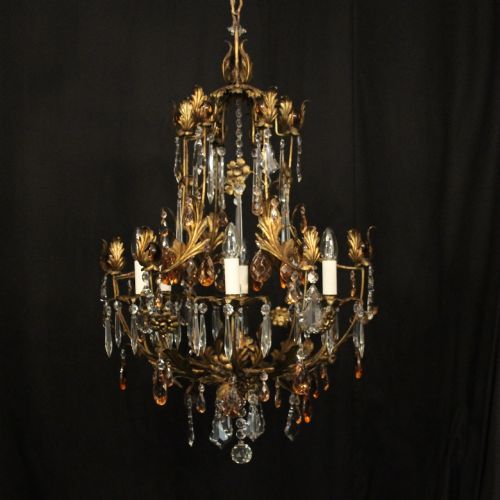
Makers and designers worked within distinct regional traditions, such as the Florentine floral forms or French Rococo curves. The forms range from simple single lamp bases to large twelve-light fixtures designed for high ceilings.
How they were made
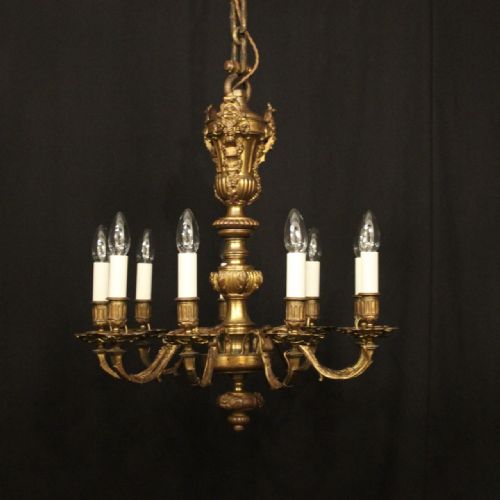
Foundries cast bronze and brass into arms, frames, and mounts, utilising heavy metal that required robust structural support. Gilding and ormolu finishes were applied to metal surfaces to catch the light.
Cranes, drops, and pendants of cut glass and crystal were hand-wired or pinned onto the metal frames to refract light from multiple bulbs. Dark-framed variants and silvered finishes offered alternative visual weights to standard gilt work.
Ornate Metal Fixture Retail Price Guide 2026
Typical asking prices for ornate metal fixture among the pieces listed under this phrase on Sellingantiques today, from the lower quarter to the upper quarter. They describe what is for sale here now, not the wider market.
Materials seen across these listings include crystal, brass, glass, gilt bronze, bronze, gilded brass, and cut glass.
What varies in quality
The crispness of the metal casting dictates the quality of the piece, where sharper relief and deeper chasing separate fine work from softer, mass-produced output. Heavier gauge brass and bronze provide structural integrity that lighter frames lack.
The cut and clarity of the crystal and glass elements also vary, with sharper facets creating brighter refraction. Original gilding that has aged evenly holds more visual harmony than later resprayed surfaces.
The Ornate Metal Fixture Glossary
- Ormolu
- Gilded bronze or brass, used extensively in French decorative metalwork to create a rich surface finish. It provides a warm metallic tone that resists tarnishing.
- Plaffonier
- A ceiling-mounted bowl light or flush-fitting fixture, often formed from cut glass set in a metal frame. This style sits directly against the ceiling rather than hanging on a chain.
- Gilt bronze
- Bronze that has been treated with a thin layer of gold or gold paint. This technique enhances the decorative appeal of heavy cast metal fixtures.
- Cut glass
- Glass that has been shaped and faceted on a wheel to increase sparkle and light refraction. It appears frequently on chandeliers and pendant lights from the Victorian era onwards.
- Rococo Revival
- A nineteenth-century style that revives the asymmetrical scrolls, C-scrolls, and naturalistic plant motifs of the eighteenth-century French movement. Fixtures in this style feature elaborate, flowing metalwork.
Ornate Metal Fixture: Frequently Asked Questions
What periods do these fixtures cover?
The pieces span from the Victorian era and the late nineteenth century through to the 1930s. Most examples date from the early decades of the twentieth century.
French and Italian workshops dominate the dates seen here, showing stylistic shifts from Rococo Revival to Art Nouveau.
How do I hang a heavy chandelier?
Heavy cast bronze and multi-light fixtures require direct ceiling joist support rather than standard plaster fixings. A qualified electrician must assess the weight before installation.
The metal chains and ceiling roses supplied with these fixtures are built to bear the load when anchored correctly.
Are these fixtures wired for modern use?
Many antique fixtures retain older wiring or have been adapted over time. Rewiring is often necessary to meet current safety standards.
A professional can easily update the internal wiring without altering the external antique metal or crystal components.
How do I clean crystal drops?
Crystal and cut glass drops should be cleaned in place or removed individually using warm water and a mild detergent. Avoid harsh chemicals that can strip metal finishes on the frame.
Drying each piece with a lint-free cloth restores maximum light refraction to the chandelier.