


Ornate Marble Table
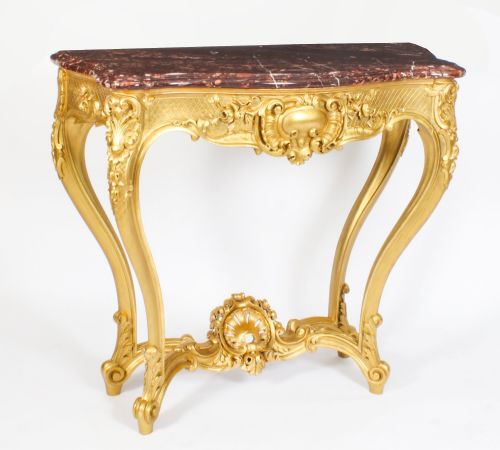
An ornate marble table brings substantial stone surfaces and decorative carving together, dominating a room with weight and presence.
Ornate Marble Table
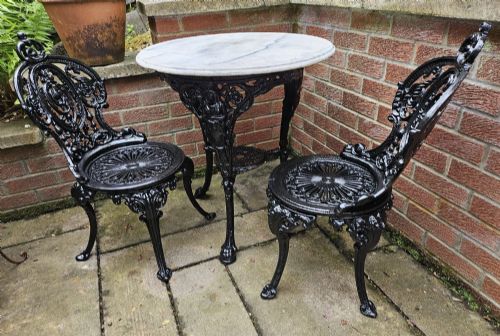
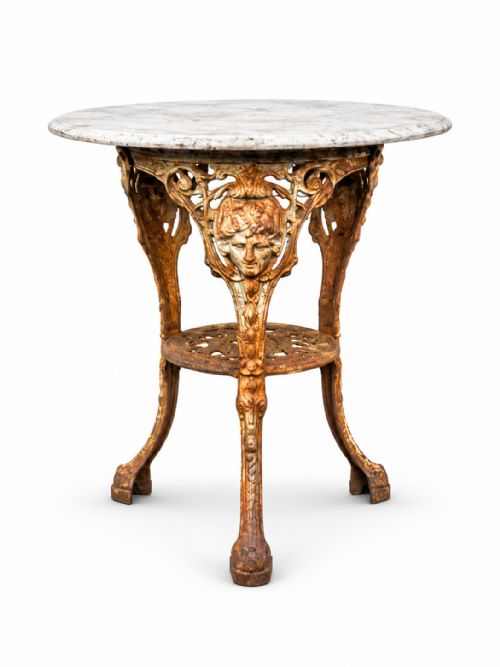
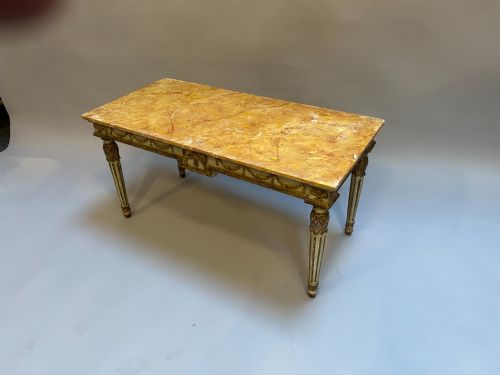
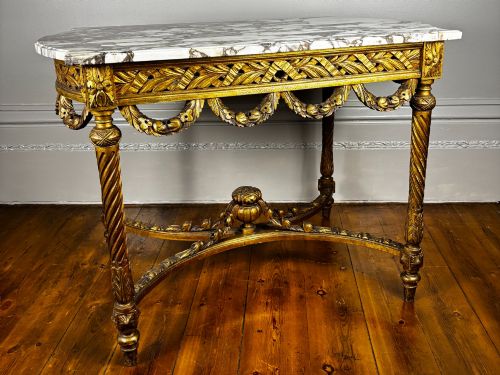
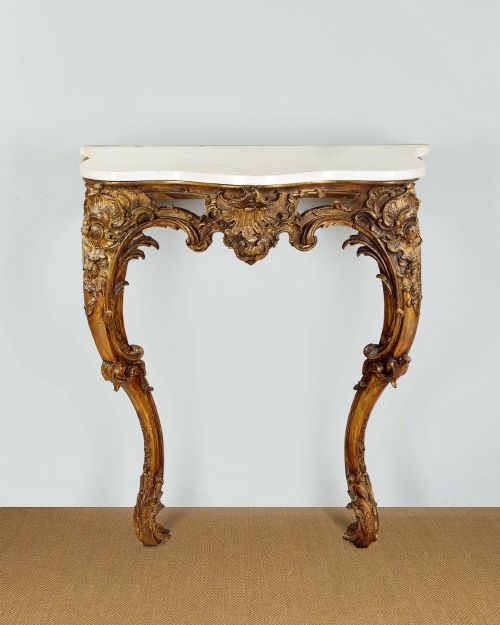
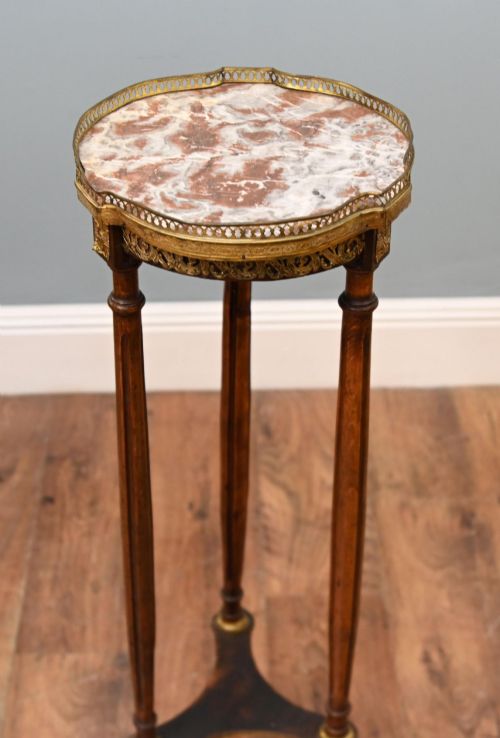
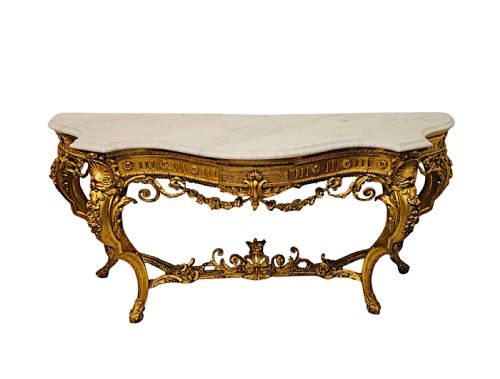
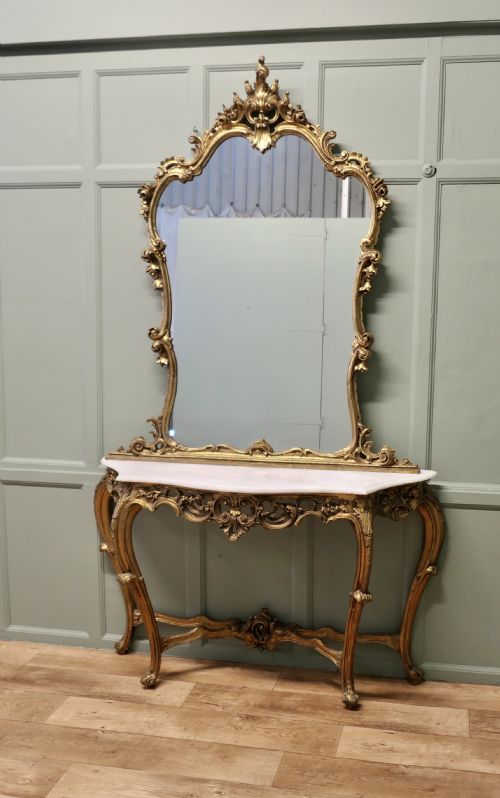
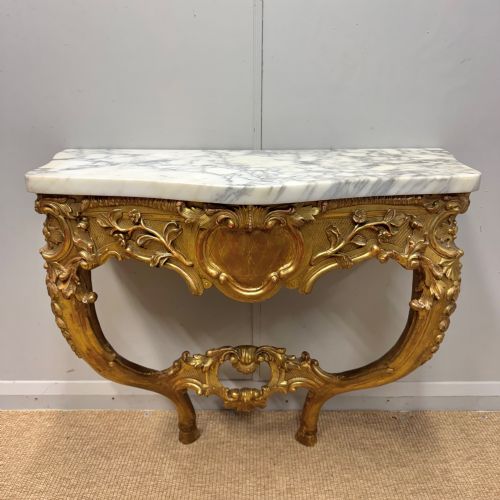
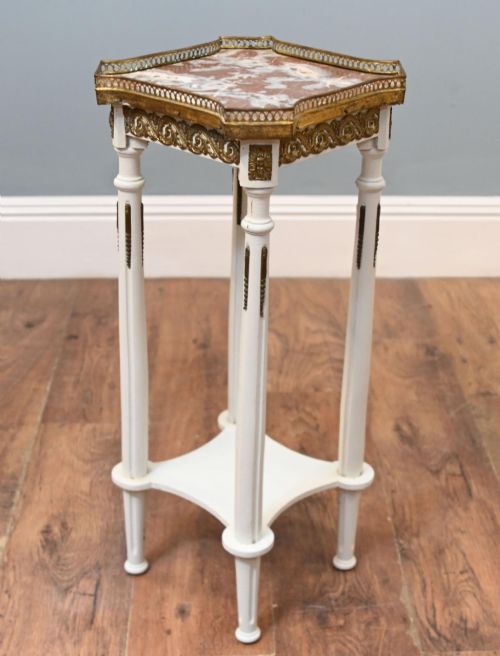
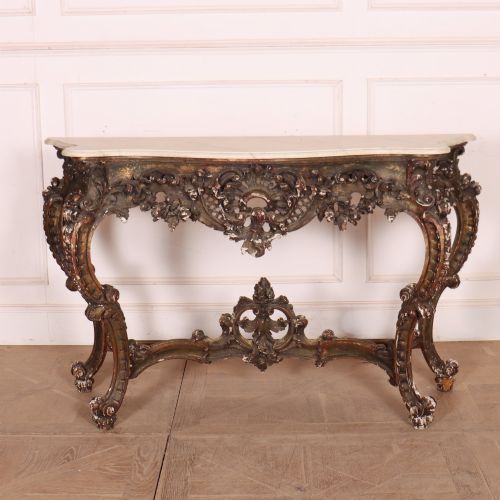
An ornate marble table encompasses console tables, centre tables, and pedestal stands originating mainly from nineteenth-century France and Italy. These surfaces range from heavy console tables designed to sit against a wall to round centre tables resting on carved wooden or cast-iron bases. The selection leans heavily toward console and centre formats featuring polished stone slabs.
Makers and workshops produced these forms across several decades, spanning the eighteenth century through the early twentieth century. Common stylistic influences draw on French Rococo, Louis XVI, and Victorian designs, incorporating intricate giltwood frames alongside plain iron garden settings.
How they were made
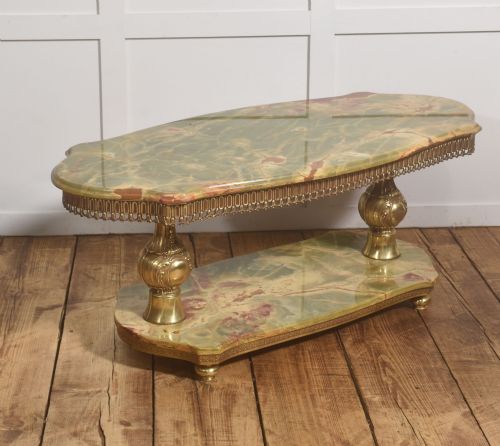
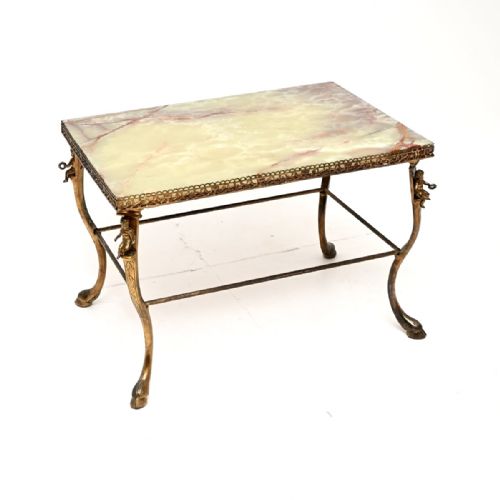
Construction relies on pairing heavy stone slabs with supportive frames of carved giltwood, solid walnut, mahogany, or cast-iron. Marble and onyx provide the dense tabletops, often polished to a smooth finish and secured to wooden or metal bases.
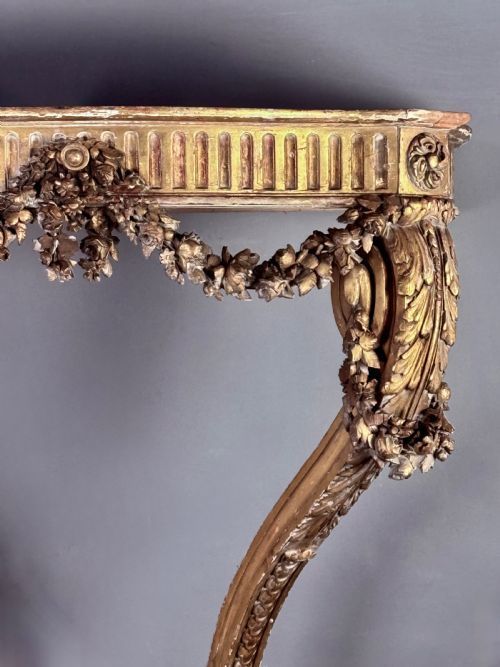
Woodcarvers shaped giltwood and gesso frames into elaborate scrolls and floral motifs, while bronze, brass, and ormolu mounts added metallic detail. Cast-iron serves for outdoor bistro sets, combining structural rigidity with decorative scrollwork.
Ornate Marble Table Retail Price Guide 2026
Typical asking prices for ornate marble table among the pieces listed under this phrase on Sellingantiques today, from the lower quarter to the upper quarter. They describe what is for sale here now, not the wider market.
Listings feature marble and onyx tops paired with giltwood, brass, and cast-iron across the eighteenth, nineteenth, and twentieth centuries.
What varies in quality
Depth and precision of the wood carving dictate the standard of the base, distinguishing hand-carved giltwood from simpler moulded decoration. The complexity of the stone top, including inlaid pietra dura work or thick solid marble slabs, alters the character of the piece.
The integration between the stone top and the supporting frame reveals the standard of manufacture. Well-made examples balance heavy marble without sagging, utilising robust joinery and quality brass or bronze mounts.
Felix-Alfred Ternisien·Amleto Bertoni
The Ornate Marble Table Glossary
- Console table
- A table designed to stand flat against a wall, frequently secured with brackets and topped with marble. These pieces often include matching mirrors.
- Giltwood
- Wood that has been coated with a thin layer of gold leaf applied over a preparation of gesso and bole. This finish provides a bright reflective surface on carved frames.
- Pietra dura
- An artistic technique using cut and fitted polished coloured stones to create geometric or pictorial inlays. This work appears on tabletops from Italian workshops.
- Onyx
- A banded variety of chalcedony used as a decorative stone top for pedestals and tables. Its translucent layers offer distinctive natural patterns.
- Ormolu
- Gilded bronze mounts applied to furniture and decorative objects during the eighteenth and nineteenth centuries. The technique involves mercury gilding to achieve a durable golden finish.
Ornate Marble Table: Frequently Asked Questions
Where should a console table go?
Console tables sit flat against a wall, traditionally placed in hallways, living rooms, or below large mirrors. Their shallow depth allows them to occupy narrow spaces without obstructing movement.
Pairing a console with a matching mirror creates a unified decorative arrangement that anchors a room's wall space.
How do I clean a marble top?
Clean marble surfaces using soft cloths and mild, non-acidic soap mixed with warm water. Harsh chemical cleaners etch the polished stone and dull the natural finish.
Wiping spills immediately prevents staining, as marble remains porous and absorbs liquids over time.
Are these tables heavy?
Stone-topped tables possess considerable weight due to the dense marble or onyx slabs resting on their frames. Moving them generally requires multiple people to lift the stone and base separately.
The substantial mass keeps the tables stable, preventing movement when placed on hard floors or carpets.
What styles do these tables follow?
Design influences draw primarily from French Rococo, Louis XVI, and Victorian traditions. These styles emphasise curved lines, elaborate wood carving, and gilded finishes.
Italian workshops also contributed pietra dura inlays and heavy polychrome carved wooden bases during the nineteenth and early twentieth centuries.