





Ornate Mantle Clock
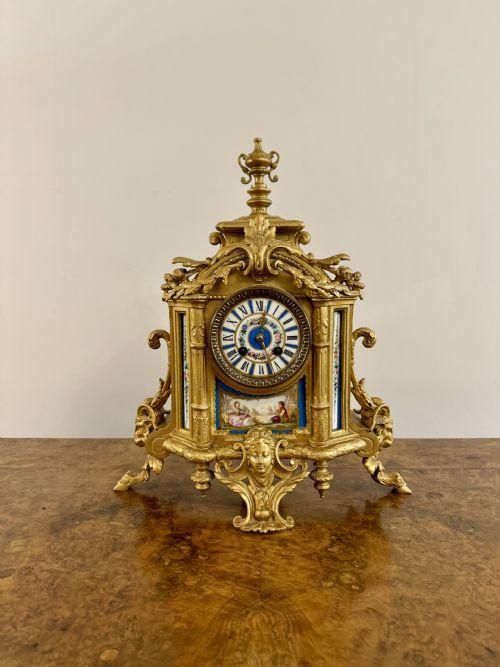
An ornate mantle clock brings nineteenth-century French and Victorian craftsmanship into a room, offering brass, ormolu, and intricate dial work.
Ornate Mantle Clock
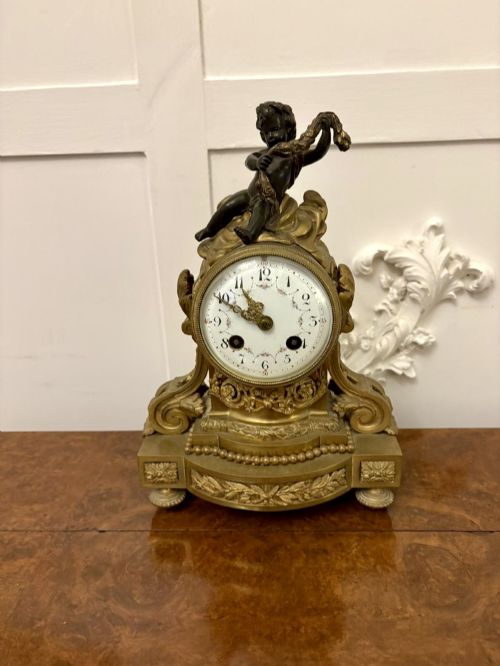
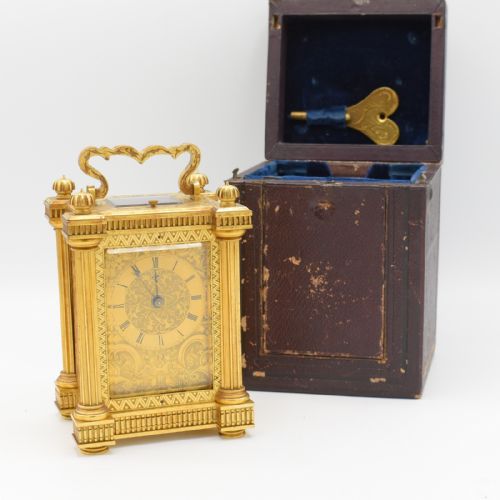
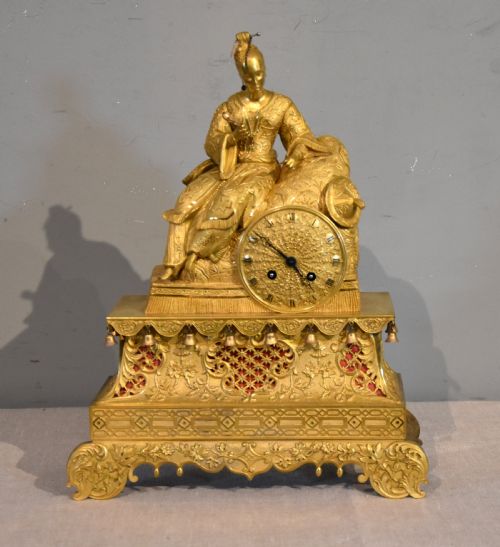
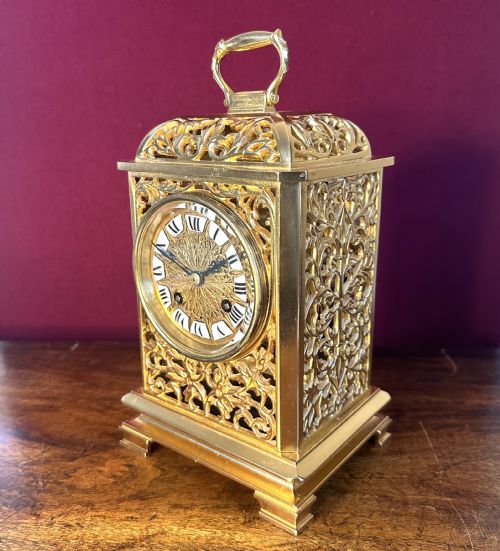
When searching for an ornate mantle clock, buyers encounter nineteenth-century French and Victorian designs ranging from robust marble cases to delicate gilt bronze garnitures. The pieces on this page are predominantly French carriage clocks, porcelain-mounted mantel clocks, and heavy gilt metal or ormolu items originating between eighteen fifty and nineteen ten.
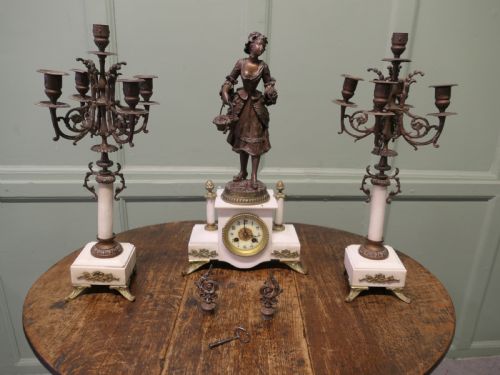
Makers and workshops of the period produced mantel clocks, desk clocks, and complete garniture sets designed to sit prominently on a fireplace or sideboard. Enamel dials, visible pendulum movements, and decorative glass panels define the forms most frequently met in this selection.
Materials and construction
Foundries and cabinetmakers utilised brass, ormolu, gilt bronze, and solid marble to construct substantial cases that housed mechanical movements. Hand-painted porcelain panels and champleve enamel details were frequently integrated into the brass frameworks of late nineteenth-century French pieces.
Movements required precision machining of brass gears and steel springs, often featuring platform escapements in portable carriage clocks or eight-day striking trains in larger mantel pieces. Cases combined cast metal ornamentation with glass viewing panels, securing the delicate dials and enamel faceplates.
Listings feature brass, marble, enamel, and gilt bronze materials spanning the Victorian era through the early twentieth century.
Distinctions in quality
The standard of an ornate mantle clock depends on the crispness of the bronze casting and the depth of the gilt or ormolu finish. Finer examples display hand-chased surface detail on the metal mounts rather than simple factory casting.
The inclusion of signed movements by recognised makers, alongside intact hand-painted porcelain or champleve enamel work, elevates a piece. Superior domestic or French models maintain heavier stone or metal cases with well-preserved glass panels and fully functional repeater mechanisms.
Howell & James London·Brunelot·Japy Freres·Tiffany
The Ornate Mantle Clock Glossary
- Ormolu
- A technique of applying finely ground high-carat gold to an bronze base. It provides a rich golden finish characteristic of French decorative objects.
- Champleve
- An enamelling process where troughs are carved into a metal surface and filled with vitreous enamel powder before firing. This technique appears on nineteenth-century clock faces and bezels.
- Garniture
- A set of matching decorative objects, typically comprising a central clock flanked by two matching urns or candelabra. These sets were designed to sit symmetrically on a mantelpiece.
- Repeater
- A mechanical complication in a clock that chimes the hours and quarters upon pressing a button. This feature is particularly common in portable carriage clocks.
- Crystal Regulator
- A clock constructed with four glass panels held in a brass frame, allowing light to pass through the movement. This style gained popularity during the late nineteenth century.
Ornate Mantle Clock: Frequently Asked Questions
How do I wind a mechanical clock?
Most pieces utilise a key inserted into winding holes on the enamel dial to tension the mainsprings. Care must be taken not to over-wind the movement.
Striking clocks require the strike train and time train to be wound separately to maintain proper operation.
Where should I place a heavy marble clock?
Substantial Victorian marble and bronze models require a sturdy, level surface capable of supporting considerable weight. Mantle shelves and heavy sideboards provide adequate support.
Placing the piece away from direct heat sources prevents drying out of internal components and cabinet woods.
What is the difference between a carriage clock and a mantel clock?
Carriage clocks are smaller, portable timepieces fitted with carrying handles and glass sides designed for travel. They frequently feature platform escapements.
Mantel clocks are larger, stationary pieces built into architectural cases of brass, marble, or wood meant to remain in one room.
How do I identify a French movement?
French movements from the nineteenth century often bear stamped foundry marks or signature engravings on the brass backplate. Makers such as Japy Freres stamped their specific medallions directly onto the mechanism.
Dial signatures and retailer names inscribed on the enamel face also point to French or London trade origin.