




Ornate Library Table
An ornate library table anchors a room with dense timber and intricate metalwork, offering a grand surface for both writing and display.
Ornate Library Table
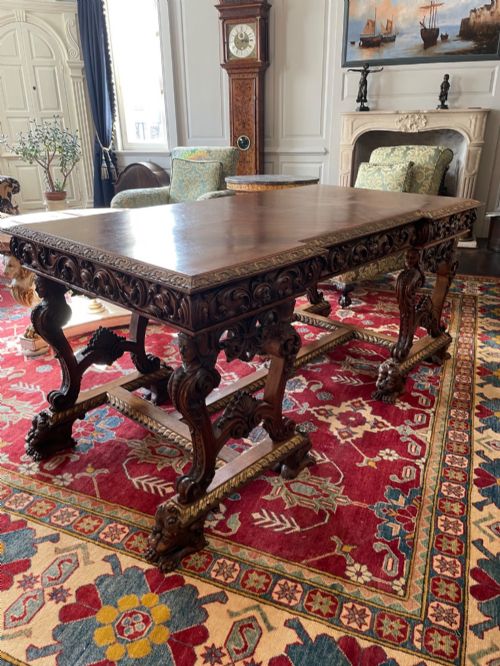
An ornate library table serves as a substantial writing surface or centrepiece, drawing on diverse stylistic traditions from the eighteenth to the twentieth centuries. Buyers searching for an ornate library table encounter forms ranging from French centre tables to Anglo-Indian partners desks and Italian carved desks.
The pieces appearing here span multiple historical periods, notably the nineteenth century, Victorian era, and eighteenth century. These works take the form of desks, writing tables, centre tables, and side tables.
Origins vary widely across the inventory, encompassing French, Italian, Portuguese, and Anglo-Indian workshops. Each regional tradition brings distinct decorative vocabularies to the basic table form.
Materials and construction
Carpenters utilised dense hardwoods such as walnut, rosewood, mahogany, teak, and kingwood as the structural foundation for these heavy tables. Ebonised wood and parcel-gilt finishes also appear across the selection.
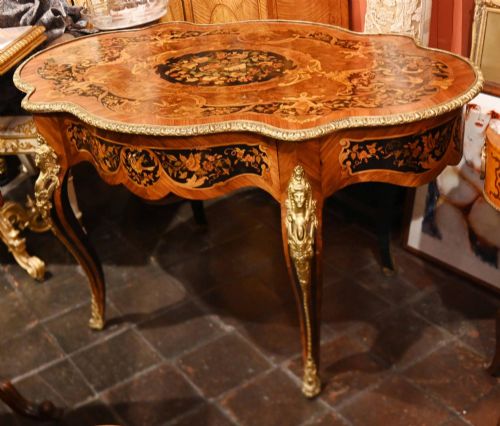
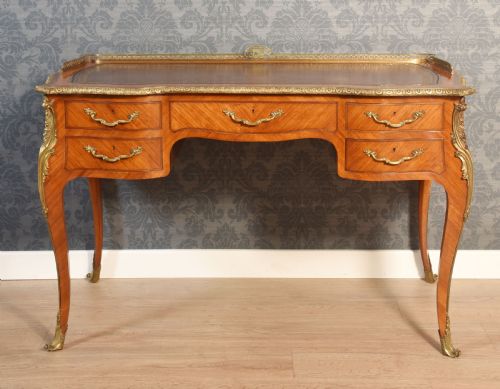
Decorative surface treatments incorporate intricate marquetry inlay, boulle work, and carved ornamentation. Metal elements in brass and ormolu complement the timber, alongside inset leather writing surfaces and marble tops.
Ornate Library Table Retail Price Guide 2026
Typical asking prices for ornate library table among the pieces listed under this phrase on Sellingantiques today, from the lower quarter to the upper quarter. They describe what is for sale here now, not the wider market.
Listings feature items from the eighteenth, nineteenth, and early twentieth centuries, incorporating marble tops and brass ormolu mounts.
Judging quality and craftsmanship
Quality rests upon the precision of the timber carving and the complexity of the marquetry or boulle inlay across the top and sides. Finer examples display meticulous hand-chiselled ormolu mounts and integrated brass details.
The choice of primary wood and secondary veneers dictates the distinction between standard production and masterwork execution. Superior execution involves seamless joinery in heavy hardwoods and sophisticated surface treatments like parcel-gilding.
Angiolo Barbetti Firenze·Wild And Wessel
The Ornate Library Table Glossary
- Ormolu
- Gilded bronze applied as decorative mounts to furniture edges and legs. This technique adds metallic contrast to dark timber surfaces.
- Marquetry
- Fitted patterns of wood veneer assembled to create pictorial or geometric designs on tabletops. Craftsmen cut contrasting timbers to slot precisely together.
- Partners desk
- A large double-sided desk designed for two people to work opposite each other. These pieces feature drawers and cupboards on both longitudinal faces.
- Boulle
- Inlay work utilising brass and tortoiseshell developed by French cabinet makers. The technique creates elaborate metallic patterns against a dark ground.
- Centre table
- A freestanding table finished on all four sides to sit in the middle of a room rather than against a wall. These forms rely on all-round visual interest.
Ornate Library Table: Frequently Asked Questions
Where should I place an ornate library table?
These large tables function best as freestanding centrepieces in studies, drawing rooms, or spacious hallways where all sides remain visible.
Ensure adequate floor space around the piece to accommodate chairs and allow comfortable movement past extended drawers.
How do I care for leather writing inserts?
Keep leather writing surfaces away from direct sunlight and excessive heat to prevent the material from drying out and cracking over time.
Dust gently with a dry cloth and consult a professional conservator before applying any conditioning treatments.
What distinguishes Louis style revival tables?
Louis style revival pieces incorporate curved cabriole legs, floral marquetry, and elaborate ormolu mounts inspired by French royal court furniture.
Nineteenth-century makers often reinterpreted these eighteenth-century motifs with heavier construction and distinct regional timber choices.