



Ornate Handles Vases
Ornate handles vases bring heavy metalwork and fine ceramics together, offering striking sculptural forms for traditional and eclectic rooms alike.
Ornate Handles Vases
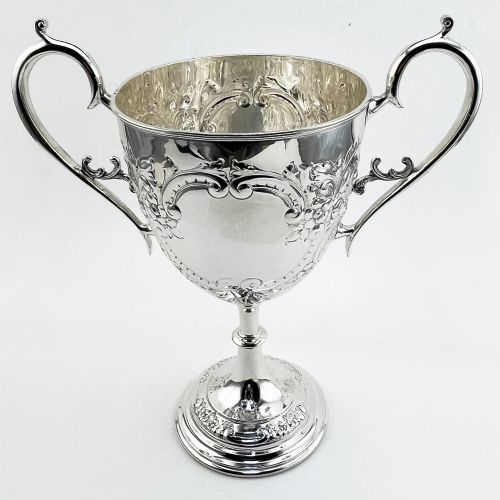
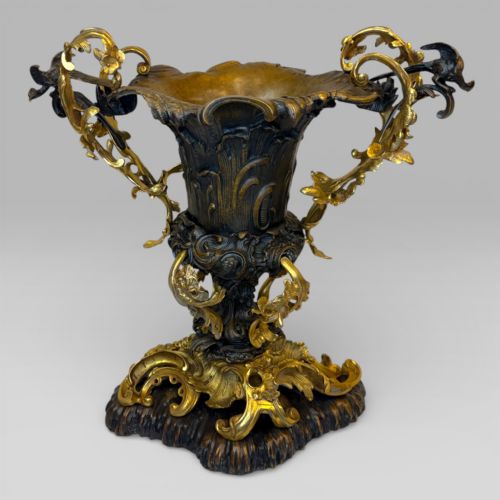
Ornate handles vases encompass decorative vessels featuring elaborate figural or scrolled grips, ranging from nineteenth century Victorian metalwork to later twentieth century decorative pieces. Buyers examining this category encounter a variety of forms including ewers, pitchers, trophy vases, and decorative urns shaped in brass, gilt bronze, ormolu, porcelain, and crystal glass.
The selection on this page leans heavily towards nineteenth century pieces, featuring Victorian designs alongside French Belle Epoque, French Rococo Revival, Neoclassical, Celtic Revival, and Art Nouveau styles. These vessels serve primarily as decorative centrepieces rather than functional flower holders, drawing the eye through detailed casting and ornamentation.
How they were made
Makers utilised bronze, brass, and ormolu for metal vessels, employing casting techniques to create intricate figural handles depicting motifs such as dolphins, Bacchus figures, or storks. Gilt bronze and gold leaf applications added rich surface highlights to the cast metalwork.
Ceramic and glass vessels incorporated porcelain and crystal glass bodies, frequently enhanced with paste enamel and paste gilt decoration. These diverse materials were combined with structural mounts to support elaborate handle designs.
Ornate Handles Vases Retail Price Guide 2026
Typical asking prices for ornate handles vases among the pieces listed under this phrase on Sellingantiques today, from the lower quarter to the upper quarter. They describe what is for sale here now, not the wider market.
Materials represented in the current inventory include porcelain, crystal glass, bronze, brass, ormolu, and gold leaf.
What varies in quality
Quality in these vessels rests upon the crispness of the casting and the depth of the chased detail in metal pieces, where finer examples display sharply rendered figural elements rather than soft or smoothed contours. The weight and stability of the mounts, alongside the precision of applied gilding, separate standard production from superior craftsmanship.
In ceramic and glass examples, the refinement of the painted or gilt decoration and the harmonious integration of the handles with the main body determine the overall caliber of the piece. Makers working in established traditions maintained strict standards of proportion across urns, ewers, and trophy vases.
Royal Worcester·Royal Crown Derby·Henry Dasson
The Ornate Handles Vases Glossary
- Ormolu
- Gilded bronze, widely utilised in French decorative arts for mounts and decorative vessels. This technique involves applying finely ground gold-mercury amalgams to a bronze base.
- Ewer
- A large pitcher or jug with a wide spout and an ornate handle. Originally functional, nineteenth century examples served primarily decorative purposes.
- Trophy vase
- A two-handled vessel modelled on classical athletic prizes. These pieces typically feature prominent handles and formal decorative friezes.
- Paste gilt
- A surface decoration technique using finely powdered gold mixed with a binding medium. It provides a rich metallic finish on glass and ceramic surfaces.
- Neoclassical
- A revival style drawing inspiration from classical Greek and Roman art. It emphasises symmetry, restraint, and classical architectural motifs.
Ornate Handles Vases: Frequently Asked Questions
How should ornate metal vases be cleaned?
Metal vessels require gentle dusting with a soft brush to protect delicate gilt surfaces and intricate handle crevices.
Harsh commercial polishes and abrasive cloths must be avoided to prevent stripping the original ormolu or gold leaf.
Are these vessels suitable for holding water?
Most antique decorative urns and ewers are designed as ornamental centrepieces rather than functional flower holders.
Using them with water can damage historical interiors, particularly on pieces featuring exposed metal mounts or delicate paste gilt decoration.
What periods do these decorative vessels represent?
The available selection spans from the late Victorian era through to mid twentieth century interpretations.
Stylistic influences range from nineteenth century revival movements to early twentieth century Art Nouveau designs.