


Ornate Gold Frame Art
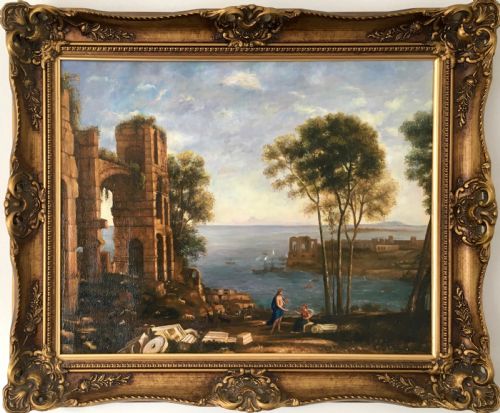
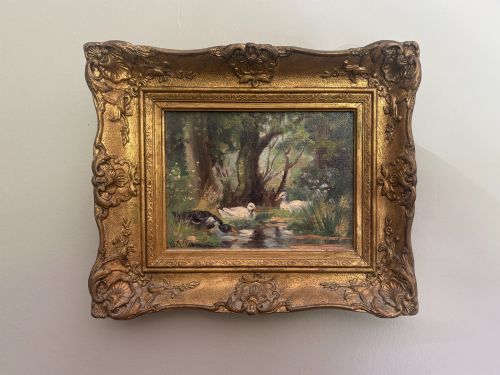
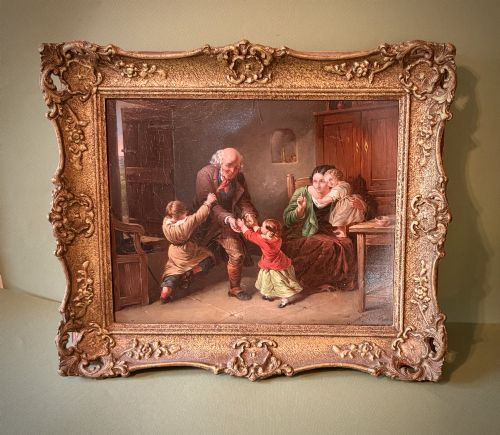
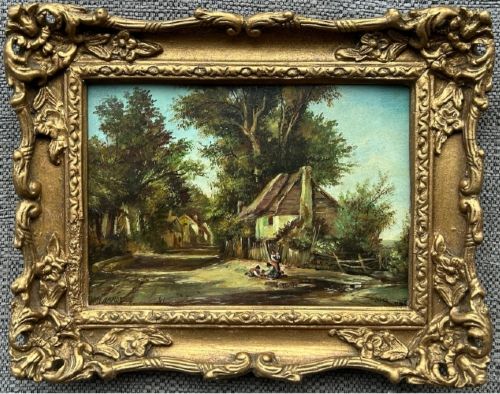
Ornate gold frame art brings together oil paintings, portraits and mirrors enclosed within elaborate giltwood, gesso and wood mouldings from several centuries.
Ornate Gold Frame Art
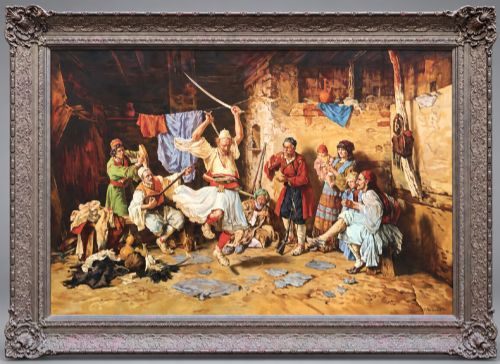
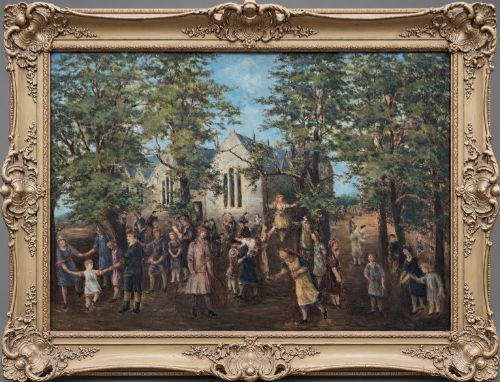
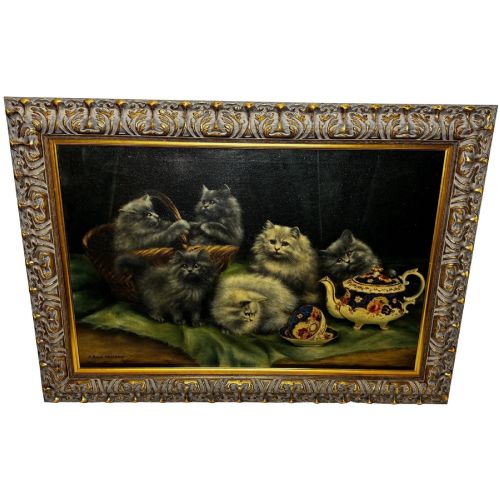
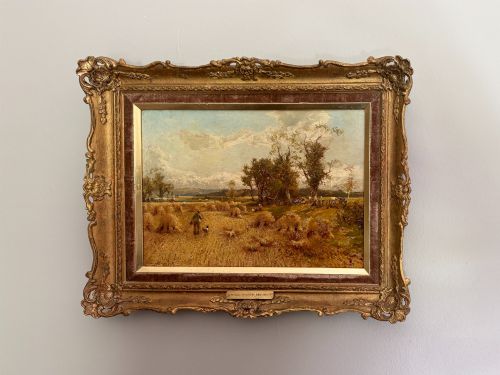
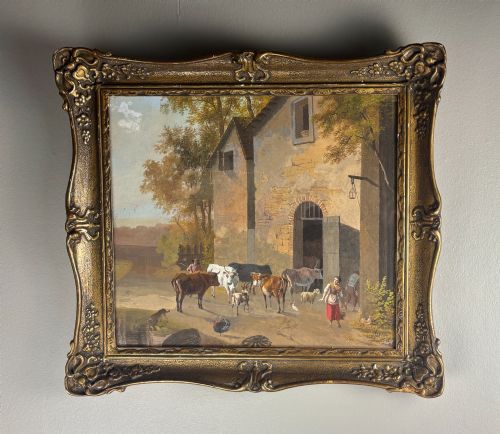
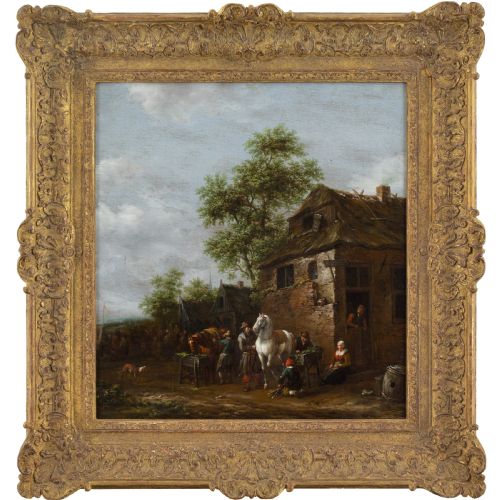
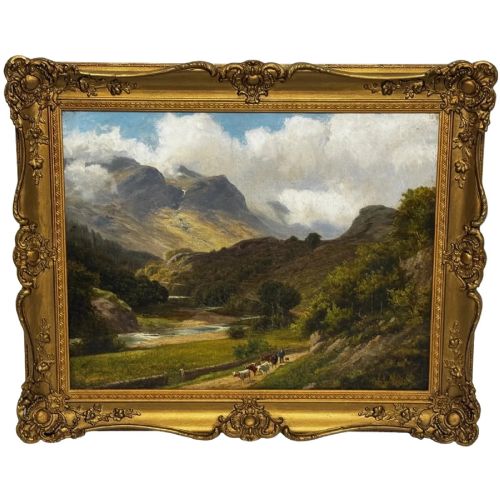
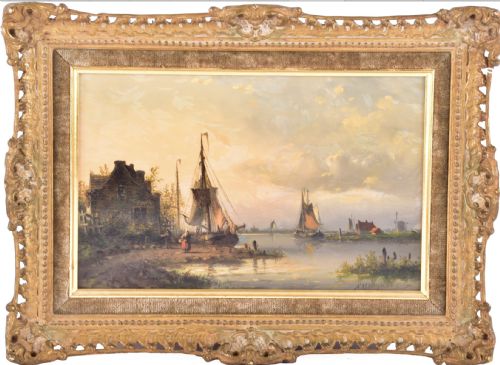
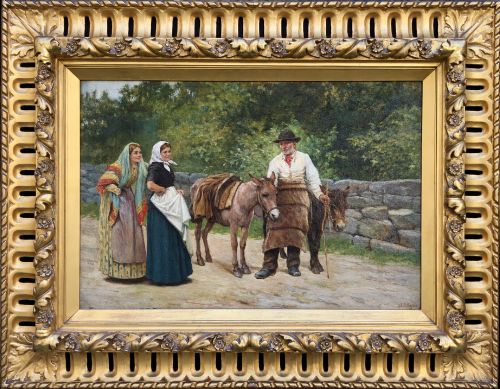
Ornate gold frame art comprises historical oil paintings, portraits and mirrors housed within elaborate giltwood or gesso surrounds, forming a complete decorative object. When exploring ornate gold frame art, a buyer encounters everything from seventeenth-century Dutch landscapes to Victorian genre scenes and twentieth-century impressions. These pieces range from substantial church gatherings and rural harvest views down to intimate animal studies and floral still lifes.
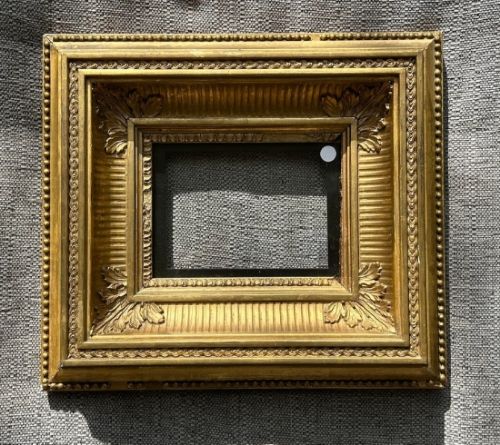
The most common examples on this page pair nineteenth-century oil paintings on canvas or panel with deep, fluted giltwood frames. Alongside these paintings, collectors find occasional wall mirrors and prints sharing the same heavy, gilded aesthetic. The union of the artwork and its heavy moulded surround defines the visual weight of these pieces.
Materials and construction
The physical build relies on traditional woodworking joined with oil paint, canvas, wood and panel supports. Makers applied gesso directly onto wood foundations to build up high-relief ornamentation before applying gold leaf or liquid gold finishes.
Canvases and wood panels received layers of oil paint applied by brush, sometimes signed by the artist or attributed to specific schools. Giltwood and gilt gesso frames required meticulous carving and moulding to achieve the deep, reflective profiles surrounding the artwork.
Cats, dogs, ducks, sheep, and goats keep a watchful eye over the human portraits and landscapes across these framed works.
Evaluating quality and execution
Quality rests upon the crispness of the gesso moulding and the depth of the carving within the gilt frame, alongside the painterly skill visible in the canvas. A superior piece shows sharp detail in the gesso ornamentation and confident brushwork in the oil painting.
The relationship between the artwork and its frame dictates overall success. Frames originally built for the canvas they enclose demonstrate a harmony missing when art and frame are united at a later date.
Agnes Augusta Talboys·Willem J Palman·William Manners·Karel Dujardin·Barent Gael·Nicolaas Martinus Wijdoogen·Alfred Walter Bayes·Eugène Verboeckhoven·William Howard Hardy·Oliver Clare·Edward Mills·Gabriel Mathieu·Jonny Gaston·Martin Theodore Ward·Howard Helmick·John Horace Hooper·James Hamilton ARSA·John Hodgson Lobley RBA·Edgar Hunt
The Ornate Gold Frame Art Glossary
- Gesso
- A plaster-like mixture applied to wood frames to create a smooth surface for gilding or deep relief moulding. It allows intricate decorative patterns to be cast or carved along the border of the artwork.
- Giltwood
- Timber coated with gold leaf or gold paint to give the appearance of solid gold. This material reflects light and provides the characteristic warm glow of historical frames.
- Oil Painting
- Pigment mixed with drying oils applied to canvas, wood panel or board. This medium dominates the historical works found within these gilded surrounds.
- Genre Painting
- Art depicting scenes from everyday life, such as village gatherings or domestic interiors. These works form a significant portion of the figurative pieces seen here.
Ornate Gold Frame Art: Frequently Asked Questions
How do I date an old gold frame?
Dating relies on examining the construction of the wood corners, the composition of the gesso layer beneath the gilding, and the style of the ornamentation. Earlier frames often feature hand-carved wooden elements, whereas later nineteenth-century examples frequently utilise moulded gesso over timber.
The backing boards, fixing nails, and any artist signatures or labels on the canvas or panel also offer reliable clues to the period. Comparing the rabbet and sight edge profile to known historical styles helps narrow down the exact decade of manufacture.
Are these paintings original or reproductions?
The selection includes original oil paintings on canvas, panel and board created by listed artists and European schools. Each work shows the distinct brush texture, craquelure and pigment layering expected of period oil paint.
Buyers should examine listings for specific medium terms such as oil painting, gouache or print to confirm the exact nature of the piece. Close inspection reveals hand-applied brushwork rather than modern dot-matrix printing techniques.
How should I hang heavy gilt framed art?
Heavy giltwood and gesso frames require secure wall fixings attached directly to wall studs or installed with heavy-duty anchors suitable for plaster or masonry. The considerable weight of the wood and gesso demands robust picture wire and sturdy D-rings.
Position pieces away from direct sunlight and sudden temperature shifts to protect both the delicate gesso ornamentation and the oil canvas. Maintaining a stable environment prevents warping in the wooden frame and cracking in the paint layer.
What is the difference between gesso and giltwood?
Gesso is the prepared plaster composition used to build up raised decorative mouldings on a wooden frame base before gilding occurs. Giltwood refers specifically to timber that has been covered with gold leaf or metallic finish.
Many antique frames combine both materials, using carved wood as the primary structure overlaid with sculpted gesso for fine details, all finished in gold.