



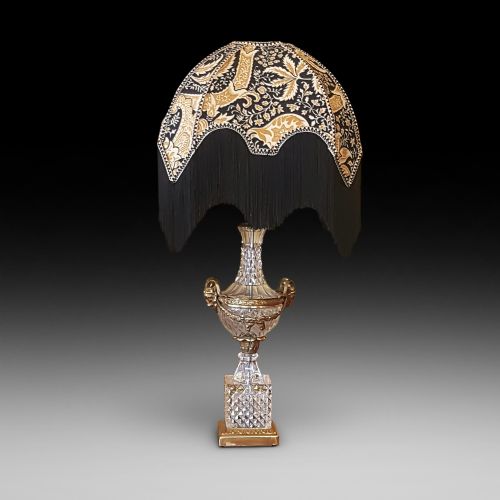
Ornate Glass Table Lamp
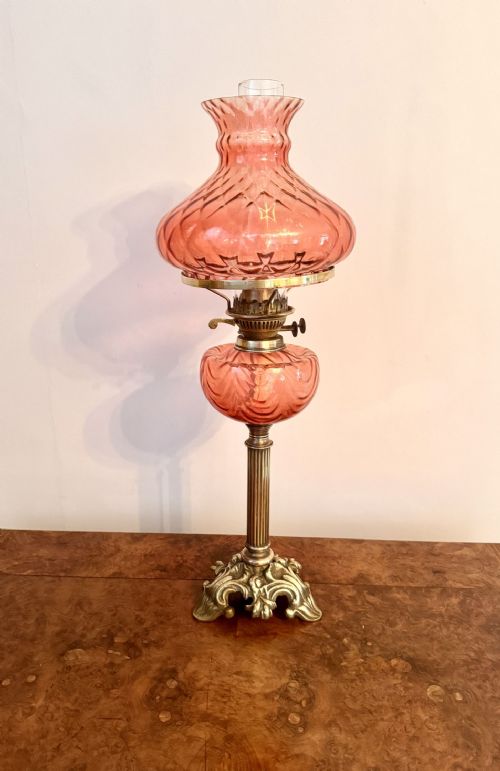
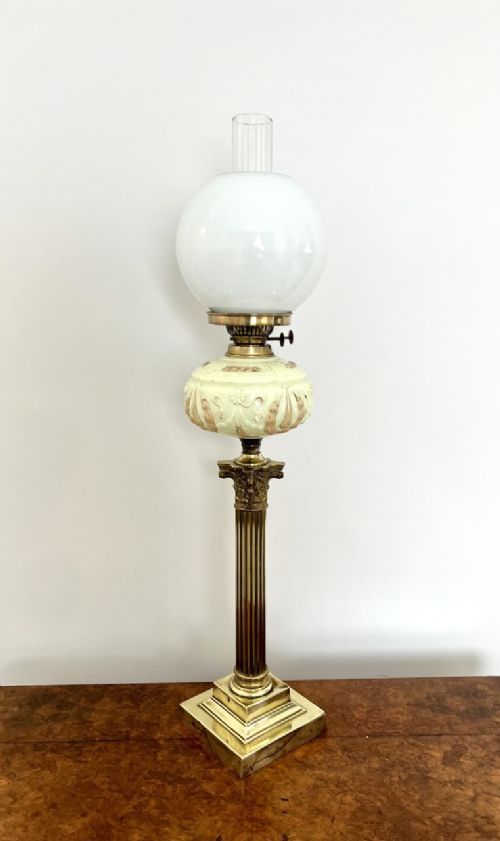
An ornate glass table lamp brings heavy Victorian and Edwardian character to a room, casting a warm glow through opaline or cranberry bowls.
Ornate Glass Table Lamp
When someone searches for an ornate glass table lamp, they find robust lighting fixtures spanning the Victorian and Edwardian eras, often adapted from earlier oil burners. These pieces combine decorative bases with textured glass reservoirs, sitting comfortably in traditional reception rooms or studies.
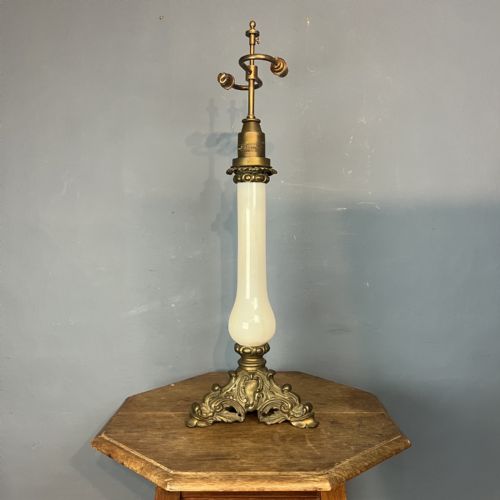
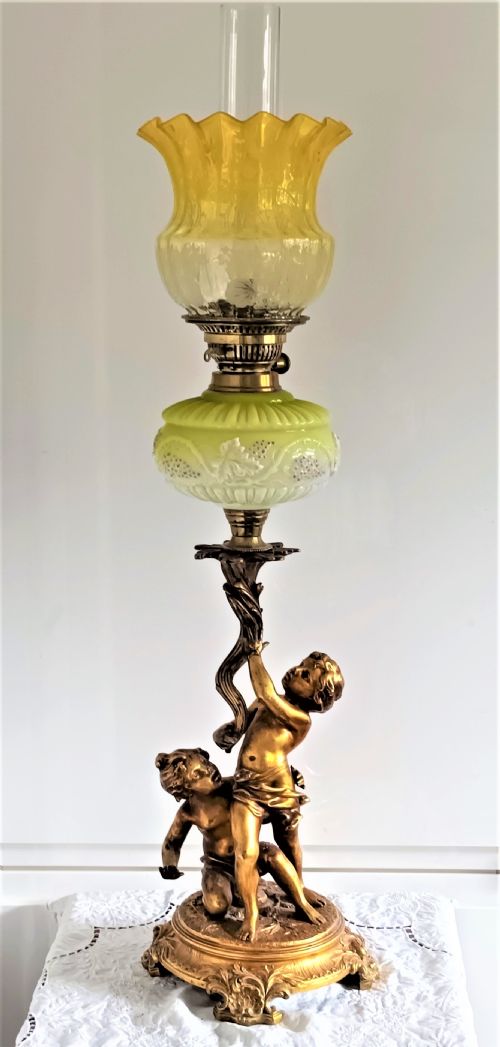
The most frequent examples on this page are Victorian oil lamps featuring opaline or cranberry glass bowls mounted on brass or gilt metal columns. Alongside these, buyers encounter French neoclassical designs and occasional reading lamps from the late nineteenth and early twentieth centuries.
How they were made
Maker workshops combined blown or pressed glass with cast brass and bronze, securing reservoirs to metal collars using traditional threaded mounts. Skilled artisans applied surface gilding and hand-painted details directly onto the glass bodies.
Foundries cast heavy bases in classical motifs using bronze or brass, whilst specialised glasshouses produced coloured opaline and cranberry glass formulas. Metal mounts frequently received silver or gold gilt finishes to complement the luminous glass elements.
Ornate Glass Table Lamp Retail Price Guide 2026
Typical asking prices for ornate glass table lamp among the pieces listed under this phrase on Sellingantiques today, from the lower quarter to the upper quarter. They describe what is for sale here now, not the wider market.
What varies in quality
Quality rests upon the weight and crispness of the metal casting alongside the depth of colour in the glass. Superior examples display heavy bronze or brass mounts with sharp chased details and unblemished glass reservoirs free from internal clouding.
Maker signatures and patent stamps elevate a piece, distinguishing standard commercial production from patented workshop designs. The integration between the glass body and the metal fittings dictates the overall structural integrity of the lamp.
Mc Gary·Wild & Wessel
The Ornate Glass Table Lamp Glossary
- Opaline glass
- An opaque or translucent pale glass developed during the nineteenth century, often tinted in pastel shades to diffuse light softly.
- Cranberry glass
- A rich red-pink glass created by adding gold chloride to the molten batch, popular throughout the Victorian period.
- Ormolu
- Gilded bronze used for decorative mounts and bases, providing a bright gold-coloured finish on nineteenth-century furnishings.
- Wild & Wessel
- A prominent German manufacturing firm known for producing high-quality burners and metalwork for period lamps.
Ornate Glass Table Lamp: Frequently Asked Questions
Are these lamps still fitted for oil?
Most surviving lamps have been converted to electricity for modern domestic use, though some retain their original burner mechanisms.
Buyers usually choose between keeping the antique burner intact as a decorative feature or utilising modern internal wiring for daily illumination.
How do I date an antique glass lamp?
Dating relies on examining the materials, burner types, and any maker stamps found on the metal collars or thumb-wheels.
Victorian pieces tend to feature heavy brass castings and opaline glass, whereas Edwardian examples often display finer gilt metal mounts and cut glass.
Where should I place an ornate glass lamp?
These substantial pieces suit heavy wooden sideboards, large desk surfaces, or occasional tables where their height and weight provide stability.
They function best as statement accent lighting rather than task lamps, drawing the eye toward the coloured glass reservoirs.
Can I find matching pairs?
Matched pairs appear occasionally, particularly among desk lamps and French neoclassical lighting designed for symmetrical placement.
Single lamps dominate the selection, reflecting their original use as individual reading or parlour lights.