



Ornate Glass Lamp
An ornate glass lamp brings weight, colour and layered reflection to a room through heavy brass mountings and deep-toned shades.
Ornate Glass Lamp
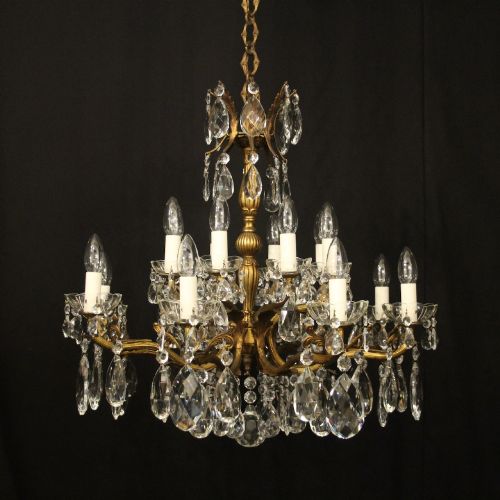
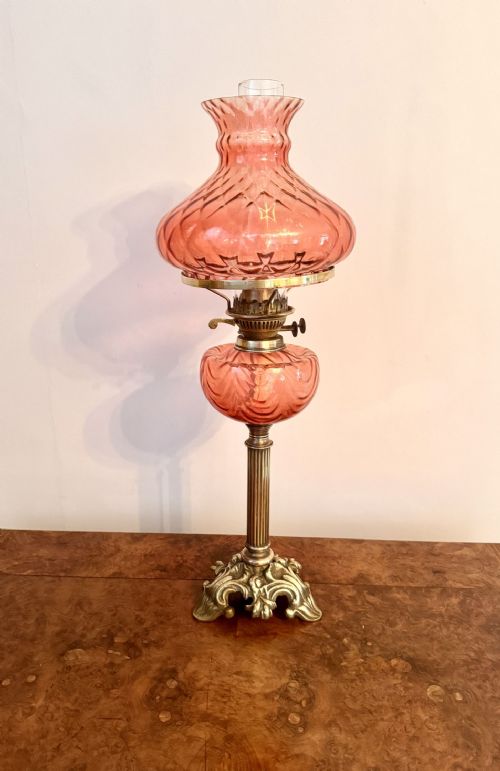
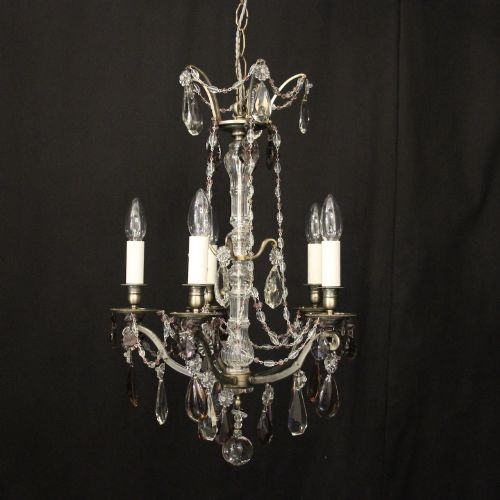
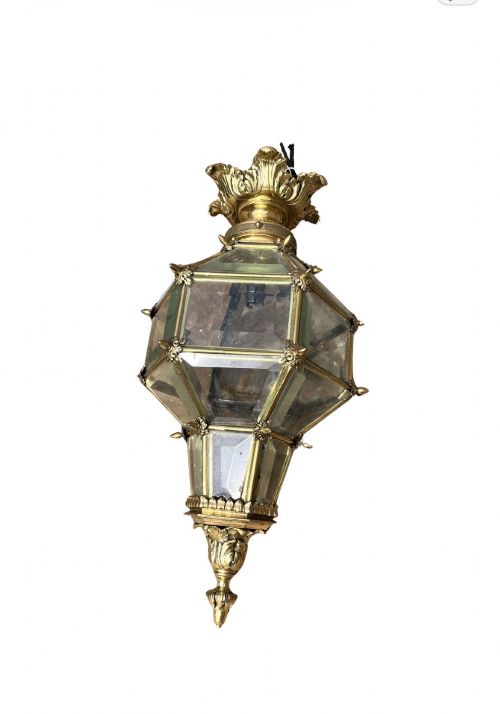
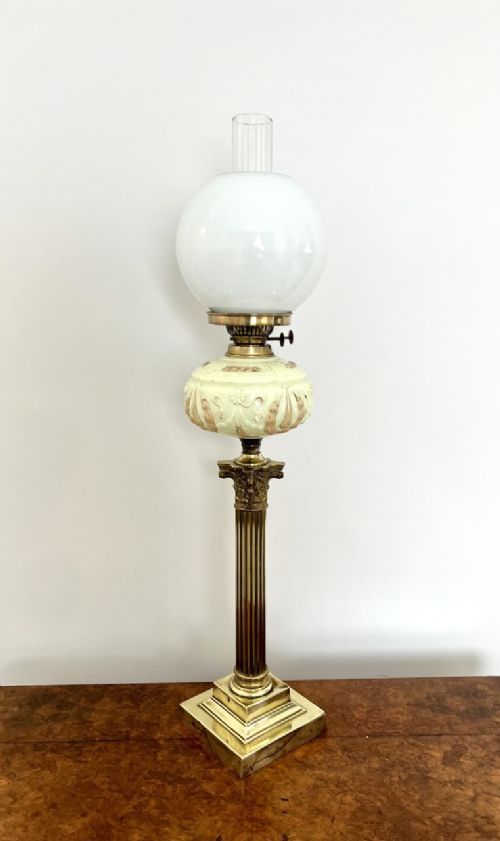
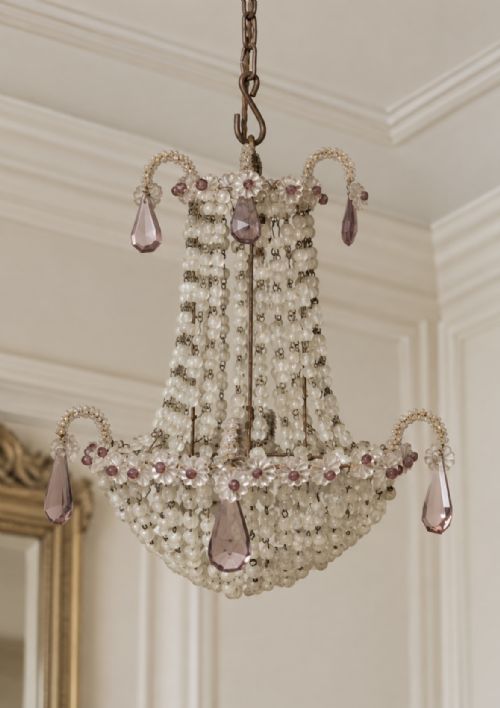
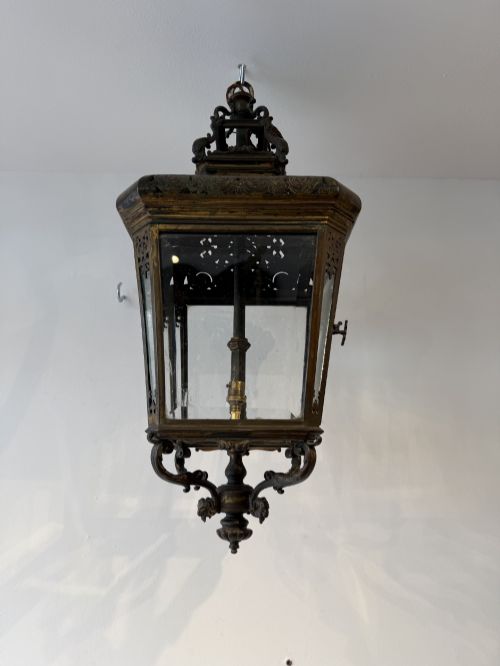
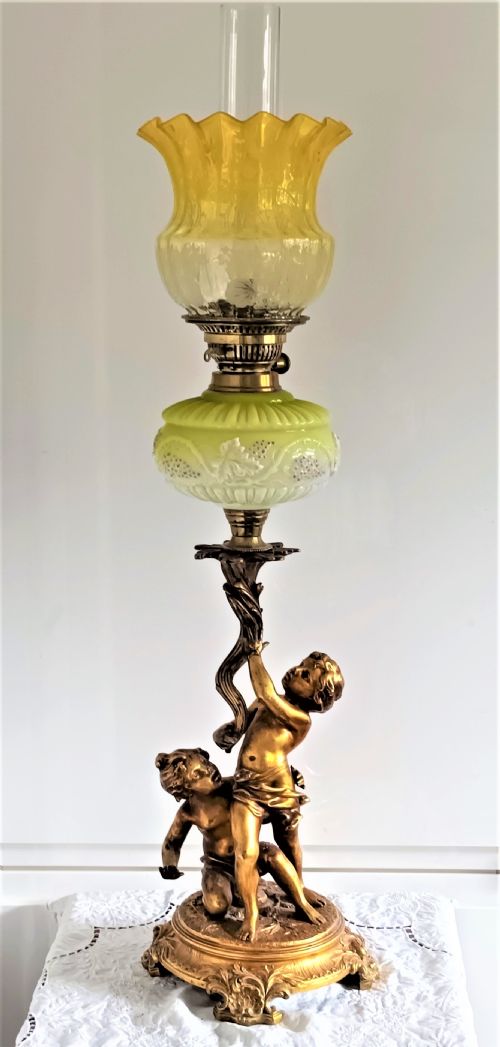
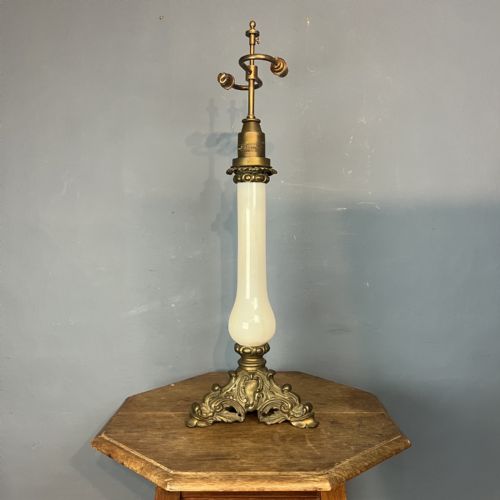
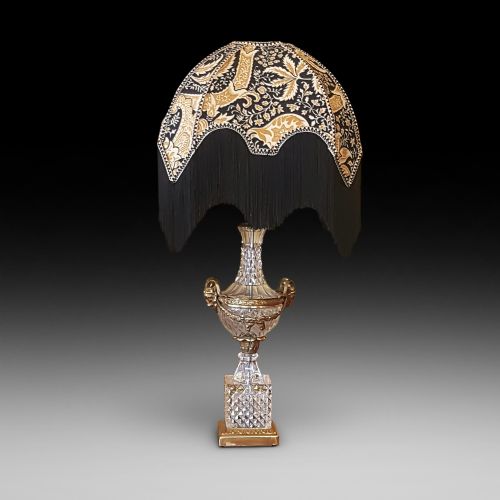
An ornate glass lamp combines heavy metal mounts with moulded, opaline, cranberry or cut crystal glass to create a decorative lighting fixture. These pieces span the nineteenth century and the Edwardian period, appearing as table lamps, oil lamps, reading lamps, desk lamps and hanging lanterns.
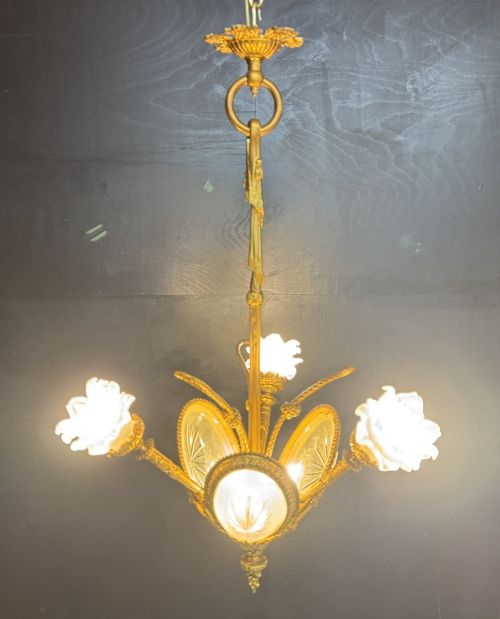
The version most commonly met on this page is the Victorian or Edwardian oil or table lamp, often pairing coloured glass bodies with cast brass or bronze bases. French lighting from similar periods brings gilt bronze, ormolu, and crystal elements into chandeliers and hall lanterns.
Makers and marks occasionally appear, such as Wild & Wessel desk lamps or pieces stamped by patent holders like Mc Gary. Styles stretch from Rococo Revival and Victorian Gothic to Arts and Crafts and Art Nouveau.
Materials and construction
Glass is blown, pressed, opaline, or cut crystal, frequently paired with brass, bronze, gilt metal, or ormolu mounts. Heavy metal casting provides the structural support for delicate glass fonts and shades.
Makers used silver gilding, silver plating, and hand-chiselled bronze to finish the metal components. Structural joins rely on threaded brass fittings and screws to secure glass bodies within metal frameworks.
Ornate Glass Lamp Retail Price Guide 2026
Typical asking prices for ornate glass lamp among the pieces listed under this phrase on Sellingantiques today, from the lower quarter to the upper quarter. They describe what is for sale here now, not the wider market.
Some nineteenth-century desk lamps come from the firm Wild & Wessel, ready to illuminate your paperwork with heavy Victorian resolve.
Measures of quality
Quality rests in the weight of the cast metal and the clarity or depth of the glass. Thick opaline and hand-cut crystal show greater definition and substance than thinner pressed alternatives.
Finishing separates standard production from finer work, particularly in the hand-chasing of bronze mounts, crispness of ormolu detailing, and the integration of components such as marked burners or registered patents.
Wild & Wessel·Mc Gary
The Ornate Glass Lamp Glossary
- Opaline glass
- An opaque or translucent glass, often found in pale or vibrant tones, used for lamp bodies and shades during the nineteenth century.
- Ormolu
- Gilt bronze, where finely ground gold is applied to a bronze base through a mercury amalgamation process or later electroplating.
- Cranberry glass
- A rich red glass created by adding gold chloride to the molten batch, popular in Victorian table and oil lamps.
- Plaffonier
- A ceiling light fixture mounted flush or close to the ceiling, frequently incorporating cut glass and gilt metal mounts.
- Font
- The oil reservoir portion of an antique lamp, usually manufactured from glass or metal positioned above the base.
Ornate Glass Lamp: Frequently Asked Questions
What is an ornate glass lamp?
An ornate glass lamp is a period lighting fixture that combines moulded, coloured, or cut crystal glass with heavy metal bases, mounts, or shades. These pieces include table lamps, oil lamps, and hanging lanterns from the nineteenth and early twentieth centuries.
They rely on materials like brass, bronze, ormolu, and opaline glass to create decorative illumination for interiors.
How were these lamps used?
Many originated as oil lamps or reading lamps, burning fuel to provide functional illumination on tables or desks before domestic electricity became widespread. Others functioned as hanging hall lanterns and ceiling lights to illuminate entranceways and principal rooms.
Over time, many of these lighting bodies have been adapted for modern electrical wiring while retaining their original brass and glass components.
How do I live with one?
Place these lamps where natural light can strike the glass bodies and metal mounts to highlight the colours and textures. They suit side tables, desks, or entrance halls where their weight and decorative presence anchor the room's design scheme.
Ensure they are positioned near stable surfaces and check that any electrical adaptations meet current safety standards before regular use.
How do I tell periods apart?
Victorian pieces often feature heavy cast brass, cranberry glass, or opaline bodies with elaborate floral or Gothic-inspired detailing. Edwardian and later pieces shift toward lighter gilt metal mounts, refined cut crystal, and cleaner lines influenced by Art Nouveau or Arts and Crafts ideals.
Examining the manufacturing techniques, such as hand-chased bronze versus mass-pressed brass, helps distinguish mid-nineteenth-century work from later twentieth-century production.