
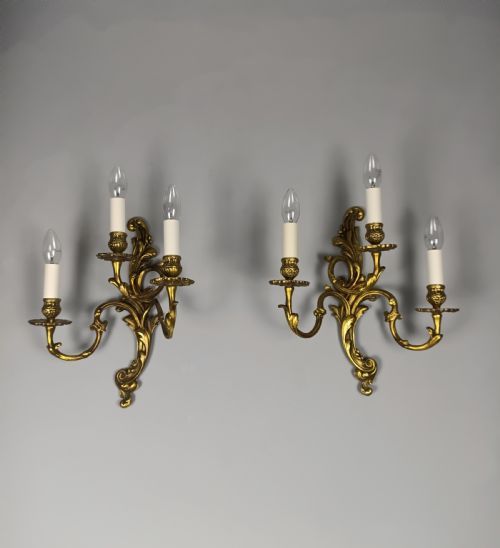


Ornate Gilded Wall Brackets
Ornate gilded wall brackets are decorative ledges and supports designed to hold objects on a wall, bringing historical surface and metallic depth to an interior.
Ornate Gilded Wall Brackets
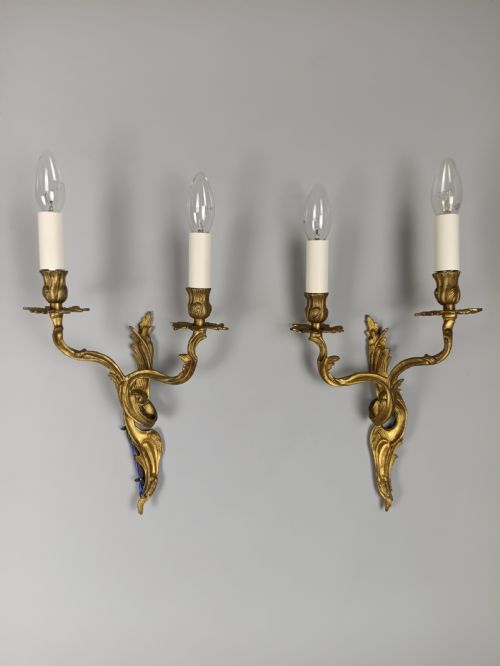
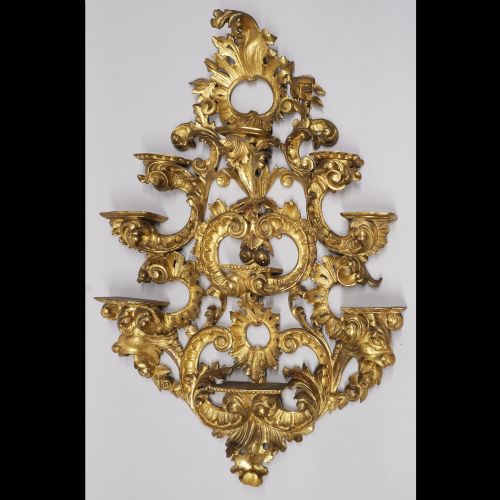
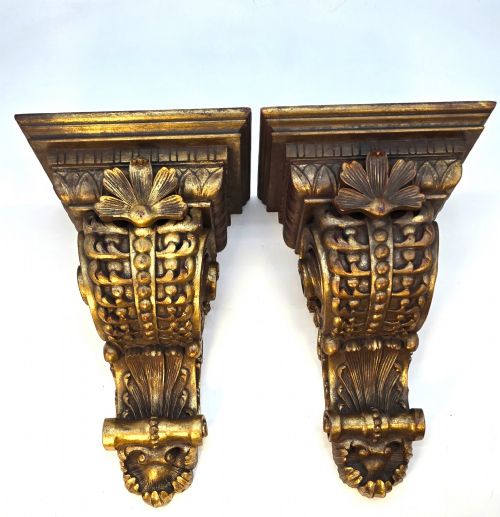
When you search for ornate gilded wall brackets, you encounter items designed to project decorative forms and small objects from the vertical plane of a room. The selections on this page span the eighteenth century through to the 1930s, encompassing forms that serve as structural ledges or illuminate rooms.
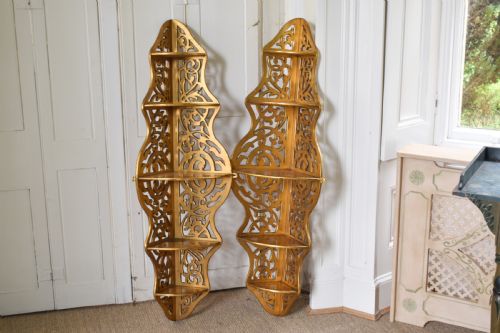
The most frequent examples take the form of wall lights, sconces, and dedicated display shelves. Many originate from French workshops or follow French design idioms, bringing elaborate sculptural movement to domestic interiors.
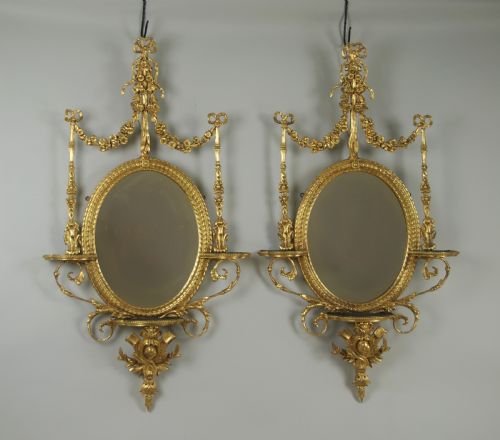
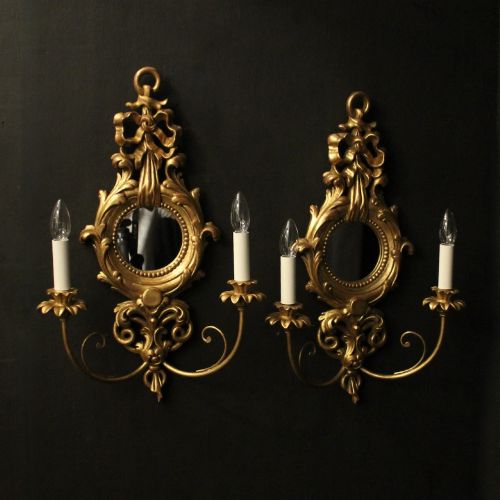
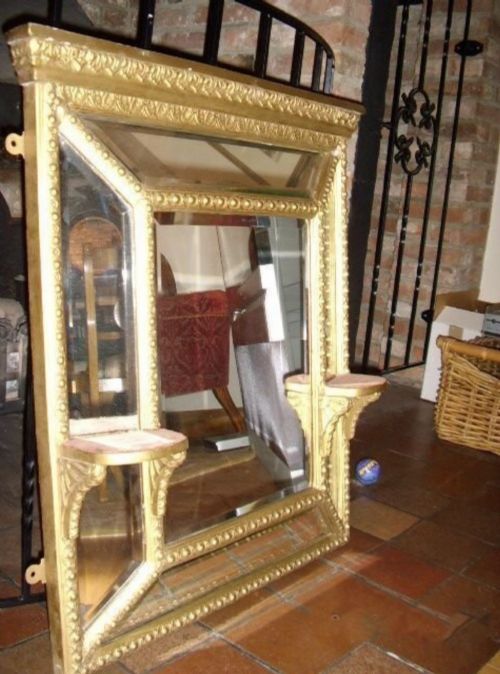
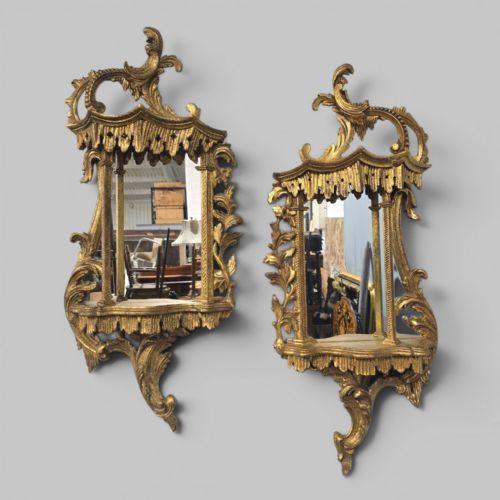
Beyond single ledges, the evidence includes related supporting fixtures such as corner shelves, girandoles, and mirror combinations. These pieces demonstrate how nineteenth-century and early twentieth-century makers integrated functional support with rich surface decoration.
How they were made
Makers constructed these pieces primarily from carved wood, giltwood, and gesso, applying gold leaf to build luminous metallic surfaces. Brass, bronze, and gilt metal also feature prominently, particularly in the creation of structural arms for wall lights and sconces.
Carving technique dictates the depth and definition of the ornament, allowing artisans to render scrolling foliage, cherubs, and asymmetrical Rococo motifs. Guilds and workshops relied on traditional application methods for leaf and gesso to achieve the characteristic sheen found across these objects.
Listings incorporate items spanning the eighteenth century, the Victorian era, and the 1930s, utilising giltwood, gesso, brass, and carved wood.
What varies in quality
Quality rests in the depth and clarity of the carving beneath the metallic surface. Skilled hand-carving in wood yields crisp undercut details that cast distinct shadows, whereas simpler moulded gesso offers less definition.
The sophistication of the gilding also determines the character of the piece. Fine application of gold leaf ages with a soft warmth, whereas uniform modern metallic paints lack the subtle tonal variation seen in period examples.
The Ornate Gilded Wall Brackets Glossary
- Giltwood
- Wood that has been coated with gold leaf. This material forms the primary structural and decorative base for many classical and revival wall supports.
- Gesso
- A plaster-like mixture applied to wood surfaces as a base for gilding. Artisans model this substance to create raised ornamentation before applying gold leaf.
- Girandole
- A decorative wall bracket holding candles or electric lights, often featuring an attached mirror. The reflective glass multiplies the illumination within the room.
- Rococo
- An ornate artistic style characterised by asymmetry, scrollwork, and organic plant forms. This aesthetic heavily influences the French and Italian pieces in this collection.
- Sconce
- A wall-mounted lighting fixture designed to hold candles or lamps. These fixtures project illumination outward while adding sculptural presence to a wall.
Ornate Gilded Wall Brackets: Frequently Asked Questions
How were wall brackets used originally?
Original interiors utilised these brackets to support ornamental porcelain, clocks, or small sculptures, elevating prized objects to eye level. They functioned as permanent architectural furniture fixed directly to the wall.
In rooms illuminated by candlelight, bracket shelves and sconces reflected ambient light from gilded surfaces to brighten dark corners.
Can I wire old wall lights safely?
Many vintage wall lights arrive ready to install, but older wiring requires inspection by a qualified electrician to meet current safety standards. Rewiring preserves the original metal or wooden fixture while ensuring domestic compliance.
Consulting a professional prevents damage to fragile gilt brass or bronze components during the installation process.
How do I tell Rococo from Louis XVI style?
Rococo designs embrace asymmetrical curves, C-scrolls, and flowing organic motifs without rigid geometry. The overall impression mimics natural plant growth and aquatic forms.
Louis XVI revival pieces introduce symmetry, straight lines, neoclassical urns, and architectural restraint. This later style values balanced proportions over theatrical movement.
Where should I mount a wall bracket?
Mount these pieces at eye level or above furniture groupings where they can function as focal points without obstructing movement. Solid wall fixings are essential to support the weight of carved wood and metal.
Placing them near mirrors or opposite windows helps maximise the reflective qualities of the gilded surfaces.