
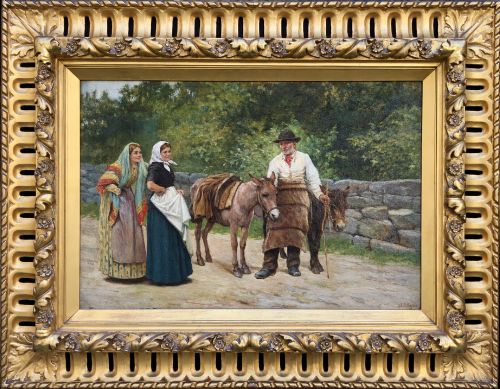
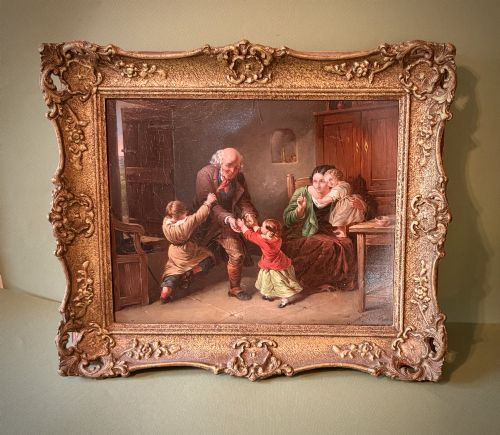


Ornate Framed Art
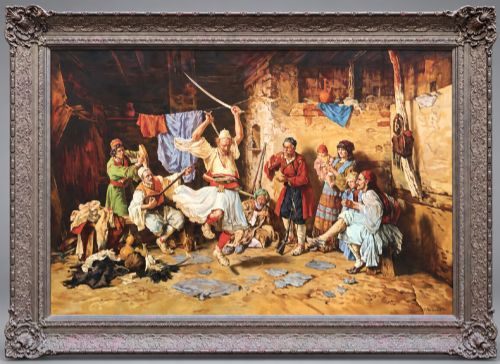
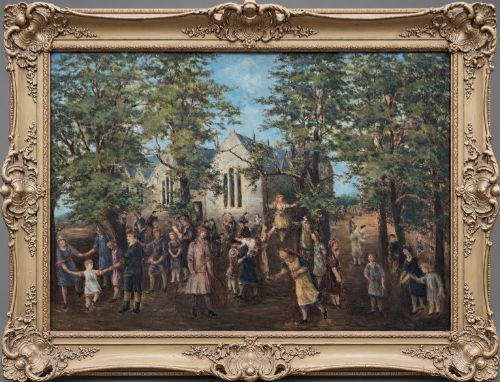
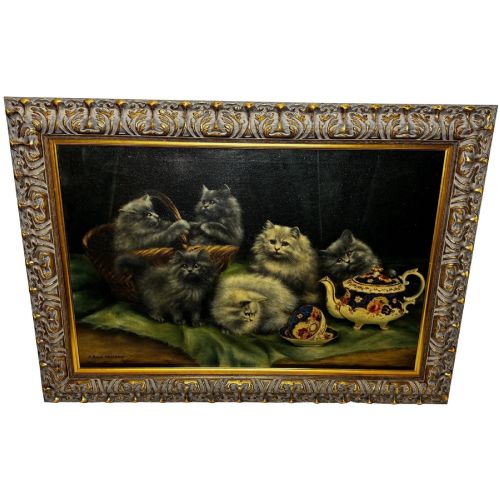
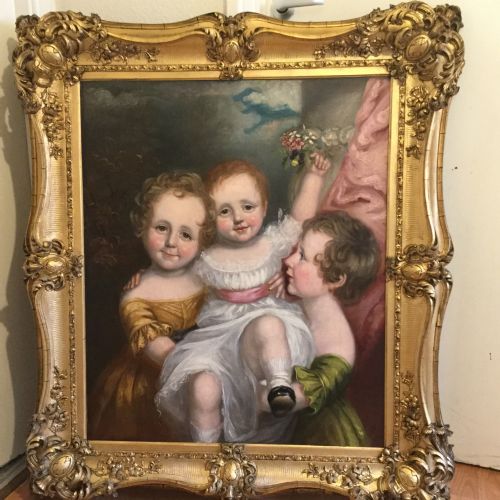
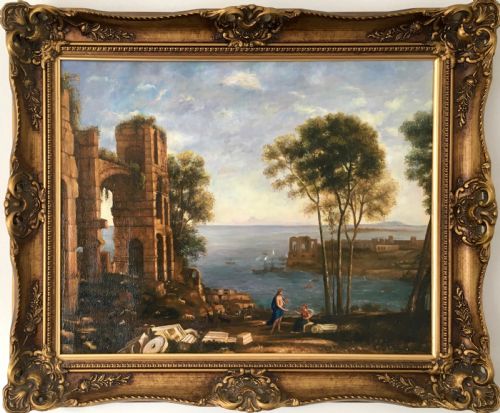
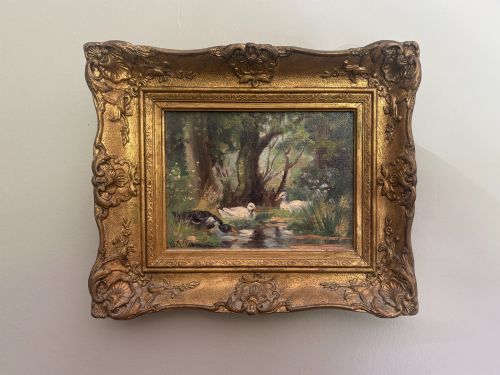
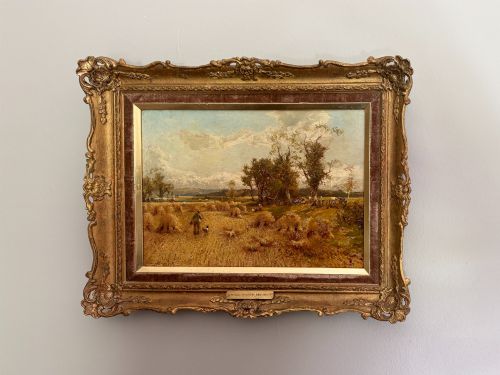
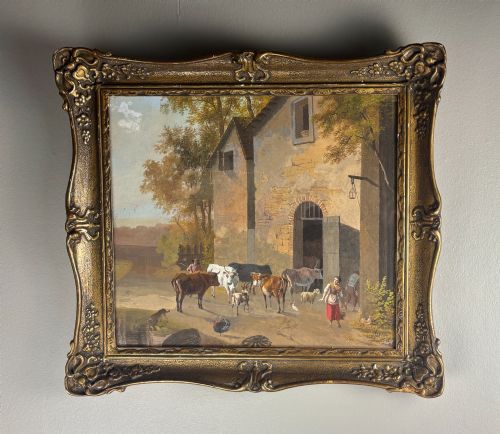
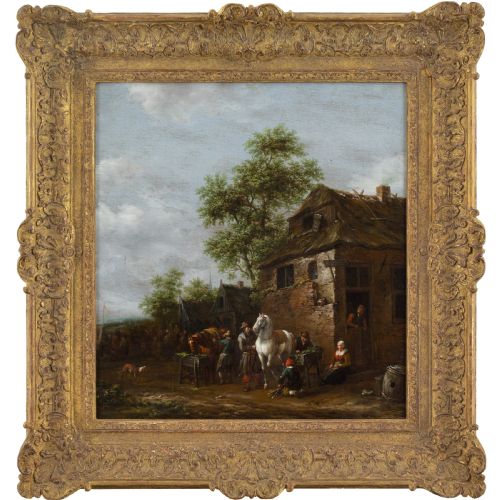
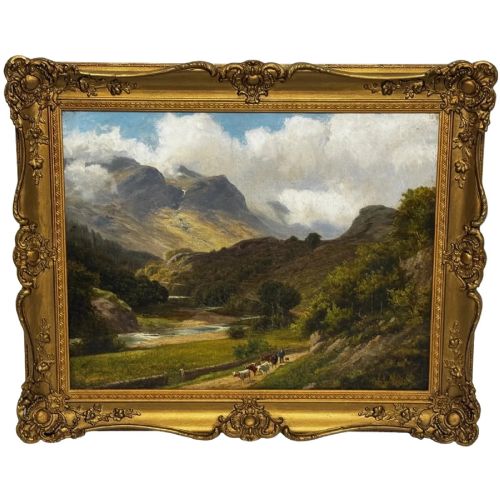
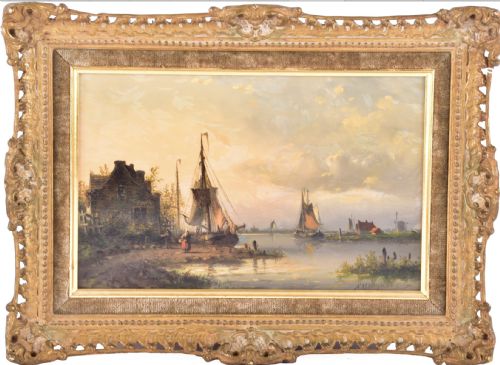
Ornate framed art brings together oil paintings, watercolours and prints housed within heavily moulded timber and gesso surrounds from various historical eras.
Ornate Framed Art
Ornate framed art encompasses a diverse selection of oil paintings, portraits, landscapes and decorative prints encased in elaborate historical enclosures. The items span multiple centuries, including seventeenth-century Old Master works, nineteenth-century Victorian pieces and mid-twentieth-century examples.
Buyers frequently encounter oil on canvas works alongside panel paintings and framed prints housed within deeply moulded wooden surrounds. These objects function simultaneously as visual artworks and decorative furnishings for interior spaces.
The category includes landscapes, animal studies, still-lifes and historical genre scenes created by named European artists and anonymous studio hands alike. Many pieces retain their original period housings, which showcase intricate surface ornamentation.
How they were made
Makers constructed the enclosures using solid wood cores built up with layers of gesso to create high-relief surface decoration. Artisans then applied gold leaf or metallic paint finishes to achieve the characteristic reflective appearance.
Artworks utilise traditional mediums such as oil paint on canvas or wooden panels, alongside gouache on paper and printed methods. Painters applied pigments using fine brushes to build up rich tonal ranges and detailed subject matter.
Listings feature oil paintings on canvas and panel spanning from the seventeenth century through to the mid-twentieth century alongside framed prints.
What varies in quality
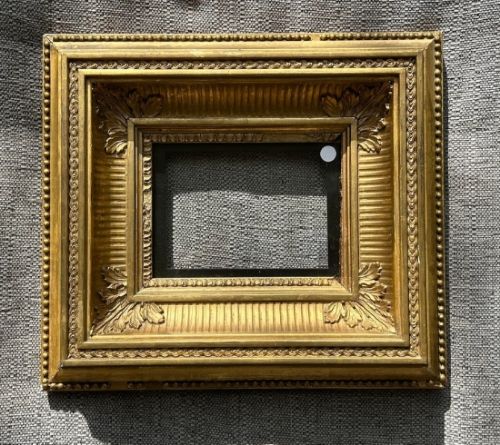
The depth of relief moulding and the intricacy of the carved gesso decoration distinguish standard framing from superior examples. Elaborate fluted hollows and deep swept profiles require advanced carpentry and modelling skill.
Pintorial execution creates a clear division across the range, with skilled brushwork, accurate anatomy and balanced composition marking out superior canvases. The harmony between the artwork and its specific housing also dictates the overall merit of the piece.
Sir Thomas Lawrence·Francesco Guardi·Willem J Palman·William Manners·Karel Dujardin·Barent Gael·Nicolaas Martinus Wijdoogen·Alfred Walter Bayes·Eugène Verboeckhoven·William Howard Hardy·Oliver Clare·Edward Mills·Gabriel Mathieu·Gian Paolo Pace·Maria Jose Hernandez·Martin Theodore Ward·Howard Helmick·John Horace Hooper·Toussaint Gelton·James Hamilton ARSA·John Hodgson Lobley·Pieter Borseler·Harold Clayton·Edgar Hunt
The Ornate Framed Art Glossary
- Giltwood
- Wood that has been coated with a thin layer of gold leaf or gold powder. This finish provides a durable and reflective metallic surface across the moulding.
- Gesso
- A plaster-like mixture applied to wooden bases as a smooth foundation for moulding and gilding. Artisans carve and shape this material to create raised decorative motifs.
- Oleograph
- A type of chromolithographic print textured to imitate an oil painting. These mechanical reproductions gained popularity for decorative domestic display.
- Fluted hollow
- A concave architectural moulding channelled with parallel vertical grooves. This profile adds visual depth to the outer border of a picture surround.
- Genre painting
- Artwork depicting scenes from everyday life, ordinary people and domestic settings. These works focus on narrative moments rather than formal portraiture or grand landscapes.
Ornate Framed Art: Frequently Asked Questions
How do I identify the age of ornate framed art?
Examine the construction methods of the timber backing and the composition of the gesso layers. Older pieces often exhibit hand-carved details and period-specific fastening techniques.
Style indicators within the painting itself, such as costume, pigment types and canvas preparation, further clarify the exact period of production.
Can I separate the painting from its frame?
While the artwork and its enclosure are often treated as a unified decorative object, they can be separated for conservation purposes. Many historical pieces were paired with their specific surrounds centuries ago to complement the aesthetic of the artwork.
Altering these historical pairings can reduce the overall integrity and visual context of the piece.
How should I hang heavy framed artworks?
Support heavy pieces using appropriate wall anchors secured directly into masonry or wall studs rather than standard plaster fixings. The substantial weight of deep gesso and wooden surrounds requires robust hardware.
Ensure the hanging wire or integrated brackets on the reverse are structurally sound before mounting the item.
What maintenance do giltwood frames require?
Keep giltwood surrounds away from direct sunlight and excessive moisture to prevent the gesso from cracking and the gold leaf from flaking. Dust the intricate mouldings gently with a soft, dry brush.
Avoid using liquid cleaners or chemical polishes, as these substances damage the delicate metallic leaf and historic finishes.