

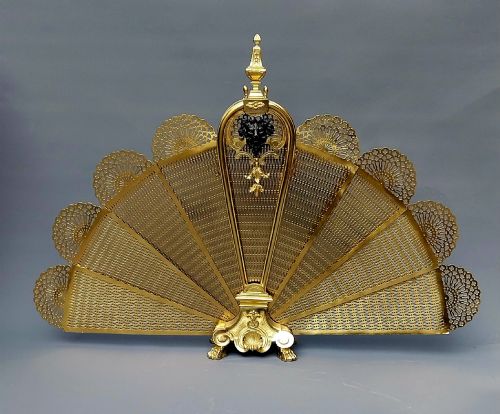
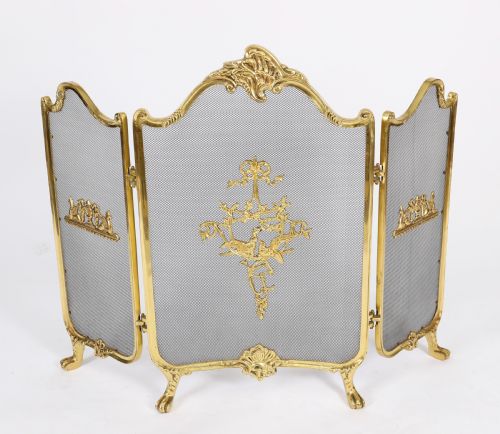
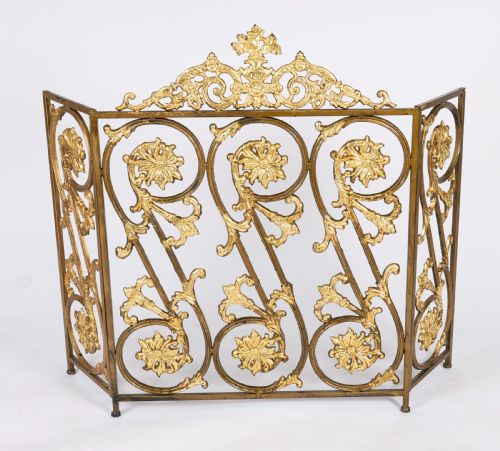
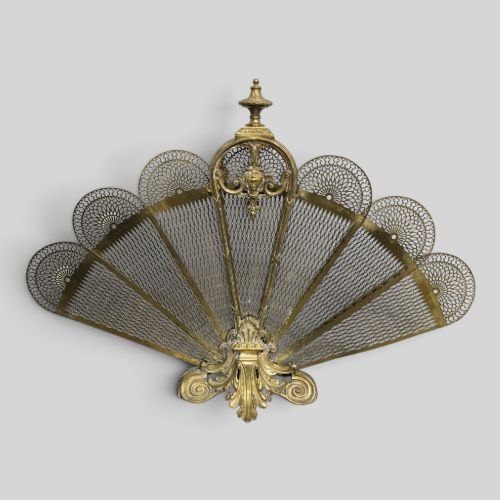


Ornate Folding Screen
An ornate folding screen keeps the hearth tidy while turning coal smoke and embers into a proper architectural centrepiece.
Ornate Folding Screen
The materials and periods span the nineteenth century and the early twentieth century, taking in Victorian examples alongside French chateau imports. A painted leather three-fold screen also appears, broadening the domestic repertoire beyond hearth accessories into room dividers.
How they were made
Maker's workshops employed cast brass, gilt bronze, and wire mesh to build frames that could withstand intense fireplace heat while supporting elaborate decorative metalwork. Individual panels relied on hinges or rotating pivots to allow the folding action without warping the structural frame.
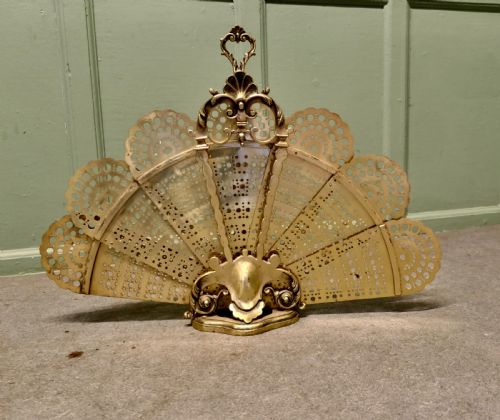
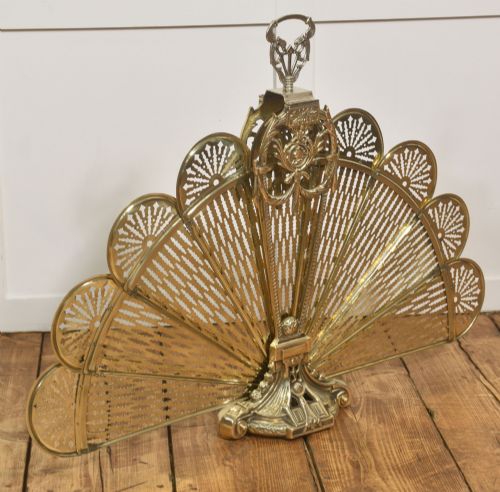
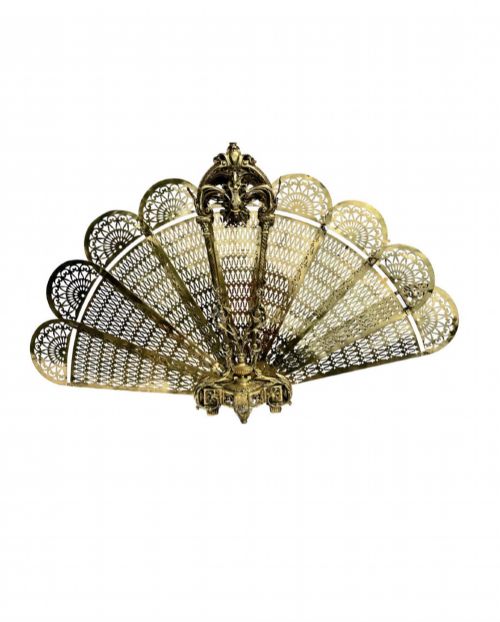
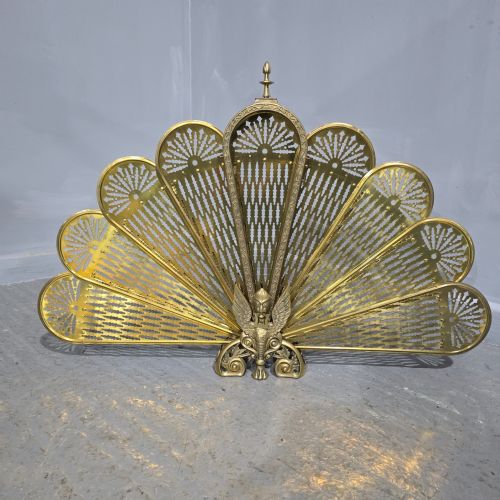
Finishes combined fire gilding or applied ormolu with painted leather panels and fine wire mesh screens designed to catch errant sparks. Decorative elements such as flaming torches, Rococo scrollwork, and feather motifs were cast separately before being fixed to the main frame.
Ornate Folding Screen Retail Price Guide 2026
Typical asking prices for ornate folding screen among the pieces listed under this phrase on Sellingantiques today, from the lower quarter to the upper quarter. They describe what is for sale here now, not the wider market.
Listings span the nineteenth century through the 1920s, featuring cast brass, gilt bronze, and wire mesh in French Rococo and Victorian styles.
What varies in quality
The distinction between ordinary and exceptional pieces rests upon the crispness of the bronze casting and the depth of the original gilding. Earlier nineteenth-century examples tend to show heavier gauge brass and more detailed hand-chased enrichment on the mountings compared to later mass-produced variants.
The structural integrity of the folding mechanism and the tension in the pivots dictate how well the piece maintains its shape over decades of use. Superior fire screens integrate functional wire mesh seamlessly with heavy decorative frames rather than treating the protective screen as an afterthought.
The Ornate Folding Screen Glossary
- Ormolu
- Gilded bronze used extensively for decorative mounts on fine nineteenth-century furnishings. This technique involved applying a mercury and gold amalgam to cast bronze before heating.
- Rococo revival
- A nineteenth-century design movement favouring asymmetrical scrolls, C-scrolls, and naturalistic shell motifs. It draws directly upon eighteenth-century French decorative arts.
- Fire screen
- A movable barrier placed in front of a fireplace when not in use to conceal the empty grate or block draughts. They are constructed in folding, sliding, or fan configurations.
- Peacock fan screen
- A specific hearth screen featuring rigid brass blades that fan out into a circular array resembling a peacock tail. They operate via a central pivot mechanism.
Ornate Folding Screen: Frequently Asked Questions
Where did these screens stand?
These screens stood directly in front of the fireplace opening during warmer months when fires were not lit. They served to hide the soot and ash of the grate while adding decorative weight to the room.
In daily use, they could be folded flat or adjusted to manage radiant heat and protect nearby carpets from stray embers. Their compact folding nature allowed them to be stored easily when the hearth was active.
How do I date an antique screen?
Dating relies heavily on the style of the cast brass or bronze mounts, the weight of the metal, and the assembly techniques used on the hinges. Nineteenth-century examples often exhibit heavier hand-chasing and distinct French revival motifs.
Later pieces from the early twentieth century frequently adopt lighter gauges of brass and mechanical fan designs. Comparing the patination of the metal helps confirm the age of the piece.
Are all these screens for fireplaces?
The vast majority of these pieces function as fireplace accessories designed to protect the room from ash and improve the appearance of an unlit hearth. Their construction incorporates fire-resistant materials like brass, bronze, and iron wire mesh.
Occasional examples, such as painted leather multi-fold pieces, were built taller to divide interior spaces rather than shield a hearth. Checking the height and mesh panels clarifies the intended placement.
How should I clean the brass?
Maintenance requires gentle dusting with a soft, dry cloth to prevent the accumulation of soot and grime within the intricate casting details. Avoid harsh commercial metal polishes that can strip away original gilding and historic patination.
Preserving the aged surface ensures the metal retains the warm tones developed over more than a century of domestic use. Professional conservation is recommended if the gilt bronze requires deeper cleaning.