



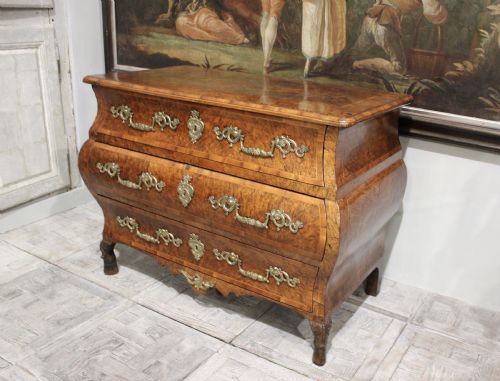

Ornate Commode Drawers
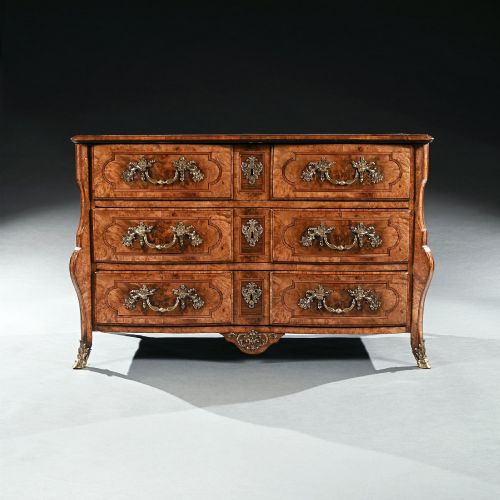
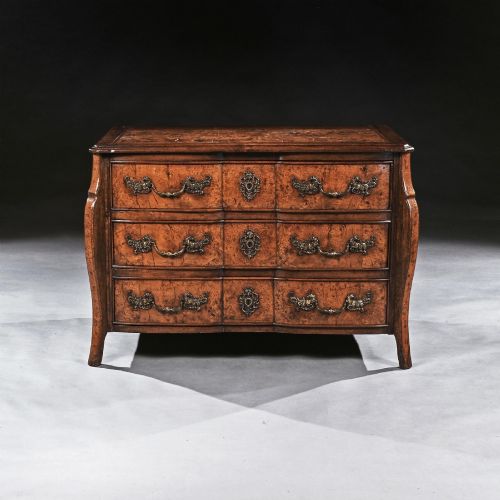
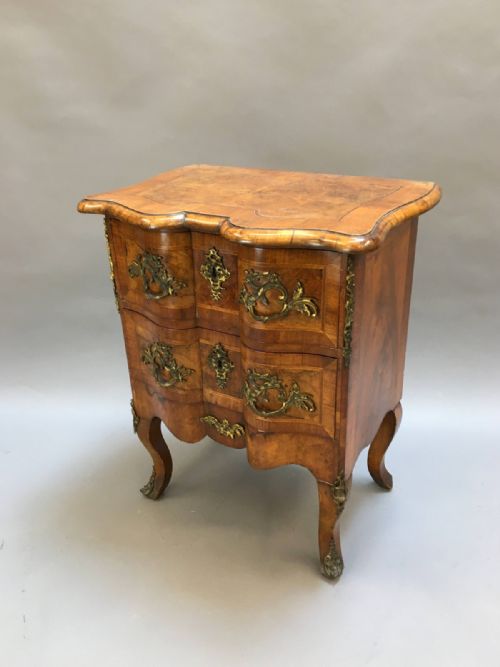
These ornate commode drawers bring continental theatre and rich timbers into a room, offering grand storage through serpentine forms and elaborate mounts.
Ornate Commode Drawers
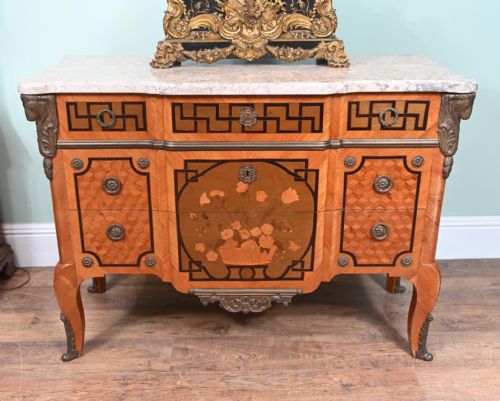
These ornate commode drawers combine the capacious storage of a chest of drawers with the sculptural presence of a continental commode, drawing on eighteenth-century French and regional styles. Pieces appearing here range from provincial oak and burr elm examples to highly decorative walnut and kingwood pieces dressed in brass, ormolu, and marble.
Buyers frequently encounter revival pieces alongside eighteenth-century originals, spanning periods from the eighteenth century through to the early twentieth century. Forms vary from serpentine and bombe fronts to straightforward chests of drawers, often enriched with marquetry inlay and giltwood detailing.
How they were made
Cabinetmakers constructed carcases from durable timbers like oak and walnut, frequently applying decorative veneers of burr walnut, burr maple, and kingwood to create striking grain patterns. Marquetry inlay added further visual complexity to the drawer fronts and sides of these pieces.
Metalwork played a defining structural and decorative role, with brass and ormolu mounts fitted to handles, corners, and aprons. Many continental examples also integrated heavy marble tops, requiring robust framing to support the stone.
Ornate Commode Drawers Retail Price Guide 2026
Typical asking prices for ornate commode drawers among the pieces listed under this phrase on Sellingantiques today, from the lower quarter to the upper quarter. They describe what is for sale here now, not the wider market.
Listings feature periods spanning from the eighteenth century to the twentieth century, incorporating walnut, oak, and marble.
What varies in quality
The sophistication of the timber work and the crispness of the carving distinguish finer examples from simpler provincial output. Figured veneers like burr walnut and intricate marquetry demand high levels of joinery skill to prevent lifting and shrinkage over time.
The integration and weight of metal mounts and marble tops also shape the standard of a piece. Original ormolu and heavy cast brass hardware reflect a higher grade of workshop production than later replacements or simpler iron fittings.
Thomas Hache of Grenoble
The Ornate Commode Drawers Glossary
- Bombe
- A bulging, convex shape found on the front and sides of certain continental commodes. This swelling profile requires advanced woodworking techniques to shape the carcase timbers.
- Ormolu
- Gilt bronze mounts used extensively on decorative furniture to accent corners, handles, and aprons. The technique involves applying a gold amalgam to cast bronze.
- Marquetry
- The art of applying pieces of veneer to a structure to form decorative patterns and pictures. Craftsmen utilise various contrasting woods to achieve tonal depth.
- Serpentine
- A wave-like curved outline featuring a convex centre flanked by concave sides. This fluid shape appears frequently on the drawer fronts of eighteenth-century pieces.
Ornate Commode Drawers: Frequently Asked Questions
What is a commode?
A commode is a low chest of drawers originating in France, designed for domestic storage and often finished with decorative mounts and marble tops.
Over time, the term became interchangeable with larger chests of drawers sharing similar continental proportions and decorative detailing.
Where were these placed?
These pieces traditionally served as principal storage furniture in bedrooms and formal reception rooms, where their decorative facades displayed wealth and taste.
Today, they function as statement sideboards in hallways or living spaces, providing surface area for lamps and decorative objects.
How do I date a commode?
Dating relies on examining the timber selection, construction methods, and stylistic cues such as provincial carving versus revival proportions. Eighteenth-century examples display period-specific joinery and hand-cut elements distinct from later nineteenth-century revival interpretations.
Matching the materials, such as burr walnut or kingwood, to documented periods helps narrow down the decade of production.
Are marble tops original?
Many continental commodes feature heavy marble tops integrated into the original design to provide a durable and decorative surface. These stone slabs were cut specifically to follow the serpentine or bombe contours of the carcase.
Replacement marble tops appear on some pieces where the original stone suffered damage during centuries of use.