





Ornate Candle Chandelier
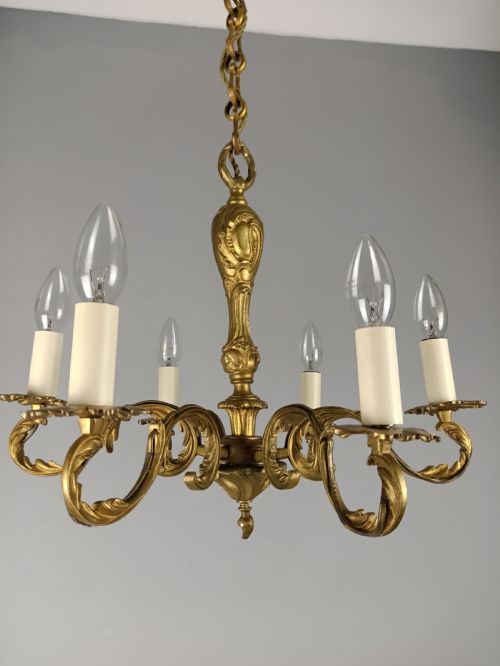
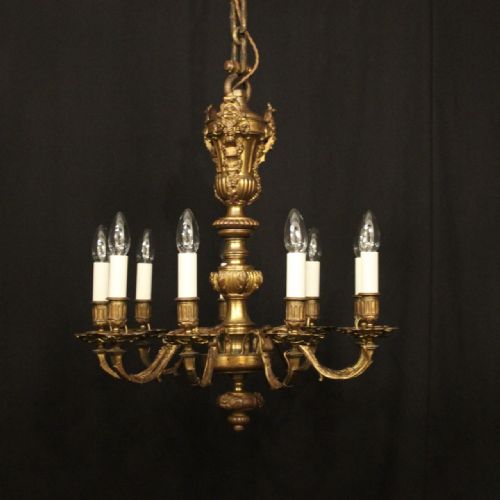
These ornate candle chandeliers bring heavy metalwork and brilliant glass drops to high ceilings, offering the exact dramatic weight that period rooms demand.
Ornate Candle Chandelier
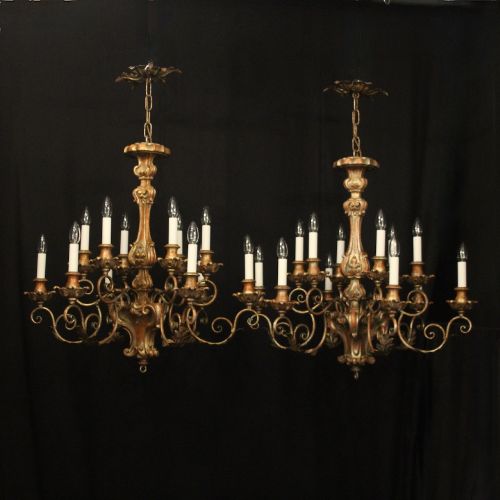
When someone searches for an ornate candle chandelier, they are looking at large, multi-light ceiling fixtures designed to hold candles across four to twelve branches. These pieces originate primarily from the nineteenth and early twentieth centuries, spanning periods from mid-Victorian designs up to the nineteen-thirties.
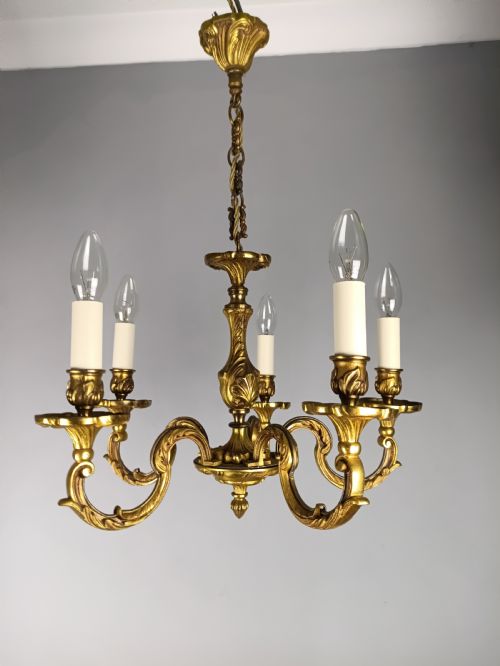
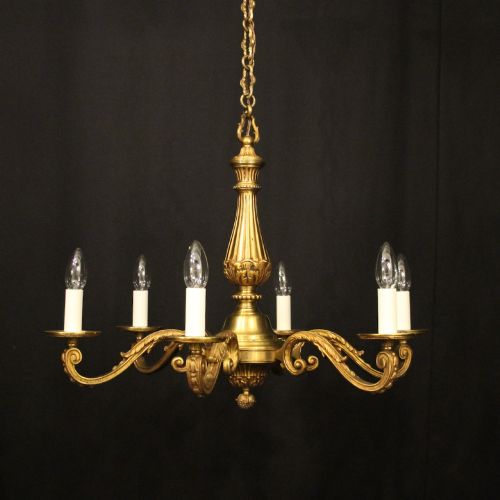
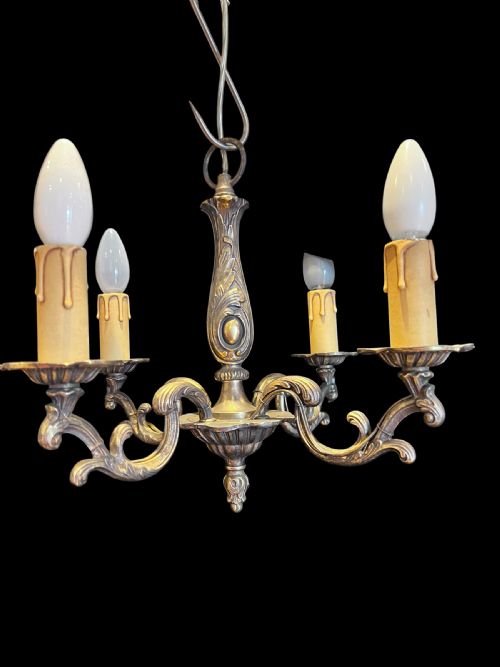
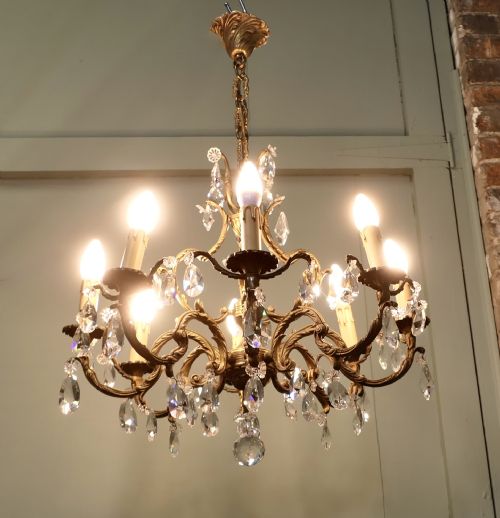
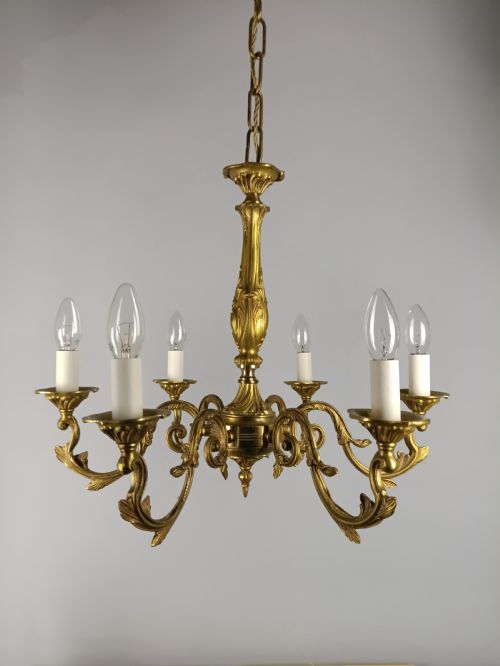
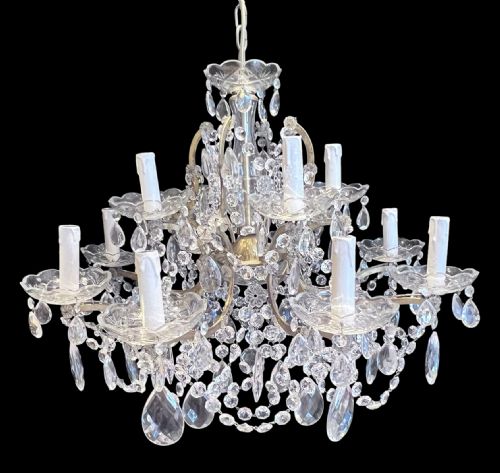
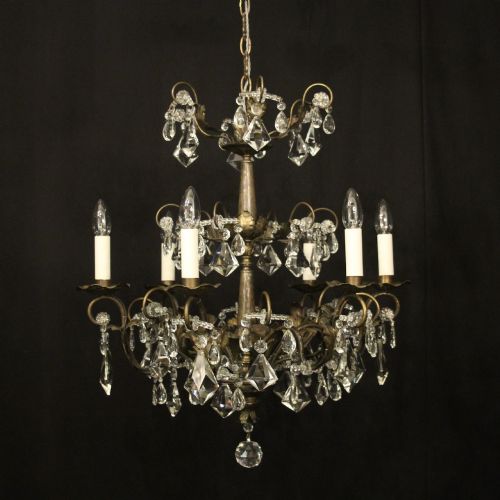
The versions most commonly met on this page are French and Italian fixtures, built in styles such as French Rococo, French Neoclassical, and Italian Neoclassical. They frequently appear as large multi-arm formats in brass, gilt bronze, and gilded brass, often hung with crystal lustres.
Makers and designers are uncredited in the current evidence, leaving the focus entirely on the workshop styles and national traditions of France and Italy. Buyers encounter everything from compact four-light pendants to grand twelve-light arrangements suited for substantial spaces.
Materials and construction methods
These fixtures rely on heavy cast metals such as bronze, brass, and gilt brass, combined with hand-cut crystal and glass drops. Workshops utilised mercury gilding or fire-gilding techniques on bronze to achieve deep, lasting metallic sheens, while other pieces used silver plating over base metals.
The structural framework typically consists of a central column supporting branching arms designed to secure candle pans and nozzles. Crystal lustres and drops are suspended from the frame using wire ties, catching and refracting the candlelight across the room.
Ornate Candle Chandelier Retail Price Guide 2026
Typical asking prices for ornate candle chandelier among the pieces listed under this phrase on Sellingantiques today, from the lower quarter to the upper quarter. They describe what is for sale here now, not the wider market.
Several heavy chandeliers hide tiny drip pans beneath their branches, catching stray wax before it could land on the dinner guests below.
Judging quality in candle chandeliers
The quality of these chandeliers rests in the crispness of the metal casting and the depth of the original gilding. Finer pieces display sharply chased surface details on the bronze or brass, whereas simpler examples show softer, flatter casting marks.
The presence and completeness of original crystal lustres alter the character of a piece significantly. Chandeliers featuring heavy, well-cut crystal drops suspended uniformly across every branch demonstrate a higher standard of manufacture than those with mismatched or missing glass elements.
The Ornate Candle Chandelier Glossary
- Ormolu
- A technique of applying finely ground high-carat gold to an object of bronze, producing a rich golden finish. This process was widely used in eighteenth and nineteenth-century French workshops.
- Lustre
- A cut-glass or crystal pendant suspended from a chandelier to reflect light. These pieces hang from the arms or crown to enhance the visual brilliance.
- Rococo Revival
- A nineteenth-century design movement drawing on the asymmetrical scrolls, shell motifs, and natural curves of the original French Rococo period. It dominates many of the ornate frames seen here.
- Neoclassical
- A style rooted in classical antiquity, featuring symmetrical lines, urn motifs, and restrained geometric patterns. It provides a more formal counterweight to Rococo extravagance.
Ornate Candle Chandelier: Frequently Asked Questions
How do I clean an antique chandelier?
Dust the metal elements gently with a dry microfibre cloth to protect the surface finish and any remaining gilding. Remove crystal lustres individually for washing in warm soapy water if heavy grime has accumulated.
Dry each glass drop thoroughly before rehanging it with new or secure wire. Avoid commercial chemical dips on gilt or plated metals, as these substances strip the historical finish.
Were these chandeliers originally wired for electricity?
These fixtures were made for candles, as evidenced by the drip pans and candle nozzles on each branch. They date from periods when wax candles were the primary light source for large rooms.
Many examples have since been adapted to house internal wiring for electric candle bulbs. This conversion allows them to function safely as ceiling lights while retaining their original appearance.
How do I determine the period of a chandelier?
Examine the casting quality, the composition of the metal frame, and the style of the decorative mounts. Pieces from the mid nineteenth century often display heavier Victorian gothic or early revival traits.
Items from nineteen-twenty and nineteen-thirty tend to lean towards refined French and Italian neoclassical or rococo interpretations. Comparing the cut of the crystal and the type of construction screws offers further clues to the decade of manufacture.
Can these heavy chandeliers hang from standard ceilings?
These fixtures are constructed from solid bronze, brass, and crystal, meaning they carry considerable weight. They require secure installation into a ceiling joist or the use of a heavy-duty ceiling anchor.
Professional installation by an electrician ensures the weight is supported safely without damaging the plaster. This step is essential given the substantial mass of multi-light bronze and crystal frames.