



Ornate Black Chair
An ornate black chair brings immediate architectural weight to a room, combining dark timber or cast metal with elaborate carving.
Ornate Black Chair
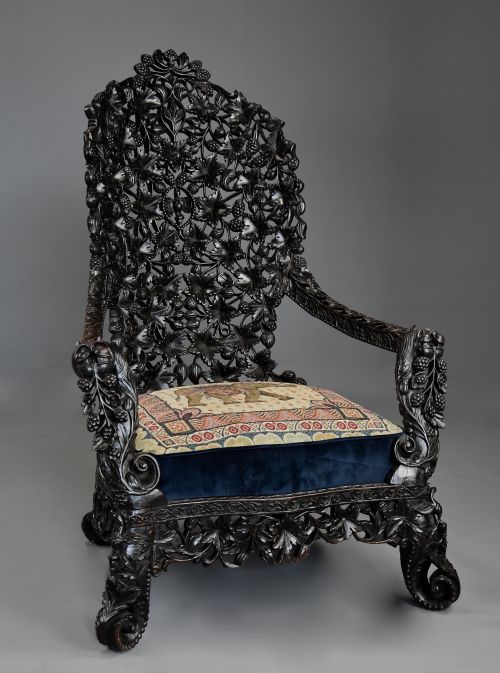
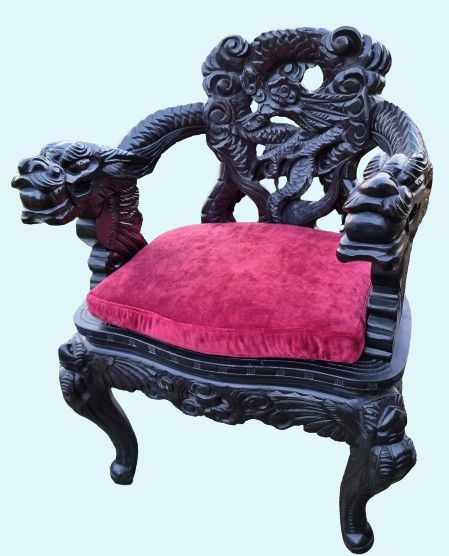
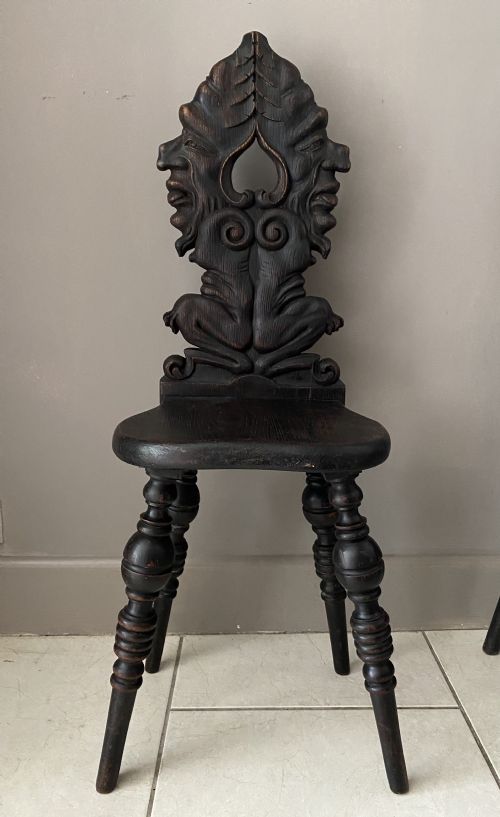
An ornate black chair is a seating piece defined by dark finishes and elaborate surface decoration, spanning styles from Victorian and Chinese Export to French Bistro and Anglo-Indian. When searching for an ornate black chair, buyers encounter diverse forms ranging from heavy cast iron garden furniture to intricately carved hardwood armchairs and hall chairs.
The pieces appearing on this page originate predominantly from the nineteenth century, including specific dates such as eighteen sixty, nineteen hundred, and nineteen thirty. Object types represented include armchairs, side chairs, bistro sets, and hall chairs constructed across multiple global traditions.
Materials vary widely across these items, taking in cast iron, marble, velvet, oak, copper, hardwood, blackwood, rosewood, and walnut. Regional expressions stretch from Swiss marquetry and Black Forest carving to American folk art and French chateau aesthetics.
How they were made
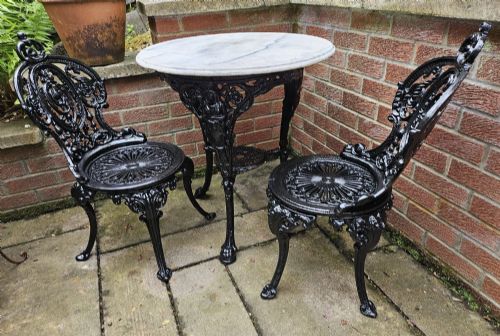
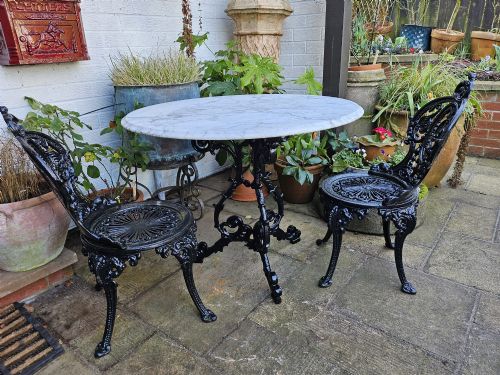
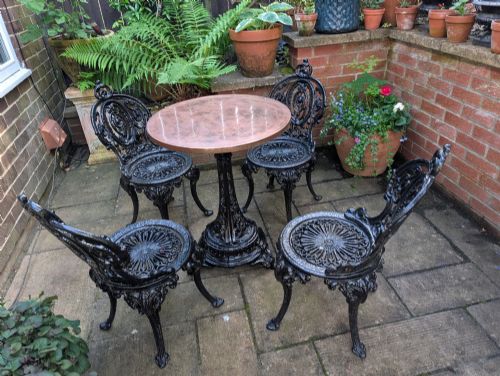
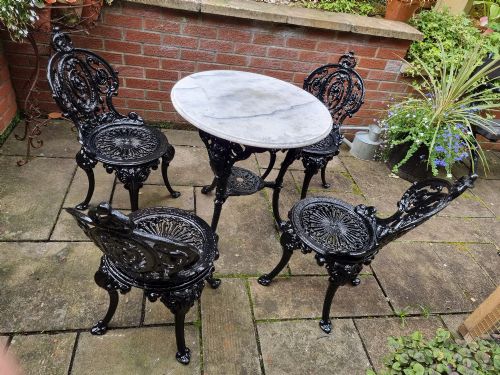
Makers utilised heavy casting techniques for metal frames, producing durable garden tables and bistro sets often paired with marble tops. Iron components provide structural rigidity while allowing for intricate openwork patterns in the metal.
Carpenters and carvers worked with dense timbers including oak, blackwood, rosewood, and walnut to achieve deep relief decoration. Hand carving defines the wooden examples, featuring detailed motifs such as dancing bears, gargoyles, and American eagles.
Inlaid surfaces appear on specific seating, incorporating marquetry techniques to create contrasting geometric or pictorial designs within the wood. Upholstered elements occasionally complement the dark frames using textiles like velvet for boudoir seating.
Ornate Black Chair Retail Price Guide 2026
Typical asking prices for ornate black chair among the pieces listed under this phrase on Sellingantiques today, from the lower quarter to the upper quarter. They describe what is for sale here now, not the wider market.
What varies in quality
Depth and crispness of hand carving separate standard commercial production from exceptional pieces. Sharp relief work on hardwood arms and backrests indicates skilled artisan labour rather than hurried mechanical output.
The integrity of the primary material dictates longevity, whether dealing with uncompromised cast iron without structural cracks or dense, stable hardwoods. Surface patination and the original quality of the black finish or polished timber grain contribute significantly to visual coherence.
Intricacy of subsidiary details, such as marquetry inlay precision or the matching of marble tops to cast iron bases, distinguishes finer examples. Construction joints must remain rigid, supporting the weight of the elaborate backrests and carved components.
The Ornate Black Chair Glossary
- Cast Iron
- An iron-carbon alloy poured into moulds to create rigid furniture frames. It allows for ornate openwork patterns suited to garden and bistro sets.
- Marquetry
- The art of applying small pieces of veneer to a structure to form decorative patterns. It appears on inlaid musical chairs from the nineteenth century.
- Black Forest manner
- A style of wood carving originating in central Europe, characterised by naturalistic animal motifs. Pieces in this tradition often feature carved figures like dancing bears.
- Hardwood
- Timber derived from angiosperm trees, providing dense and durable material for intricate seating. Varieties include blackwood and rosewood.
- Hall Chair
- A formal wooden seat placed in an entrance hall, usually featuring a high carved back displaying heraldic or grotesque motifs.
Ornate Black Chair: Frequently Asked Questions
What periods do these chairs cover?
The listings span the nineteenth century and early twentieth century, with specific examples dated around eighteen sixty, eighteen eighty, nineteen hundred, and nineteen thirty.
These dates encompass diverse regional revivals and international export styles, from Victorian gothic influences to American folk art.
Where were these chairs used historically?
Different forms served distinct domestic and outdoor functions, ranging from garden dining sets and bistro tables to formal hall chairs and boudoir seating.
Heavy cast iron pieces were built for terraces and gardens, while carved hardwood armchairs and musical chairs occupied interior reception rooms.
How do I identify different regional styles?
Regional attribution relies on specific decorative vocabularies, such as animal carvings for Black Forest pieces or inlaid marquetry for Swiss items.
Materials also offer clues, with dense tropical hardwoods pointing towards Chinese Export or Anglo-Indian workshops.
How should I care for dark wood and iron?
Wooden frames benefit from stable indoor humidity and occasional treatment with appropriate conservation waxes to nourish the dark grain.
Cast iron requires protection from damp outdoor environments to prevent oxidation, while marble tops need gentle cleaning to avoid surface staining.