



Ornate Bistro Table
An ornate bistro table brings genuine Continental character to a terrace or conservatory, offering a sturdy yet delicate centrepiece for morning coffee.
Ornate Bistro Table
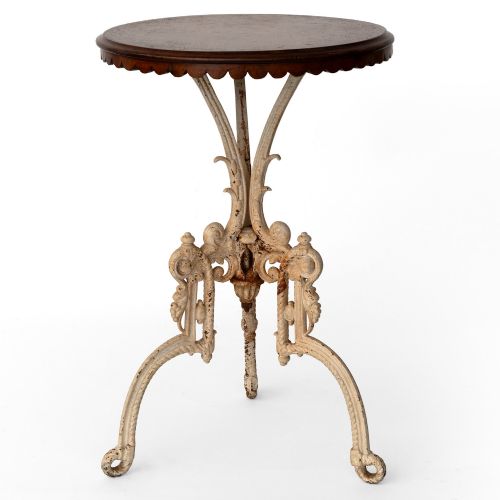
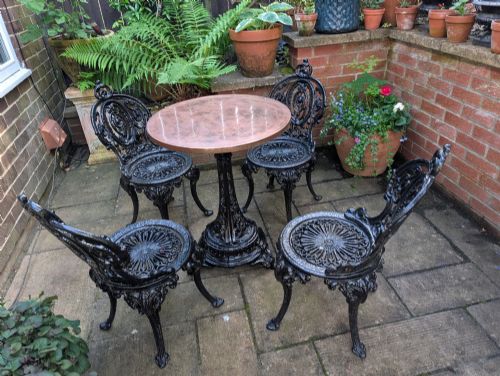
When you search for an ornate bistro table, you are looking at small-scale metal furniture designed for dining, drinks or conservatory use. The examples you meet here span the nineteenth century, the nineteen-twenties and nineteen-thirty, often drawing on Victorian and French bistro traditions.
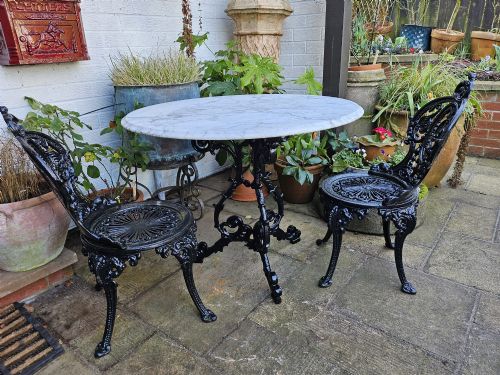
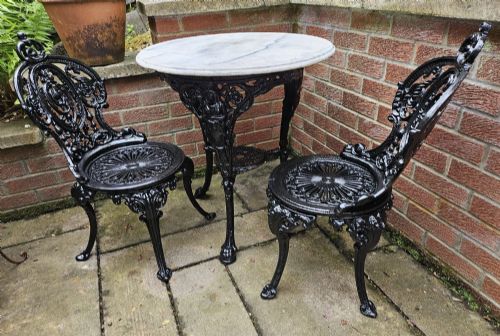
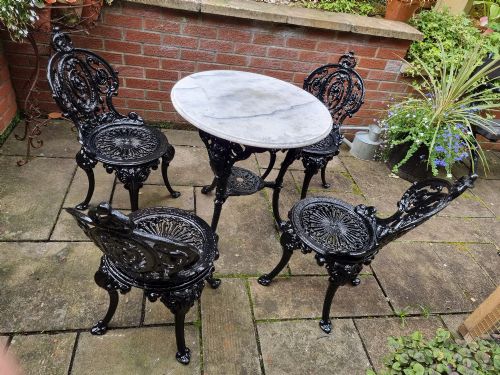
The form typically comprises a heavy metal base paired with a round top made of marble, wood or cast iron. You will encounter individual occasional tables alongside larger dining sets that include matching chairs.
Origins stretch from domestic Victorian production to French industrial workshop designs. These pieces suit compact spaces where solid wooden furniture would feel too heavy.
How they were made
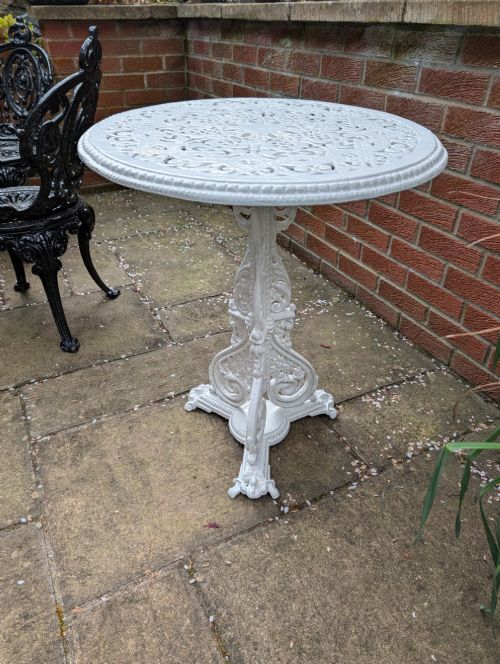
Foundries produced the heavy support structures using cast iron and wrought iron, employing intricate moulds to create openwork scroll designs and decorative bases. Some examples incorporate brass and copper elements alongside the primary ironwork.
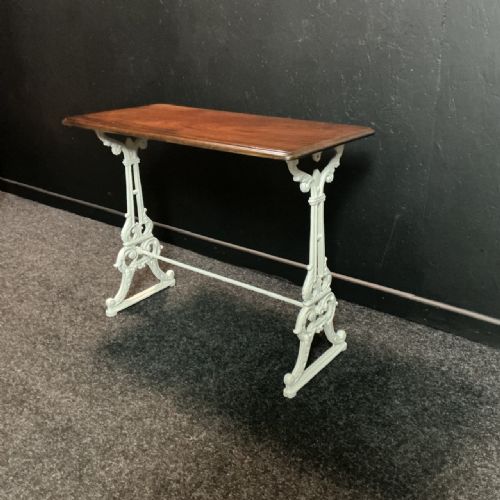
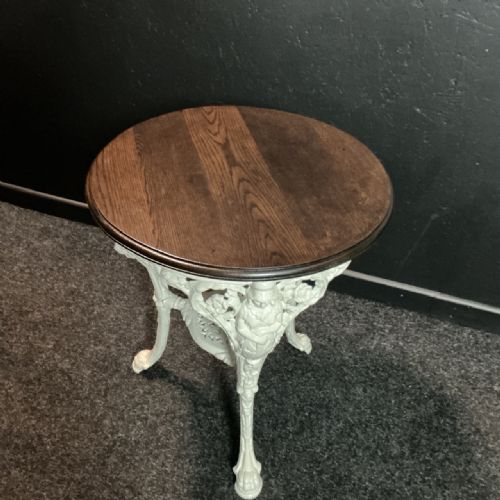
Table tops utilise contrasting materials, pairing the rigidity of metal framing with smooth slabs of marble or timbers such as oak, mahogany and painted wood. Joinery and fixings rely on traditional mechanical fasteners to secure the heavy stone or wooden surfaces to the metal pedestals.
Ornate Bistro Table Retail Price Guide 2026
Typical asking prices for ornate bistro table among the pieces listed under this phrase on Sellingantiques today, from the lower quarter to the upper quarter. They describe what is for sale here now, not the wider market.
The selection includes formal occasional tables alongside French bistro sets and conservatory dining configurations.
What varies in quality
Quality reveals itself in the crispness of the casting and the ambition of the scrollwork. Finer pieces display sharply defined patterns without the blurring found in secondary castings.
The choice of top shifts the character and weight of the piece, with solid marble slabs offering a cooler, more substantial surface than lighter timber alternatives. The integrity of the original paint finish and the stability of the central pedestal also determine the overall standard.
Christopher Dresser
The Ornate Bistro Table Glossary
- Cast iron
- A strong, heavy alloy poured into moulds to create rigid forms. It allows for detailed scrollwork and provides the substantial weight needed to stabilise a small table.
- Marble
- A metamorphic rock cut into smooth slabs for table tops. This cool stone surface resists moisture and provides a hardwearing contrast to metal bases.
- Scrollwork
- Decorative curving ornamentation shaped like scrolls or spirals. It appears frequently on nineteenth-century iron bases to soften industrial materials.
- Occasional table
- A small, movable table designed for specific, intermittent use rather than heavy dining. These pieces function well beside seating areas or in conservatories.
- Wrought iron
- Iron beaten into shape by hand rather than cast in a mould. This material offers fibrous strength and subtle surface textures.
Ornate Bistro Table: Frequently Asked Questions
Where should I place an ornate bistro table?
These compact pieces suit conservatories, small terraces, balconies or garden corners where space is restricted. Their weather-resistant metal frames handle sheltered outdoor settings well.
Pair them with matching chairs or position them as a single occasional table for drinks and display purposes.
How do I identify a Victorian piece?
Nineteenth-century examples often feature heavier cast iron bases with distinct scrollwork, heavier patination and traditional construction methods. Design influences from this era frequently mimic natural or geometric motifs.
Compare the casting detail and the weight of the metal against later twentieth-century productions.
Are marble tops original to these tables?
Many period tables were paired with marble tops to provide a durable, wipe-clean surface for dining and drinks. These stone slabs add considerable weight and stability to the lightweight frame.
Check how the top rests on the base and whether the edges show appropriate period wear.
How do I care for cast iron furniture?
Protect iron surfaces by keeping them clean and applying appropriate protective coatings if they sit outdoors. Avoid abrasive cleaners that might damage painted finishes or patination.
Store vulnerable timber or marble tops indoors during severe winter weather to preserve the materials.