

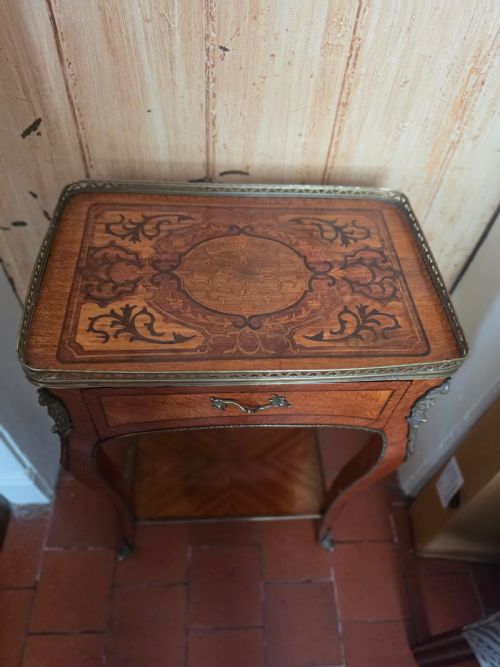
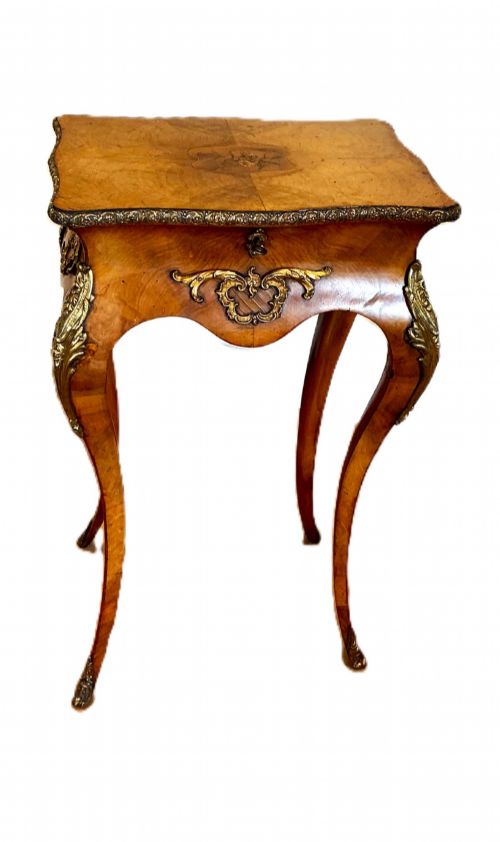


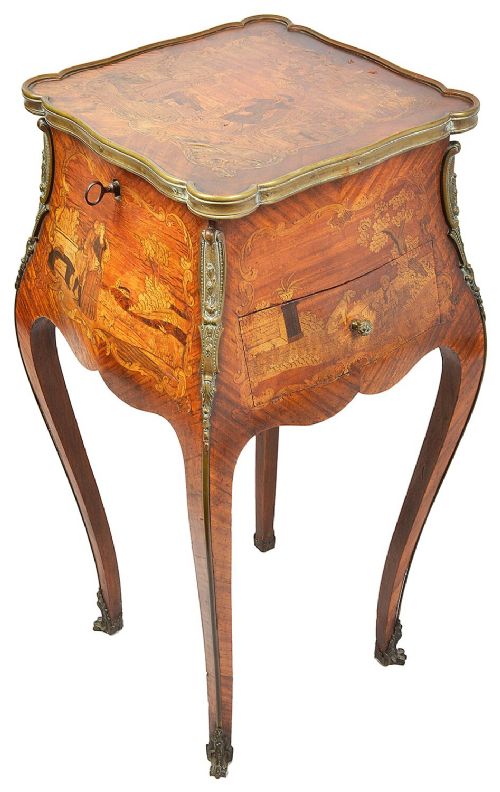


Ormolu Walnut Work Table
An ormolu walnut work table brings French revival elegance and practical interior storage into any room.
Ormolu Walnut Work Table
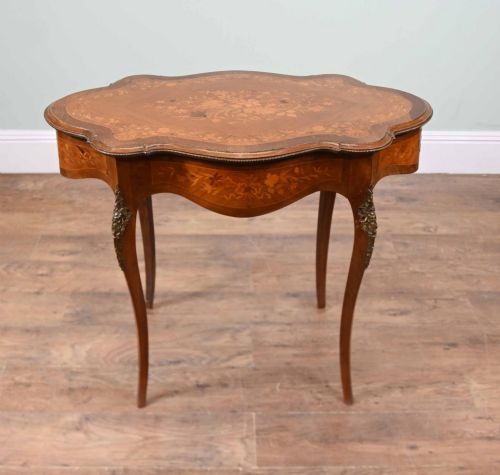
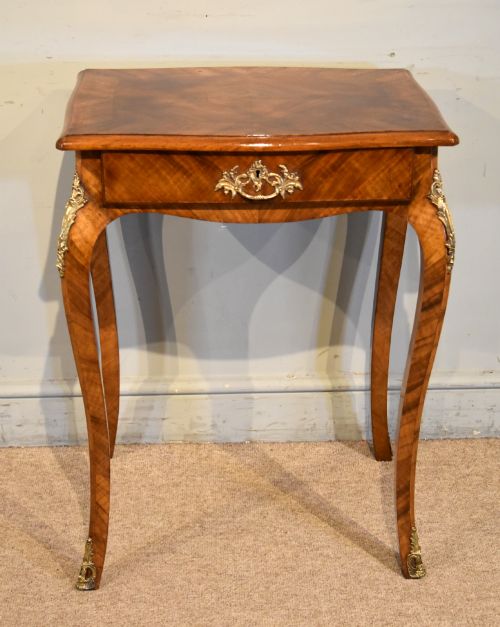
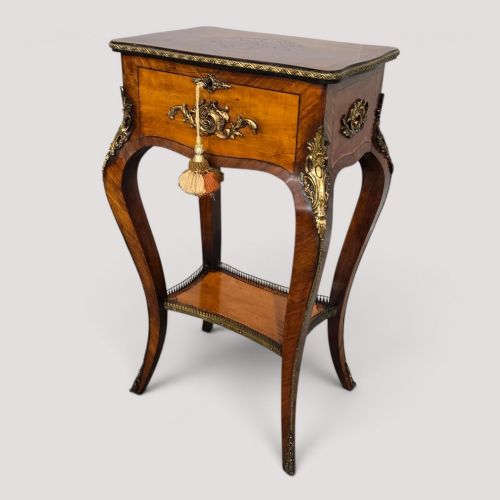
An ormolu walnut work table combines the rich timber tones of walnut with gilded bronze mounts, designed primarily for needlework or correspondence. These pieces emerge chiefly from the nineteenth century, spanning Victorian interpretations and French revival movements.
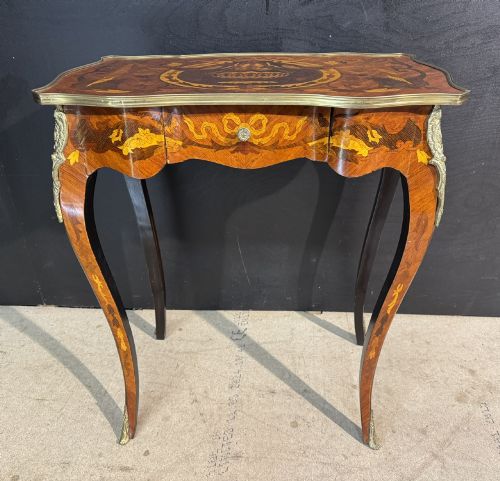
Buyers encounter forms functioning as occasional tables, side tables, or combined dressing tables and poudreuses. The construction frequently incorporates intricate marquetry inlay alongside the signature gilt mounts.
The aesthetic leans heavily towards Louis XV and Louis XVI styles, reflecting nineteenth-century revivals of French court design. Each example offers a compact surface accompanied by concealed compartments suited for small daily tasks.
Materials and construction
Cabinet makers utilised walnut veneers, burr walnut, and contrasting timbers like kingwood, rosewood, and satinwood to create detailed geometric and floral marquetry patterns across the tops and sides. These veneers were carefully applied over solid foundational woods.
Internal compartments, sliding trays, and drawers were fitted within the compact frames to serve the practical needs of writing and sewing.
Ormolu Walnut Work Table Retail Price Guide 2026
Typical asking prices for ormolu walnut work table among the pieces listed under this phrase on Sellingantiques today, from the lower quarter to the upper quarter. They describe what is for sale here now, not the wider market.
Materials recorded across the inventory include walnut, burr walnut, kingwood, rosewood, satinwood, ormolu, and brass.
Judging quality in these tables
Quality rests upon the crispness of the ormolu casting and the precision of the marquetry inlay. Finer examples display deeply chased gilt bronze mounts and tight, harmonious grain matching across the walnut veneers.
The sophistication of the internal mechanism and the integrity of the secondary timbers dictate the standing of a piece. Superior work tables maintain stable joints and smooth action within their fitted compartments and drawers.
The Ormolu Walnut Work Table Glossary
- Ormolu
- Gilded bronze or brass mounts applied to furniture for decorative effect. This technique was widely utilised during French revival periods.
- Marquetry
- Decorative patterns formed by fitting together thin slices of wood veneer. Artisans employed contrasting timbers like satinwood and kingwood to achieve pictorial designs.
- Poudreuse
- A type of dressing table featuring a folding top and internal compartments. These often doubled as work tables for Victorian ladies.
- Burr walnut
- Timber taken from a tree growth, yielding complex, swirling grain patterns. It commands attention for its decorative appearance on table tops.
Ormolu Walnut Work Table: Frequently Asked Questions
What is an ormolu walnut work table used for?
These tables served Victorian and nineteenth-century women as personal stations for sewing, embroidery, and letter writing. The fitted interior compartments kept small tools and stationery neatly organised.
Today, they function well as decorative occasional tables, bedside surfaces, or compact writing desks in reception rooms.
How do I identify French revival styles?
French revival pieces adopt the curved cabriole legs and floral motifs of Louis XV or the straighter, neoclassical lines of Louis XVI. Makers combined walnut veneers with prominent ormolu mounts to emulate authentic court furniture.
Dates cluster around the nineteenth century, particularly the Victorian era and the Napoleon III period.
What woods are used alongside walnut?
Makers frequently incorporated burr walnut for highly figured surfaces, while banding and inlay utilised kingwood, rosewood, satinwood, and tulipwood. These contrasting timbers allowed for complex geometric parquetry and floral marquetry.
The underlying carcase typically relied on sturdy secondary timbers to support the veneered exterior.
Are these tables practical for daily use?
The compact proportions and internal storage compartments make them suitable for modern living spaces as side tables or lamp tables. Their surfaces accommodate everyday items while offering concealed storage.
Care should be taken to protect the polished walnut veneer and gilded mounts from excessive moisture and direct heat.