



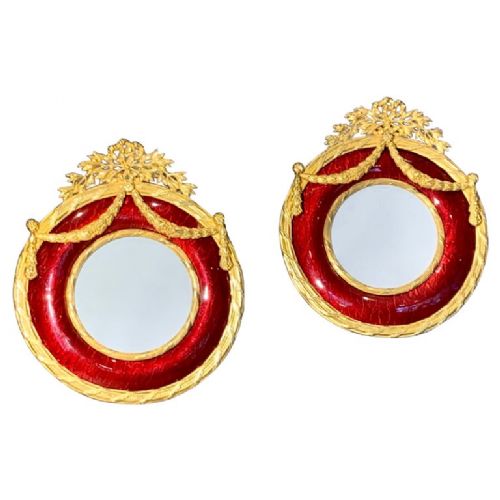
Ormolu Photo Frame
An ormolu photo frame brings warmth and gilded theatre to a desk or mantelpiece through heavy cast metal and rich French design.
Ormolu Photo Frame
An ormolu photo frame combines metal casting with decorative portrait display, capturing the grandeur of French revival styles. When you search for ormolu photo frames, you encounter pieces designed to hold treasured likenesses in domestic settings.
The selections span the Victorian era, the Edwardian period, and the late nineteenth century. Common configurations include oval apertures, double frames, and hinged easel backs intended for table placement.
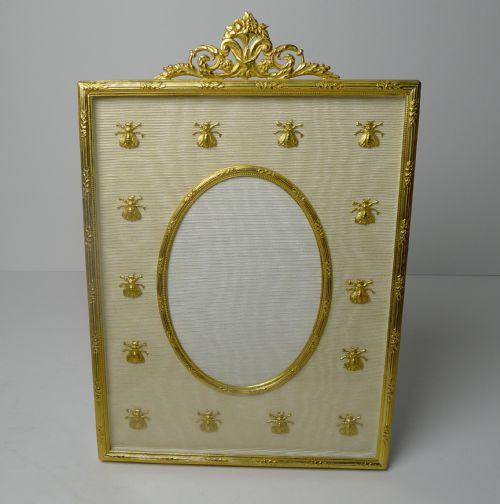
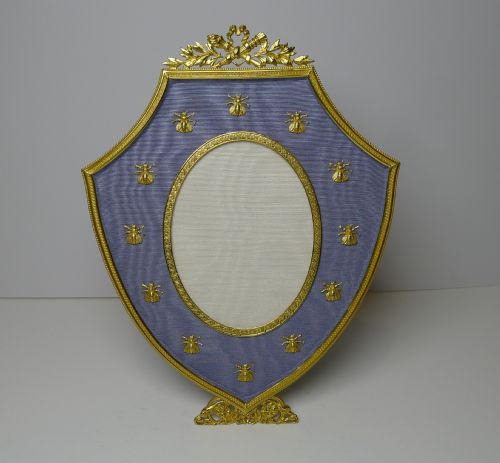
French influence dominates the selection, drawing heavily on Louis XVI, Rococo, and Empire aesthetics. Makers often integrated decorative motifs such as cherubs, Napoleonic bees, and elaborate scrollwork into the metal housings.
Materials and construction
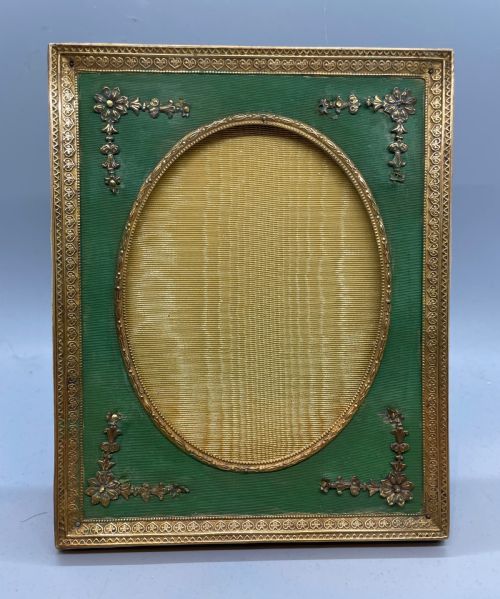
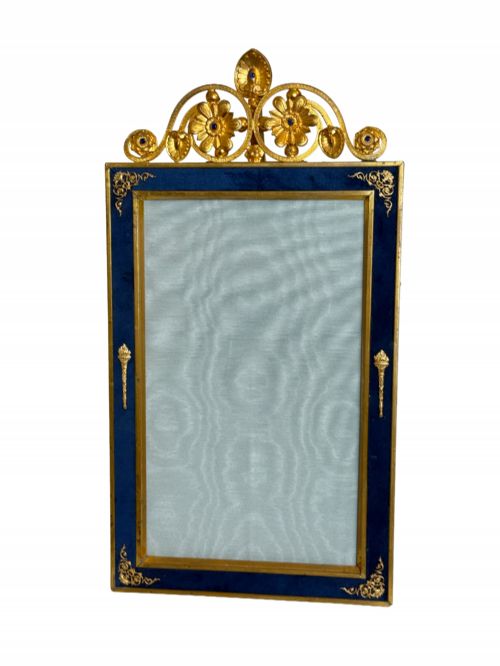
The primary structural material is cast brass or bronze, treated with a gilt finish to achieve the characteristic warm gold tone known as ormolu or gilded bronze. This metalwork provides the substantial weight and rigid framework required for standing frames.
Many examples incorporate secondary materials to enhance the visual texture, including glass covers, silk, velvet, and fabric backing panels. Specialised additions such as champleve enamel, paste stones, hardstones, and agate appear as inset decorative elements.
Several frames proudly display rows of Napoleonic bees, reminding us that even imperial insects enjoy holding family photographs.
Qualities of distinction
The sophistication of the metal casting separates standard production from superior work. Crisp detail in chased motifs, such as feathered wings on cherubs or fine foliage on Rococo scrolls, indicates skilled artisanal execution.
The integration of precious decorative accents elevates a piece. Frames featuring undamaged champleve enamel, genuine agate mounts, or complex multi-part hinges demonstrate superior manufacturing ambition.
Boin Taburet·F. Bienvue
The Ormolu Photo Frame Glossary
- Ormolu
- A gilded bronze or brass finish produced by applying gold or a gold-coloured alloy to a base metal. This technique creates a durable, bright golden surface popular in decorative arts.
- Champleve enamel
- A technique where troughs are dug into the surface of a metal object and filled with vitreous enamel before firing. It creates vibrant coloured patterns within the metal frame.
- Easel back
- A hinged support strut attached to the rear of a frame allowing it to stand upright on a table. It provides stability for desk display.
- Paste stone
- Faceted glass or crystal cut and polished to imitate gemstones. These stones add sparkle to decorative metal mounts.
- Napoleon III
- A stylistic period spanning the mid-nineteenth century characterised by eclectic revivals of historical French designs. It often employs heavy gilding and ornate ornamentation.
Ormolu Photo Frame: Frequently Asked Questions
What is ormolu?
Ormolu refers to gilded bronze or brass, created by applying a gold finish to a base metal. This gives the object a warm, brilliant appearance without requiring solid gold construction.
The technique gained widespread use in French decorative arts during the eighteenth and nineteenth centuries, lending a luxurious sheen to domestic items like picture frames and table mirrors.
How do I date a frame?
Dating relies on stylistic clues, materials, and construction methods. Late nineteenth-century pieces often display French revival motifs like Louis XVI ribbons or Rococo scrolls.
Examining the backboards, hinge mechanisms, and glass types also helps establish the era. Edwardian examples tend to show lighter, more refined Edwardian or late Victorian detailing.
What is champleve enamel?
Champleve enamel is a decorative technique where hollows are carved into a metal surface and filled with coloured glass paste. The piece is then fired to fuse the enamel into the metal channels.
On photo frames, this technique introduces vibrant patches of colour that contrast against the surrounding gold-toned ormolu mount.