




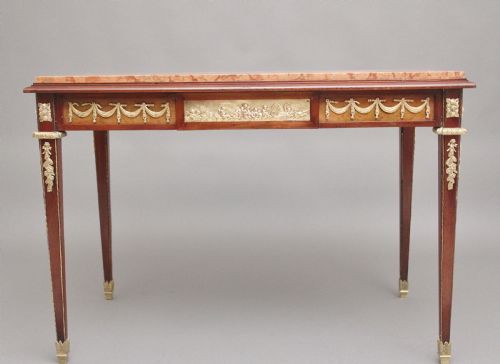


Ormolu Mounted Mahogany Console
An ormolu mounted mahogany console brings architectural weight and bright gilt bronze together, offering a surface for display that anchors a formal room.
Ormolu Mounted Mahogany Console
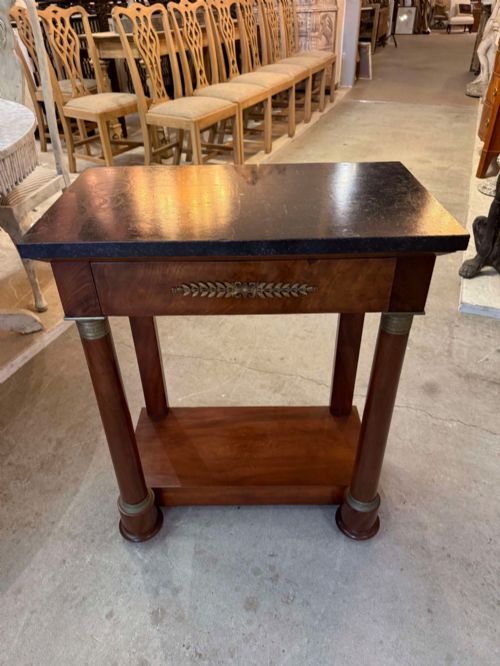
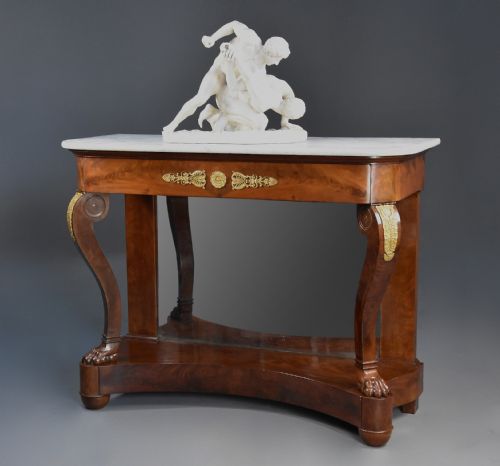
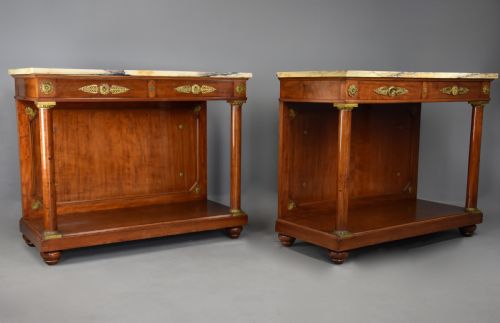
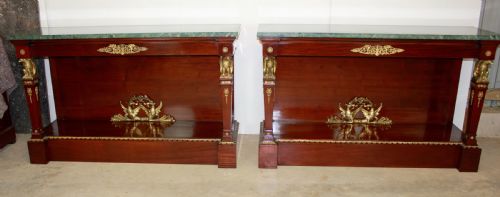
An ormolu mounted mahogany console table stands against a wall or functions as a freestanding centre piece, combining deep timber grounds with cast metal mounts. These tables emerge from nineteenth century French workshops and later revival periods, adopting forms from Louis XVI, Empire, and Restauration styles.
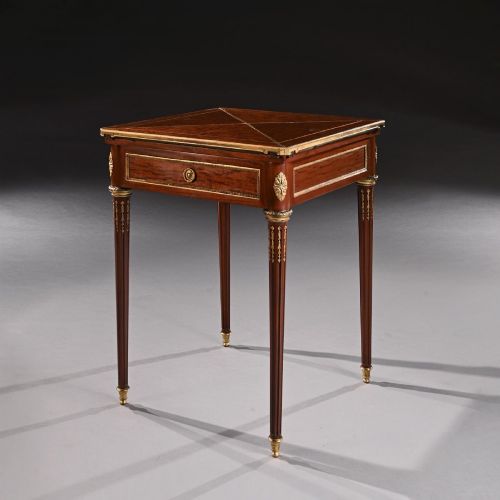
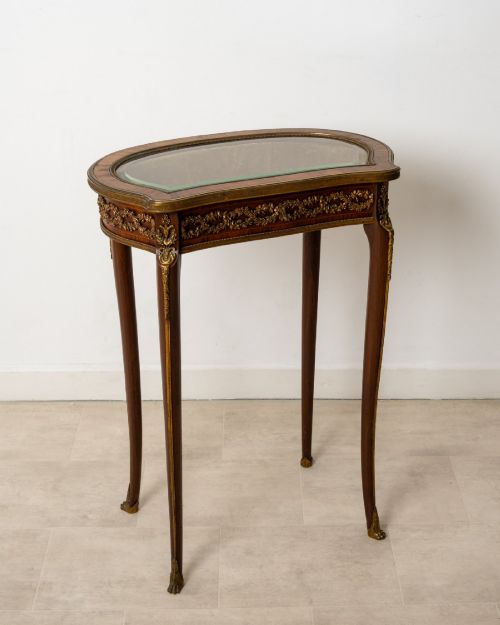
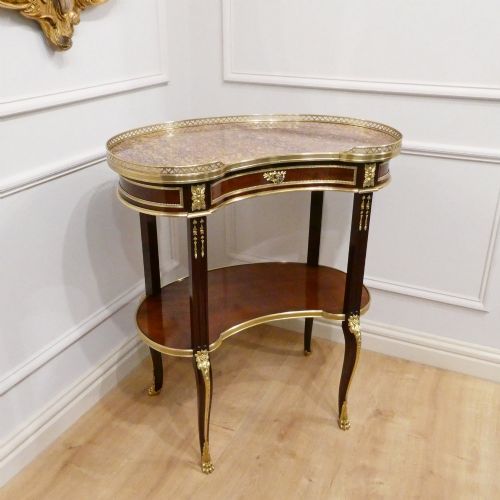
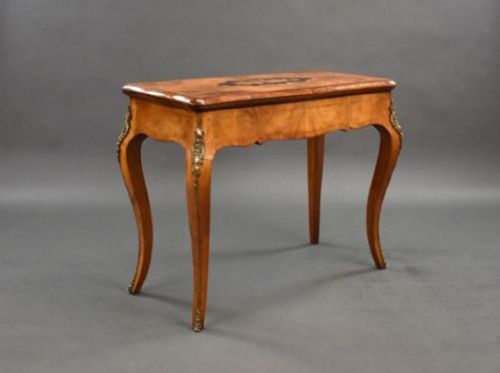
The buyer meets versions ranging from early nineteenth century French Empire pieces with flame mahogany to late nineteenth century Louis XVI revival examples featuring marble tops and parquetry. Side tables, card tables, and display vitrines also appear under this heading, sharing the characteristic timber and metal vocabulary.
Makers such as Maison Millet and Krieger Paris represent the calibre of these pieces, alongside works after François Linke. The forms span console tables, side tables, and occasional pieces intended for grand drawing rooms.
How they were made
Cabinetmakers used solid and veneered mahogany, sometimes enriched with kingwood, rosewood, or burr walnut marquetry and parquetry patterns. Timber surfaces were polished to a deep lustre to contrast against the cold brilliance of metal mounts.
Ormolu mounts, cast in bronze and fire gilt, were chased by hand to define hair, acanthus leaves, and classical drapery before being fixed to the wooden frames. Marble slabs, frequently white or fossil varieties, were bedded directly onto the timber tops of console and side tables.
Ormolu Mounted Mahogany Console Retail Price Guide 2026
Typical asking prices for ormolu mounted mahogany console among the pieces listed under this phrase on Sellingantiques today, from the lower quarter to the upper quarter. They describe what is for sale here now, not the wider market.
Listings feature nineteenth century pieces alongside early twentieth century revivals, utilising mahogany, ormolu, marble, and kingwood.
What varies in quality
The crispness of the ormolu chasing dictates the upper tier of quality, where hand finishing reveals sharp details in the acanthus and figural mounts rather than soft, mass produced casting. Timber selection similarly divides the range, with figured flame mahogany and precise parquetry inlay showing superior cabinet work.
Signatures or stamps from workshops like Krieger Paris add documented provenance, while proportion and the integration of marble tops with the wooden carcase determine the architectural success of each table.
Maison Millet·Krieger Paris·François Linke
The Ormolu Mounted Mahogany Console Glossary
- Ormolu
- Gilt bronze mounts applied to furniture. This technique involves coating bronze with a gold amalgam and heating it to drive off the mercury.
- Console
- A table designed to stand against a wall, traditionally fixed with brackets or supported on front legs. These pieces often feature shaped marble tops.
- Parquetry
- Geometric patterns of wood veneer assembled on a carcase. Makers used contrasting timbers like mahogany and kingwood to create optical depth.
- Restauration
- A French design period spanning the early nineteenth century between the Empire era and the July Monarchy. Furniture from this time often shows simpler mahogany grains with restrained bronze mounts.
Ormolu Mounted Mahogany Console: Frequently Asked Questions
Where should I place an ormolu mounted mahogany console?
These tables suit hallways, drawing rooms, or living spaces where they can sit flat against a wall beneath a mirror or artwork. Freestanding centre tables also occupy the middle of larger rooms.
Ensure the floor is level so the marble top rests evenly without placing undue stress on the mahogany frame.
How do I clean marble top console tables?
Wipe the marble surface with a soft, damp cloth and dry it immediately to prevent water marks or staining. Avoid acidic cleaners that etch the polished stone.
Dust the mahogany and ormolu mounts gently with a dry microfibre cloth, keeping moisture away from the gilt bronze.
What is the difference between Empire and Louis XVI style?
Empire pieces draw on classical Roman and Egyptian motifs, featuring heavy flame mahogany, bold proportions, and robust bronze mounts. They project military power and imperial ambition.
Louis XVI style leans towards neoclassical restraint, with straighter lines, fluted legs, and delicate ribbon or floral ormolu mounts.
Are these tables sturdy enough for daily use?
Nineteenth century console and centre tables were built for formal reception rooms rather than heavy daily friction. While solid in construction, their heavy marble tops require care when moving the furniture.
Lift rather than drag the table to protect the joints and the lower ormolu mounts from impact.