




Ormolu Gueridon Table
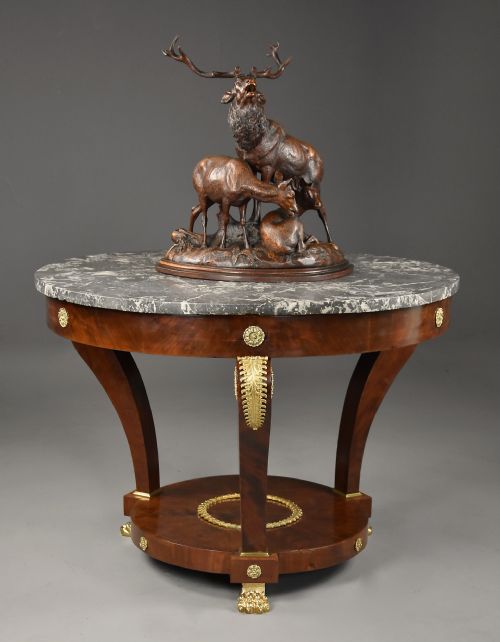
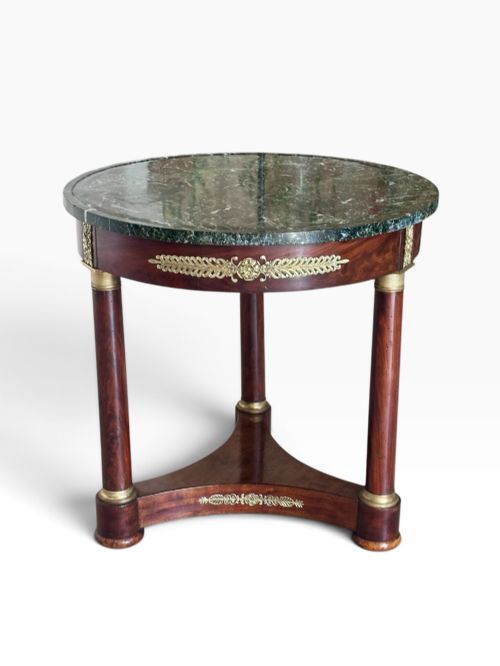
An ormolu gueridon table brings classical French elegance to a room, offering a circular marble top supported by gilded mounts.
Ormolu Gueridon Table
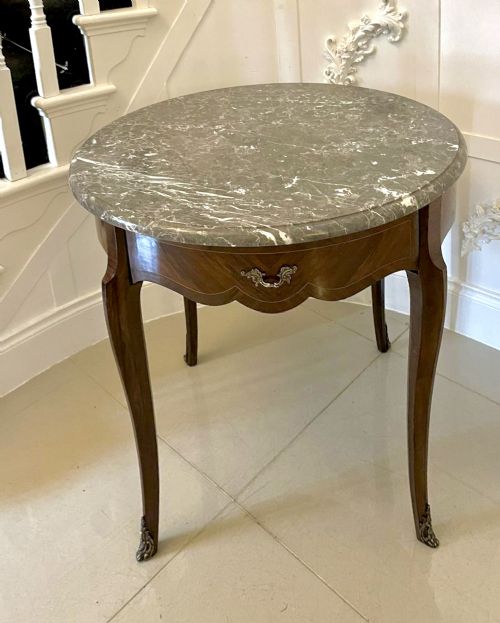
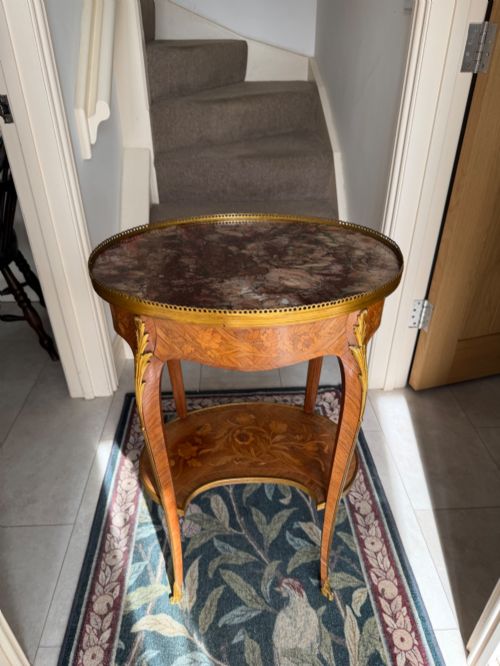
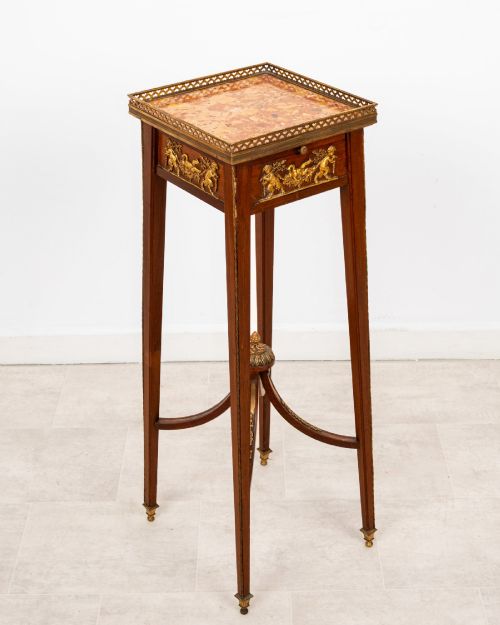
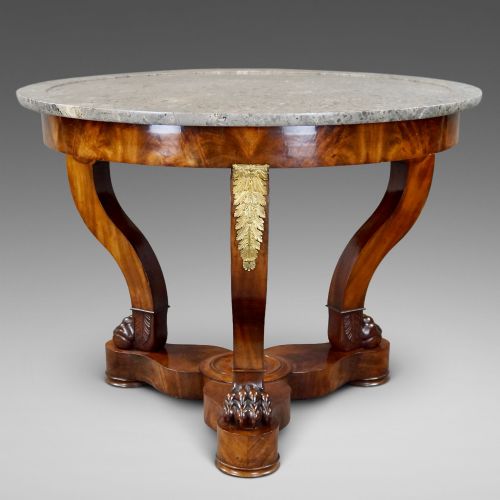
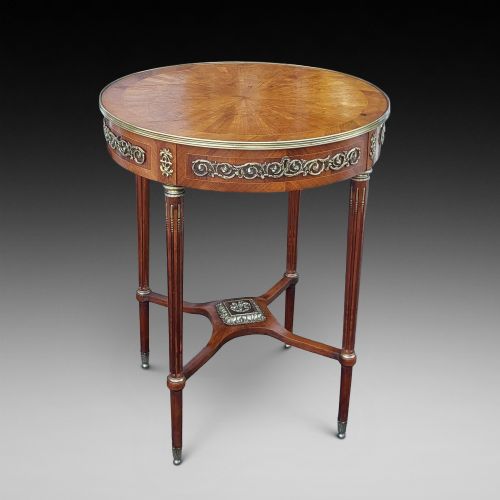
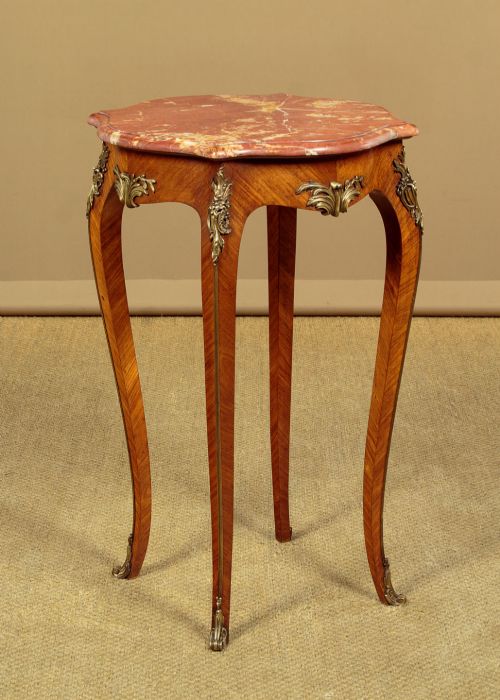
An ormolu gueridon table takes the form of a small round occasional, centre, or lamp table, frequently featuring a stone top encircled by a metal gallery. These pieces emerge predominantly from nineteenth-century French workshops, spanning Empire, Louis XV, and Louis XVI revivals.
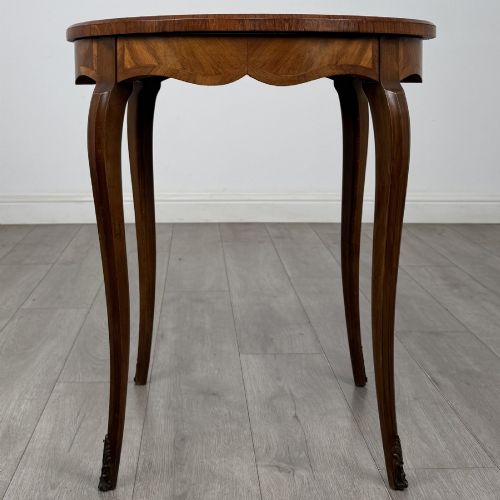
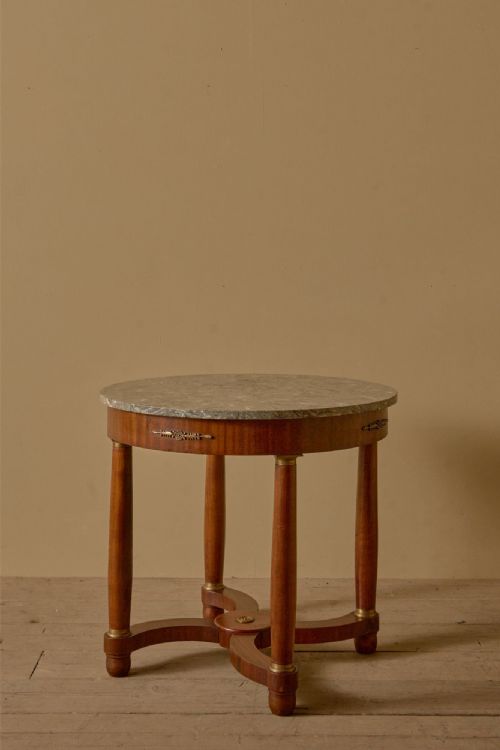
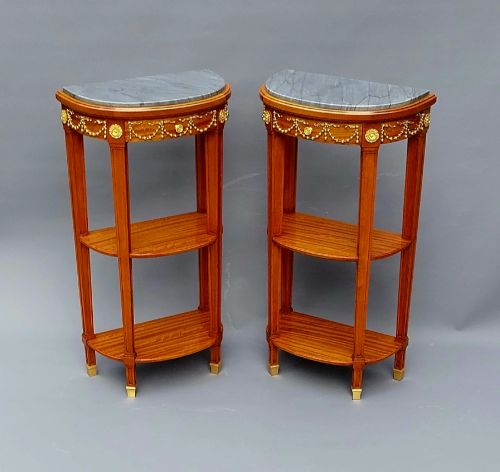
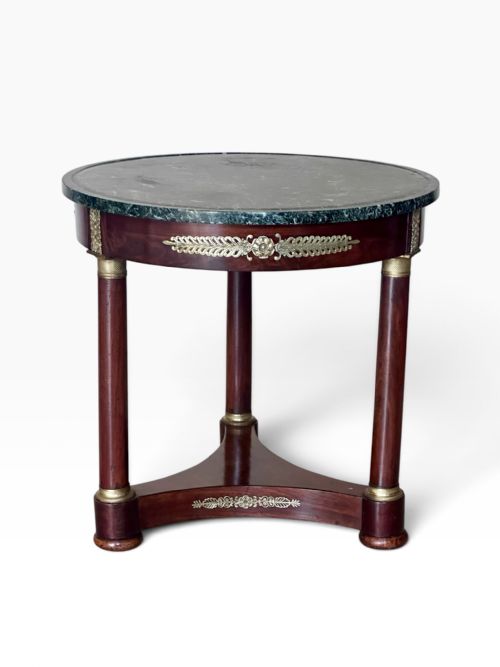
Buyers meet variations ranging from simple mahogany side tables with brass mounts to elaborate pieces displaying marquetry, parquetry, and porcelain plaques. The selection includes demilune shapes, two-tier stands, and freestanding occasional tables designed for intimate placement within a room.
Materials and Construction
Cabinetmakers constructed these tables using a carcase of mahogany, kingwood, walnut, or rosewood, often enhanced with intricate marquetry and parquetry geometric patterns. Tops of white, red, or rouge marble rest within the wooden frames, occasionally accompanied by raised brass or gilt-bronze galleries.
The defining ornamentation relies on ormolu, gilt bronze, and brass mounts, cast and chased to accentuate the classical vocabulary of the French styles. Makers secured these decorative elements onto the timber frames to frame the aprons, legs, and feet.
Ormolu Gueridon Table Retail Price Guide 2026
Typical asking prices for ormolu gueridon table among the pieces listed under this phrase on Sellingantiques today, from the lower quarter to the upper quarter. They describe what is for sale here now, not the wider market.
Some tables double as wine stands, proving that past aristocrats appreciated a handy place for a bottle near the parlour chair.
Assessing the Craftsmanship
Quality rests in the crispness and depth of the ormolu and gilt-bronze chasing, where sharper, more tactile casting denotes superior workshop production. The precision of the timber veneers, parquetry, and marquetry inlay further distinguishes standard commercial output from exceptional cabinetmaking.
The choice and thickness of the marble top, along with the integration of the bronze mounts to the underlying mahogany or exotic hardwoods, signal the tier of manufacture. Pieces associated with prominent makers like François Linke or Henry Dasson exhibit a higher degree of sculptural refinement in their mounts and structural joinery.
François Linke·Henry Dasson·Zwiener Jansen Sucesseur·L.Martin·Weisweller
The Ormolu Gueridon Table Glossary
- Ormolu
- Gilded bronze applied as mounts and decorative trim on furniture. The technique involves coating metal with a gold amalgam.
- Guéridon
- A small French round table, typically supported by a central pillar or slender legs. The form originated in the seventeenth century.
- Parquetry
- Geometric wood-veneer patterns resembling mosaic work. Cabinetmakers arrange contrasting timbers to form repeating shapes on table tops.
- Marquetry
- Pictorial or ornamental veneer work using various coloured woods. Artisans assemble thin slices of timber to create floral or scroll motifs.
- Demilune
- Half-moon shape used for tables designed to sit flush against a wall. This form accommodates smaller spaces while retaining display surface.
Ormolu Gueridon Table: Frequently Asked Questions
What is an ormolu gueridon table?
An ormolu gueridon table is a small round French freestanding table decorated with gilded bronze mounts and usually topped with marble.
These pieces function primarily as occasional, lamp, or centre tables designed to accent a principal reception room.
Where should I place this table?
These tables suit placement beside seating as lamp or wine surfaces, or freestanding in the centre of an entrance hall.
Their compact circular footprint allows them to occupy corners or open spaces where a larger piece would crowd the room.
How do I care for the marble top?
Marble tops require simple dusting with a soft cloth and immediate wiping of liquid spills to prevent staining the stone.
Avoid abrasive cleaners that dull the polished surface of the marble or scratch the surrounding wooden veneer.
How do I identify French revival styles?
Louis XV style tables display asymmetric curves and floral rococo mounts, whereas Louis XVI revival pieces feature straight tapered legs and classical symmetry.
Empire style examples rely on heavy mahogany construction with military or classical ormolu mounts reflecting nineteenth-century design tastes.